

Many Reasons to Mow Less this Year
SAVE OUR POLLINATORS | SPRING GARDEN CLEANING CAN WAIT
WHY WAIT TO MOW AND RAKE? Although we all get anxious to clean up in the spring, hibernating pollinators often need a bit more time under the leaves before they can safely emerge. Leaves left on the ground provide important insulation for bees hibernating underground and for moths, butterflies, lady bugs, wasps and hoverflies that overwinter in leaves and stems. Leaving your leaves where they are until temperatures are above 10 degrees C for 5 consecutive days will give most of those hibernating pollinators the protection that they need. Pollinators that nest in stems may not emerge until mid-June or later. It is best to leave the stems where they are. New growth will soon cover them, any pollinators nesting in the stems will emerge, and the old stems will decompose. If you want to remove past seasons’ stems from your garden before mid-June, find a place to safely stash the cut stems until the insects that might be nesting in them have a chance to emerge. Come mid-summer, you can safely compost these stems. When you do cut stems back, leave about 12 inches of stem standing to create nesting habitat for this fall’s pollinators.
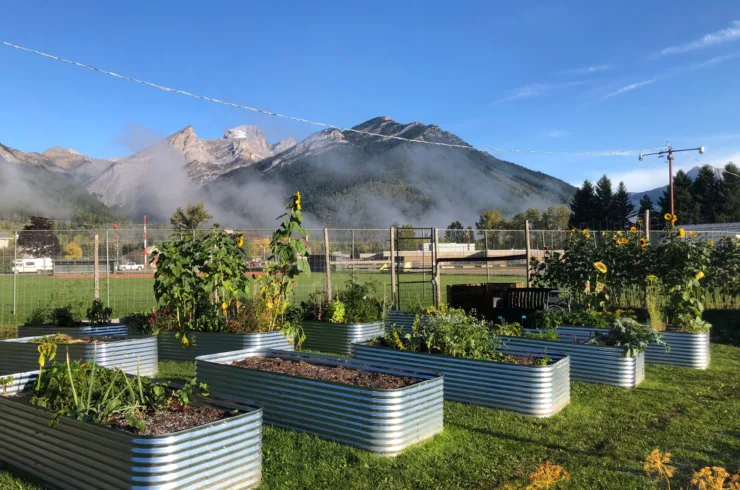
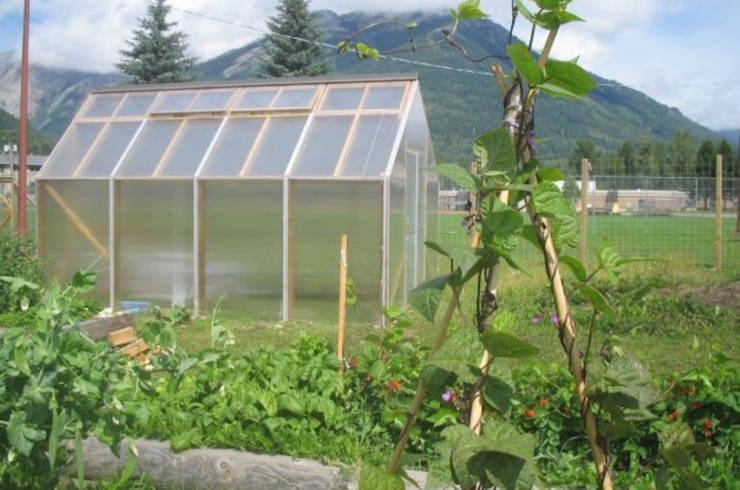
DOES A NO-MOW LAWN LOOK UNTIDY? Visit the Fernie Community EcoGarden throughout the year to explore what a No Mow Lawn looks like. The EcoGarden doesn’t mow in May. For the rest of the summer, the EcoGarden chooses to mow sections of the garden. You will see certain areas of the EcoGarden are not mown and kept wild, like the edges of the garden or along select fence lines. Here you will see red clover, white clover, self-heal and other naturalized plants flowering.
ARE DANDELIONS BAD? Dandelions are one of the earliest flowers for pollinators, blooming around the same time as wood violets, but before yarrow and fruit trees. Dandelions were originally brought to North America as food. Every part of a dandelion is edible and nutritious (as long as it is unsprayed). You will find that dandelions push to flower in the spring, once they bloom the plant does not continue blooming but instead puts its energy into its roots & leaves. The dandelion root helps bring up nutrients from deeper in the soil.
MOW 1/3 AT A TIME According to the Bee Lab at the University of Minnesota – the one-third rule is a good guide. Don’t mow more than one-third of the vegetation at one time to a height between 3.5 to 4 inches. Cutting lawn too short causes soil to dry out faster. Longer grass retains more moisture and requires less watering in the heat of summer.
POLLINATOR GARDENS Consider choosing areas of your lawn to let grow out all summer long or plant a pollinator garden with flowering plants native to the Elk Valley like yarrow, wood violet, fireweed, wild rose and Kinnikinnick (bear berry). Visit a local nature park at your similar elevation or the Fernie EcoGarden to see what’s growing there.
WATCH FOR INVASIVES Our friends at East Kootenay Invasive Species Council have an excellent list of plants to avoid planting and what to do if you spot an invasive plant in your garden. Never mow an invasive plant that has gone to seed. Bag the seed head, cut the stem, and dispose in the landfill or incinerate.
Like the EcoGarden and Wildsight Elk Valley Facebook and Instagram pages. Become a Wildsight Elk Valley branch lifetime member for just $20.