


The Creston Community Forest is a local treasure. Spanning 21,000 hectares near the rural community of Creston, B.C, its network of trails makes it a popular recreation destination. The nonprofit-run forest also supports local jobs and generates revenue that’s fed back into the community.
The creative and community-focused approach here makes it fertile ground to test out a technology that could help turn wood waste into an economic driver for the region.
The problem
Wood waste produced as a result of industrial logging operations or wildfire risk reduction efforts is often simply piled and burned. This practice creates smoke and releases greenhouse gas emissions with no beneficial outcomes other than getting rid of unwanted material.
As climate conditions change, improving soil health and water retention is becoming increasingly important. In Creston’s fertile valley, farms are facing hotter summers, longer dry periods and growing pressure on water supplies. Finding ways to adapt to expanded stressors is becoming more imperative to BC agriculture’s bottom line. This is where biochar comes in.
Fire for Healthy Soils project
In partnership with the Creston Community Forest (CCF) and the Regional District of Central Kootenay, Wildsight is exploring the transformation of wood waste into biochar — a carbon-rich form of charcoal that may improve soil health, increase water retention and store carbon.
The Fire for Healthy Soils project began in 2025 with a feasibility study that found growing interest in biochar among farmers, foresters and local organizations, while also highlighting the need for local trials to demonstrate both biochar’s effectiveness and economic viability.
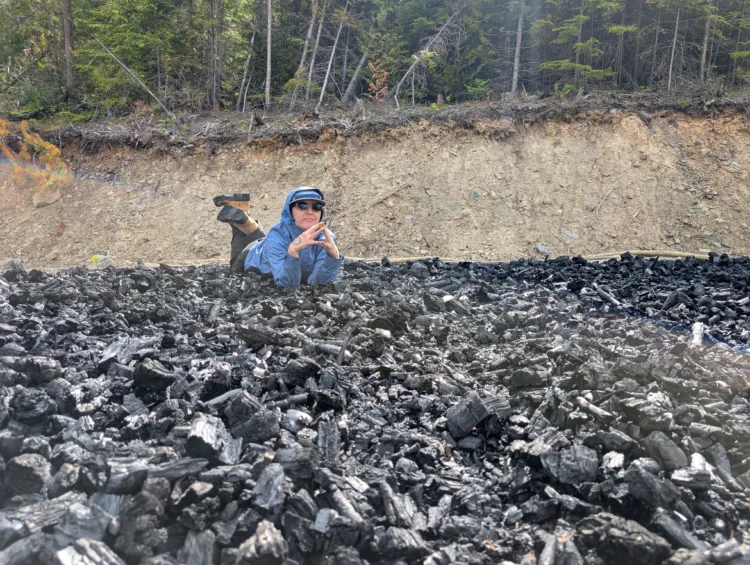
This year, we’re putting the study to the test by generating biochar in the Creston Community Forest. The process itself is fairly straightforward. Wood waste is collected and loaded into specially designed kilns that convert wood into biochar.
Work on the ground
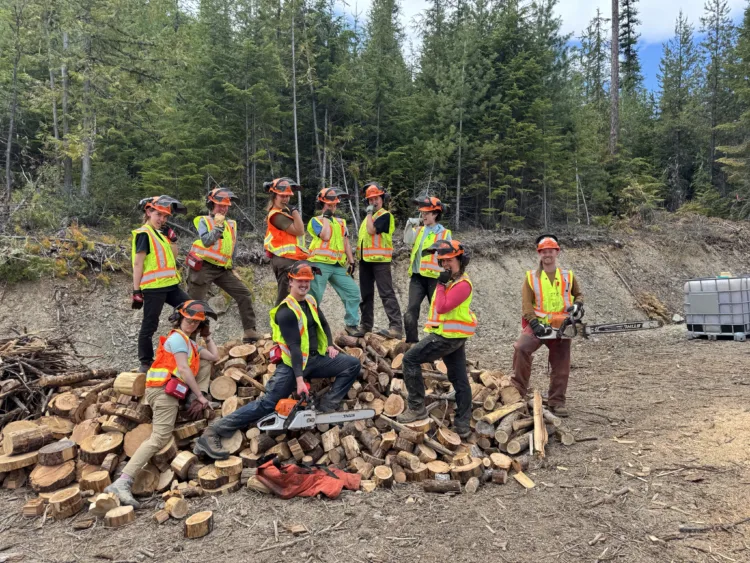
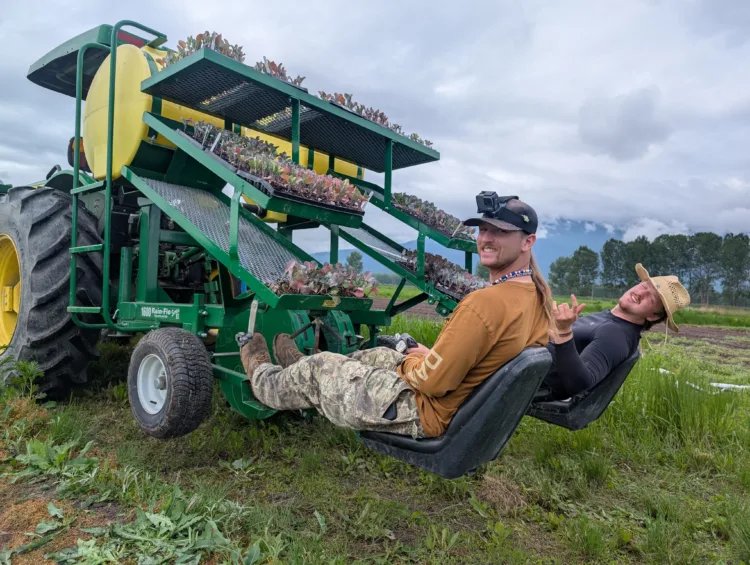
Our Youth Climate Corps1 (YCC) 2026 crew is leading the efforts in the community forest. The team of young adults was on site through May and June, clearing woody debris and burning it in the kilns.
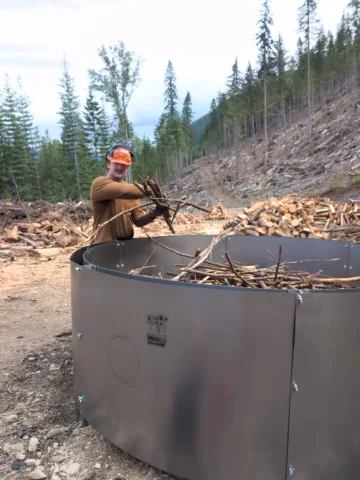
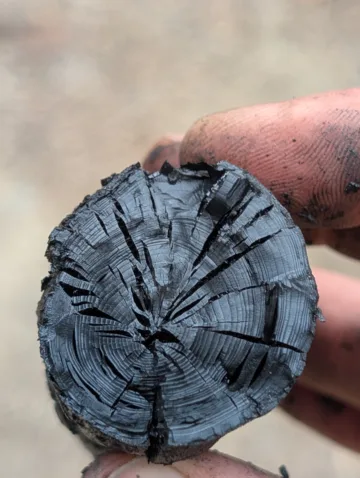
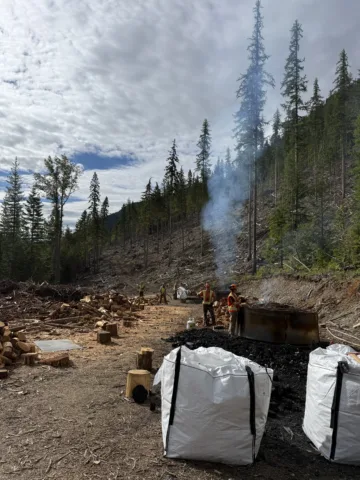
The resulting biochar will be trialled across the valley, including with local farms across the region, within the community forest, and even at regional composting facilities.
One of the most practical applications for biochar is as a soil amendment for farms, gardens and restoration projects. It can improve both soil structure and nutrient retention. In forestry and ecological restoration, biochar may help support reforestation efforts, encourage the growth of native plant species and improve water quality.
Youth Climate Corps members will also collect data, conduct outreach and share information with the community, including providing opportunities for locals to trial the biochar at their own properties.
Crew members share that the process has been interesting and rewarding.
“It feels like we’re making a difference; it’s fulfilling,” says crew member Ruedi Kelsch.
Fellow crew member Allie Gow agrees: “It’s really rewarding to see the site go from what it was to what it currently is as we clear the wood. The problem solving, the adapting, the research — all of it has been really cool.”
Building resilience
This project is timely. Finding ways to retain moisture in soils, improve ecosystem resilience and reduce wildfire risk is important as climate projections for the Creston Valley point to increased summer heat and drought conditions, which will place added pressure on both farms and forests.
Wildfire mitigation efforts like brush clearing are effective, but also costly. Creating a value-added product from the wood removed during that work could help support long-term community resilience as well as begin to replace the need to pile and burn trees removed during this process.
By the project’s end, we hope to answer a critical question: can biochar help connect forestry and agriculture in a way that benefits both sectors while supporting healthier ecosystems and stronger rural communities? If it can, this model could be replicated elsewhere, helping solve a longstanding problem and encouraging a more circular economy.
Voicing support
“People in rural communities are finding innovative ways to create new opportunities for their families and neighbours while caring for the environment,” said Ravi Kahlon, Minister of Jobs and Economic Growth. “By turning wood waste into valuable new products, this project is creating jobs, supporting local businesses and helping build a stronger future for the community.”
The Creston Community Forest team is excited about the potential of this project too.
“The Creston Community Forest has always focused on innovative projects that support sound environmental stewardship while providing employment opportunities in the Kootenays,” says Daniel Gratton, CCF forest manager. “Creston is well-positioned to explore new methods to support its agricultural and forest sectors.”
We gratefully acknowledge the financial support of B.C.’s Rural Economic Diversification and Infrastructure Program (REDIP), the Economic Trust of the Southern Interior and RBC Foundation for making this project possible!
- Youth Climate Corps is a seasonal program that provides training and meaningful employment to young adults to tackle the climate crisis. Wildsight runs cohorts in the West and East Kootenay every year, while our partners at Youth Climate Corps BC lead programs across the rest of the province. In addition to supporting this project through a REDIP grant, the Province of B.C. has also provided $4.4 million to support the Youth Climate Corps’ wider work across British Columbia.