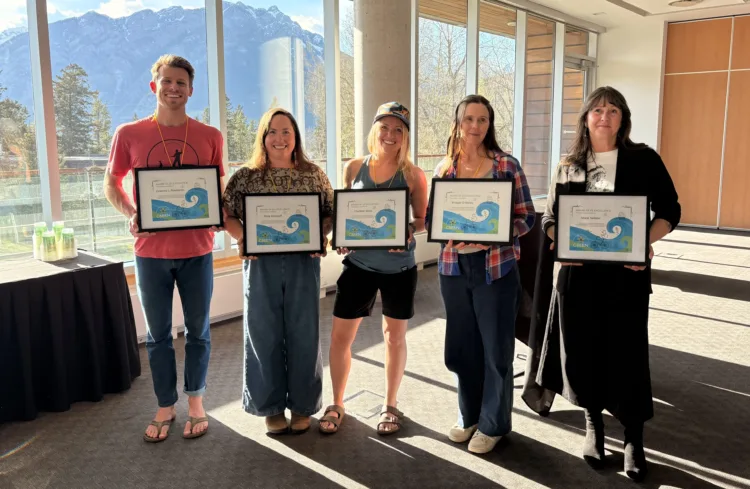


Last month, Wildsight’s Graeme Lee Rowlands was recognized for his outstanding work in the field of environmental education with an Award of Excellence from the Columbia Basin Environmental Education Network (CBEEN).
Graeme serves as Wildsight’s Director of Water and Climate, supporting water and climate change-focused programming across the organization including through the Columbia River Field School, Teach the Columbia, Columbia River Conversations and Youth Climate Corps.
Early years
Growing up near San Francisco, California, most of Graeme’s life revolved in urban spaces. What shifted his perspective was an annual backpacking trip into Yosemite National Park.
“That was really a spark for me that ultimately fuelled my life choices: big open dramatic spaces, swimming in alpine lakes, making camp food after a long day of hiking — it was phenomenal,” he recalls.
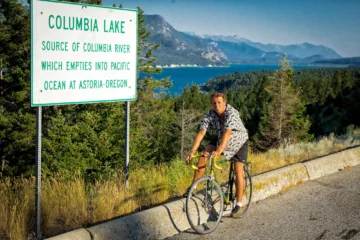 After high school, Graeme attended Quest University in Squamish, B.C. It was there he was first introduced to the Columbia River watershed via a research project on the Columbia River Treaty. Not satisfied with research from afar and wanting a more personal connection to the watershed, Graeme hopped on his bike and rode from the river’s mouth near Astoria, Oregon to its headwaters in Canal Flats, B.C.
“That trip was a life-changing experience,” he says. “It stoked my still very-alive passion for the watershed as a place that’s so interesting and complicated and beautiful and important.”
The journey also helped lead him to ultimately move to the Columbia Basin. In California, water systems felt disconnected from people’s sense of geography and orientation to where they live. In the Columbia Basin, Graeme found something quite different.
“This is a region that understands itself in terms of the watershed,” he says. “That’s unique and amazing, and it creates a great opportunity for us to be better water stewards because we are already thinking about it. It’s how we define ourselves.”
Wildsight work
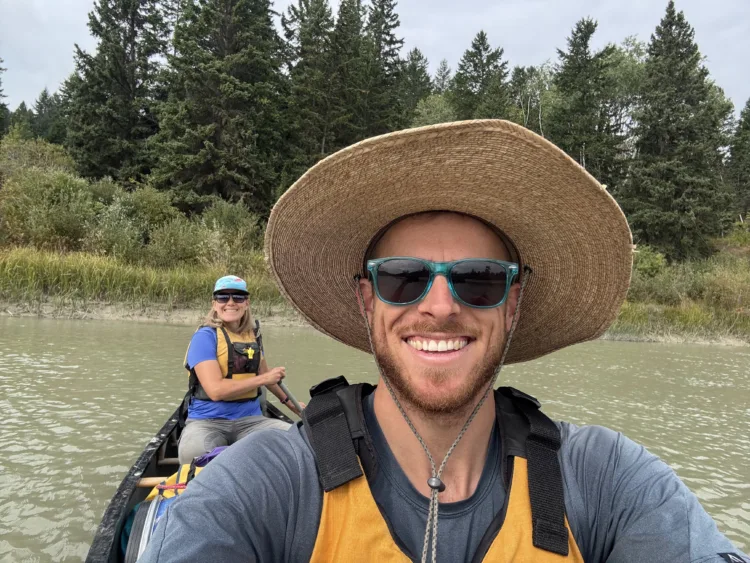
At the end of his bike trip, Graeme connected with Wildsight just as the organization was looking to launch the first-ever Columbia River Field School, a summer program that brings teens together to learn as they paddle and camp along key sections of the Columbia River system. He joined Wildsight as program coordinator in 2018. Alongside Wildsight Education Director Monica Nisssen, Graeme has since guided more than 100 students to become engaged citizens of the Columbia Basin through this 15-day program. Many have gone on to pursue water related higher education and careers and have been some of the only young people to engage deeply in government consultation processes relating to the Columbia River Treaty.
The success of the field school helped inspire Graeme and Monica to develop Teach the Columbia, a comprehensive curriculum for teachers to bring Columbia River learning to their classrooms. This program also includes field courses for educators to help deepen their own relationship with the watershed and bring that learning back to their classrooms.
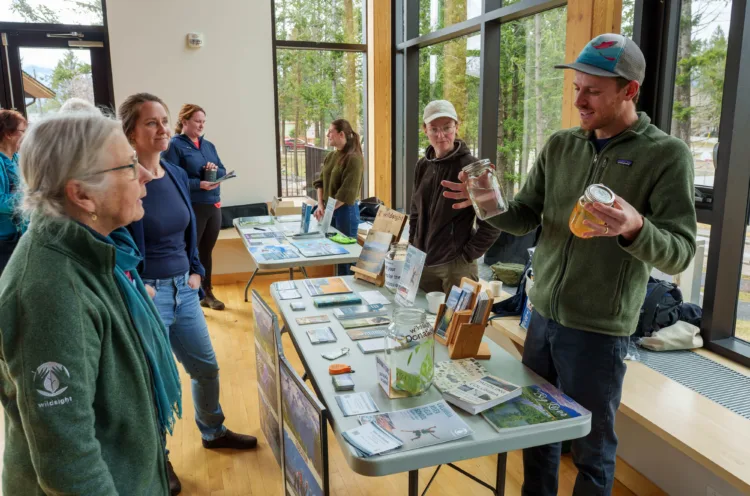
This same passion for place-based learning brought to life another idea: Columbia River Conversations. This field experience invites the general public to explore the waterways that shape our region and gain similar knowledge.
Ripple effects
For Graeme, water education is about helping people understand their relationship to place.
“Water is life, water is precious, but it’s also threatened. Even in a region so connected to its watershed, there’s still a lot of work to do.”
While programs like Columbia River Conversations and the Columbia River Field School can help individuals develop a deeper understanding of this watershed, it’s the ripple effect of education that will make bigger changes, Graeme explains. Individuals who take part in programs like these can then impact those around them and help build engaged citizens across the basin.
“In the Columbia Basin we have about 180,000 people. There’s no way we can reach the majority of those people in a deep way. But we can reach some number of people in a deeper way and thousands of people in a lighter way. And if we empower those people, it can ripple outwards.”
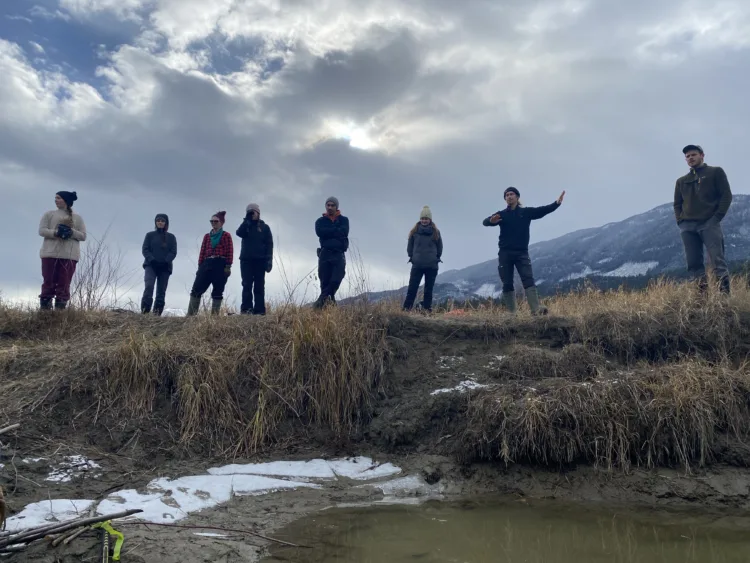
In 2020, Graeme helped spearhead the creation of the Youth Climate Corps, a program that provides young adults with paid climate-action work, training, and career development opportunities. Wildsight now leads annual programs in the West and East Kootenays in partnership with Youth Climate Corps BC (YCCBC), which also operates similar programs across the province.
Alongside Graeme’s program work, he has also written extensively on topics ranging from the Columbia River Treaty, salmon restoration, colonization and reconciliation, and climate change, and has collaborated with dozens of organizations across the international Columbia River Basin.
For Graeme, it is a steady vision for the future tied intricately to water that fuels his work. Celebrating BC and World Rivers Day back in 2019, Graeme wrote:
“I dream that we as a society will make our choices like water. From headwater springs, values will flow downstream, connecting neighbours and relatives, each tributary finding the others and mixing into consensus where everyone’s contributions are represented, conflicts are reconciled, and needs are balanced. Water will show us the way if we are ready to listen.”
Today, Graeme says receiving the CBEEN Award of Excellence feels especially meaningful because of the strength of the environmental education community in the basin.
“I feel honoured to have their support and recognition, and motivated to keep giving back to this amazing education community.”
Graeme was given a CBEEN Award of Excellence in Environmental Education alongside fellow recipients Mara Nelson, an Indigenous educator from the Ktunaxa Nation; primary teachers Charlotte Soles, Myia Malakoff, and Bridget O’Malley; and community educator Amy Cross.
This annual award recognizes educators who demonstrate, teach and promote environmental stewardship and sustainability through their work. Graeme and his fellow recipients received their awards at the Outdoor Learning Conference in Banff, Alberta this May.