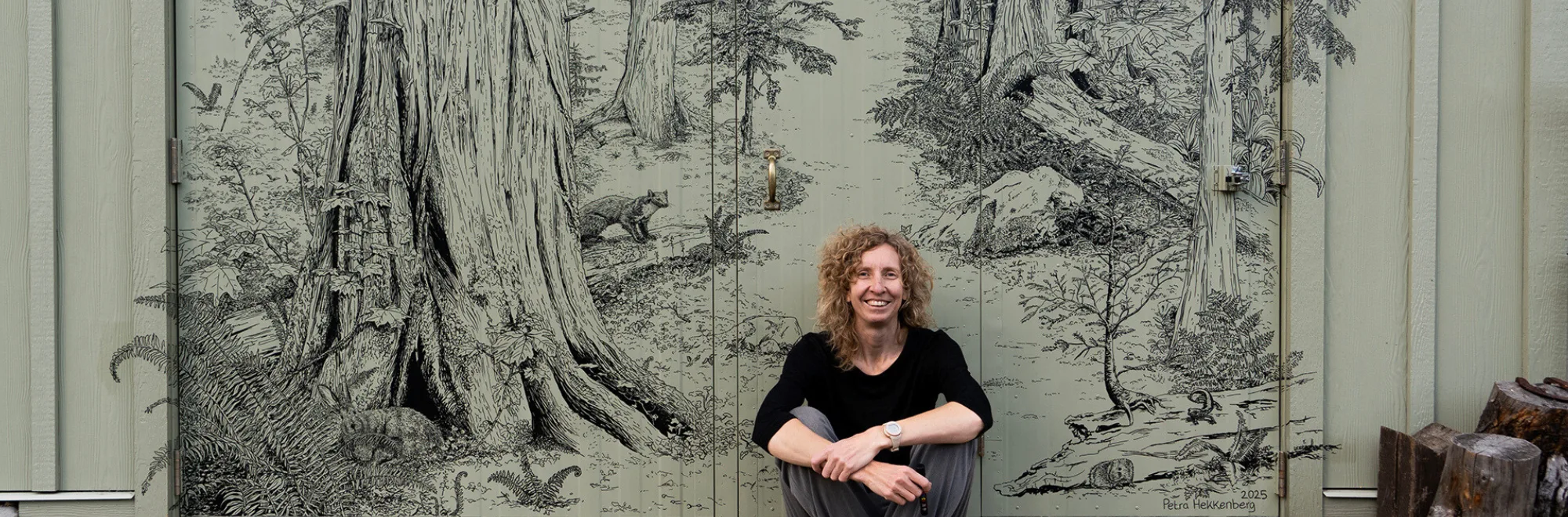
When a couple approached New Denver artist Petra Hekkenberg’s display at a market, she was surprised when it wasn’t her prints they were interested in: it was the Beech tree she’d line-drawn on her booth’s backdrop.
“I had this big curtain behind me with a tree on it, one I had drawn as a student a long time ago in the Netherlands. They saw that, and they told me they had a workshop garage door that they wanted to get an art piece on.”
The Kaslo couple were already fans of Petra’s landscape- and wildlife-centric artwork, and knew she’d be the perfect person to paint an old-growth forest scene on their workshop door. Petra was immediately keen.
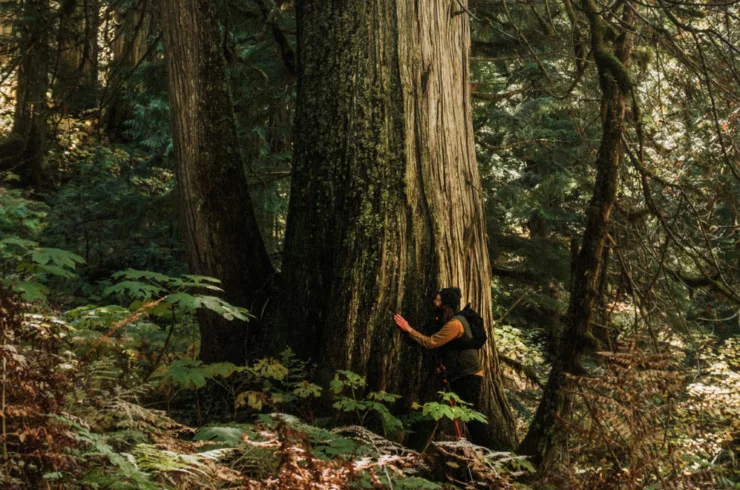
“I moved here because of the wilderness,” she says. “But the most daunting thing about this [project] was to draw a forest — because a forest is very large, and very chaotic.”
Petra used both photographs and her own regular walks in local old growth as inspiration. The couple who commissioned her also had a list of animal species they wanted to include.
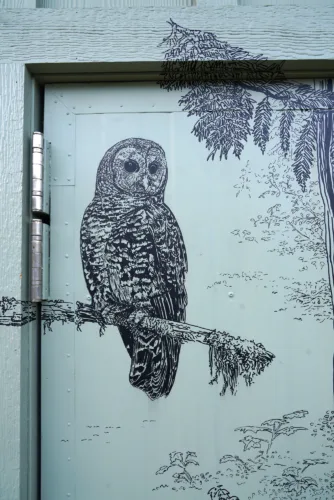
Viewers may notice the Spotted Owl overlooking the scene —
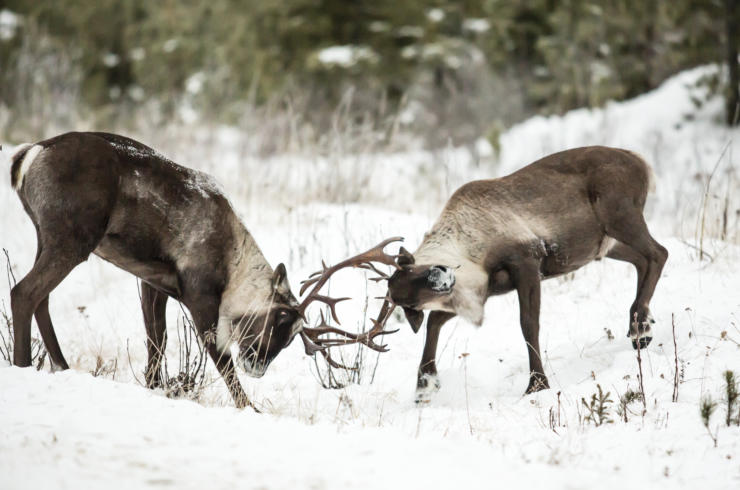
— a reminder of a species that once inhabited old-growth forests all over BC, but which was declared functionally extinct in Canada in 2023. Trudging through the forest not far behind — like a ghost bearing witness — is a Mountain Caribou.
“We live in an area where caribou used to be and now they’re not really seen anymore,” says Petra. She muses that although the caribou occupies the background of the image, the species is at the forefront of our minds:
“Hopefully, caribou will outlive the mural.”
These two iconic species — one extremely endangered, one gone forever — are immortalized in Petra’s image: reminders of species that simply cannot survive without the exact kind of forest depicted in this breathtaking visual.
Another personal addition of Petra’s was the nurse log. “They’re like a symbol of hope. You have something that died, but afterward, they’re still collaborating and creating new life. I think it’s a very pleasant, happy way to think of the world.”
Ancient trees disintegrating into the soil isn’t the only symbol of the circle of life in the mural.
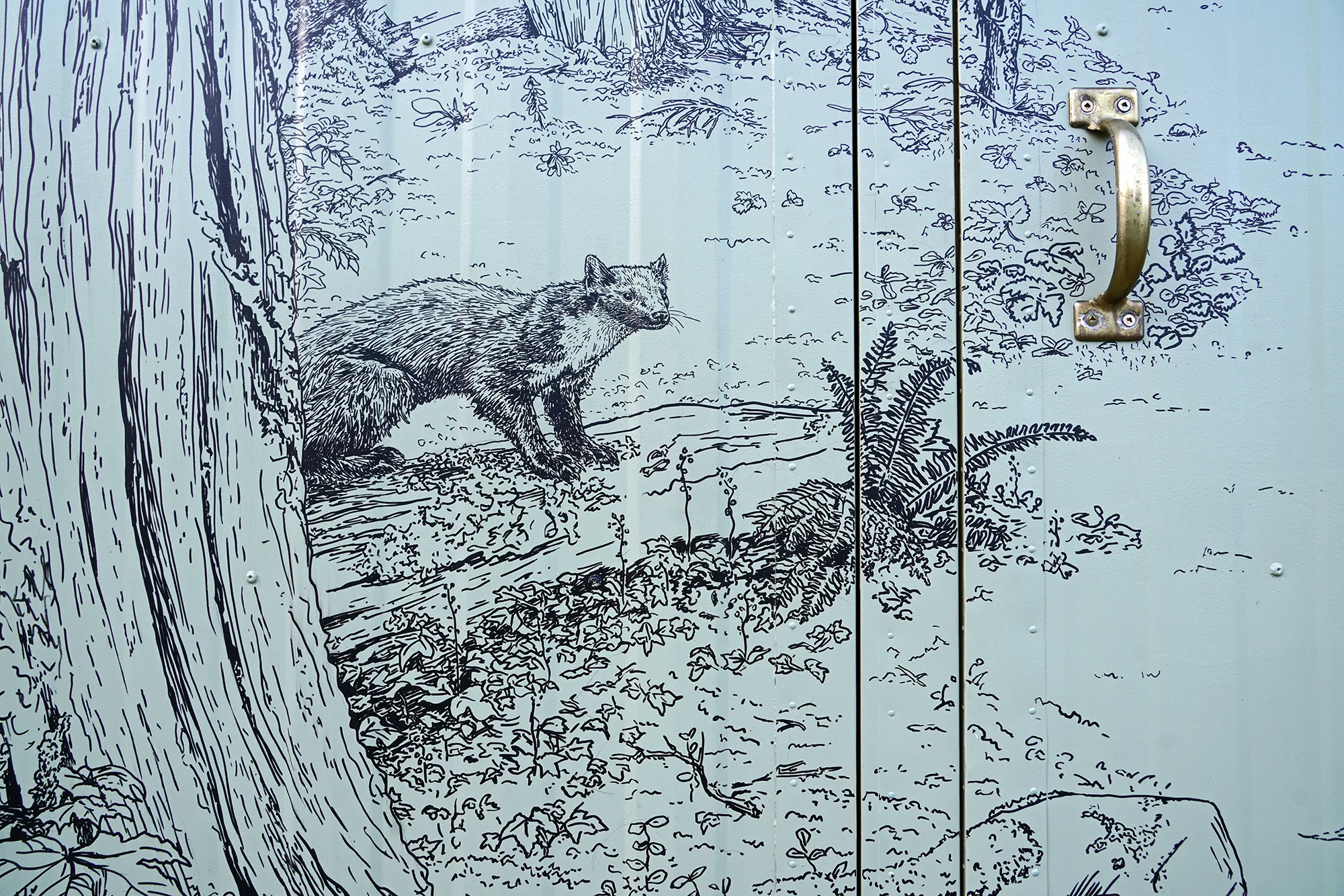
Both PineMarten and Spotted Owl gaze in the direction of the Southern Red-backed Vole and Couer d’Alene Salamander — signifying every species’ innate interdependence.
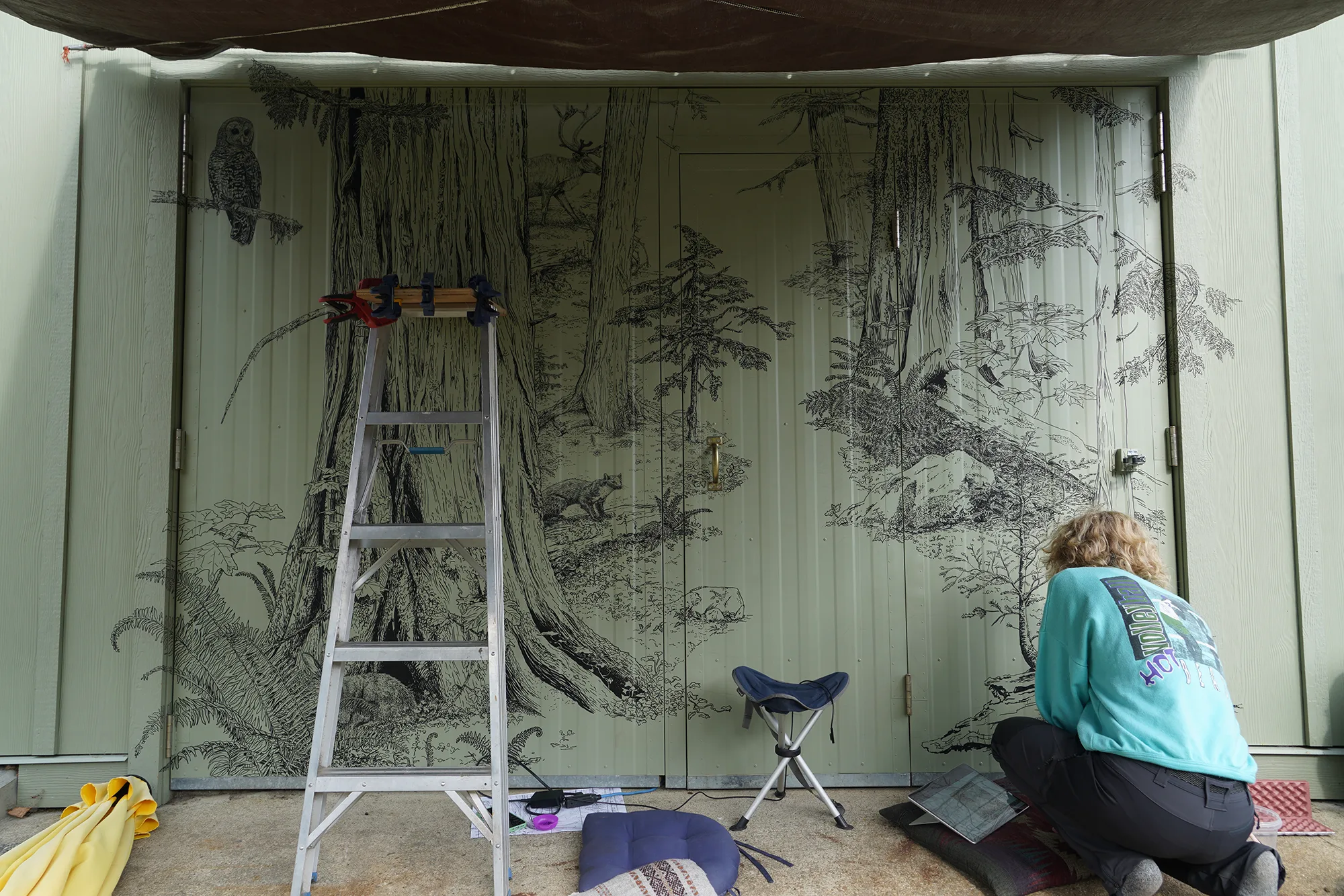
Perhaps the single most incredible thing about this mural is that it was done almost entirely in freehand.
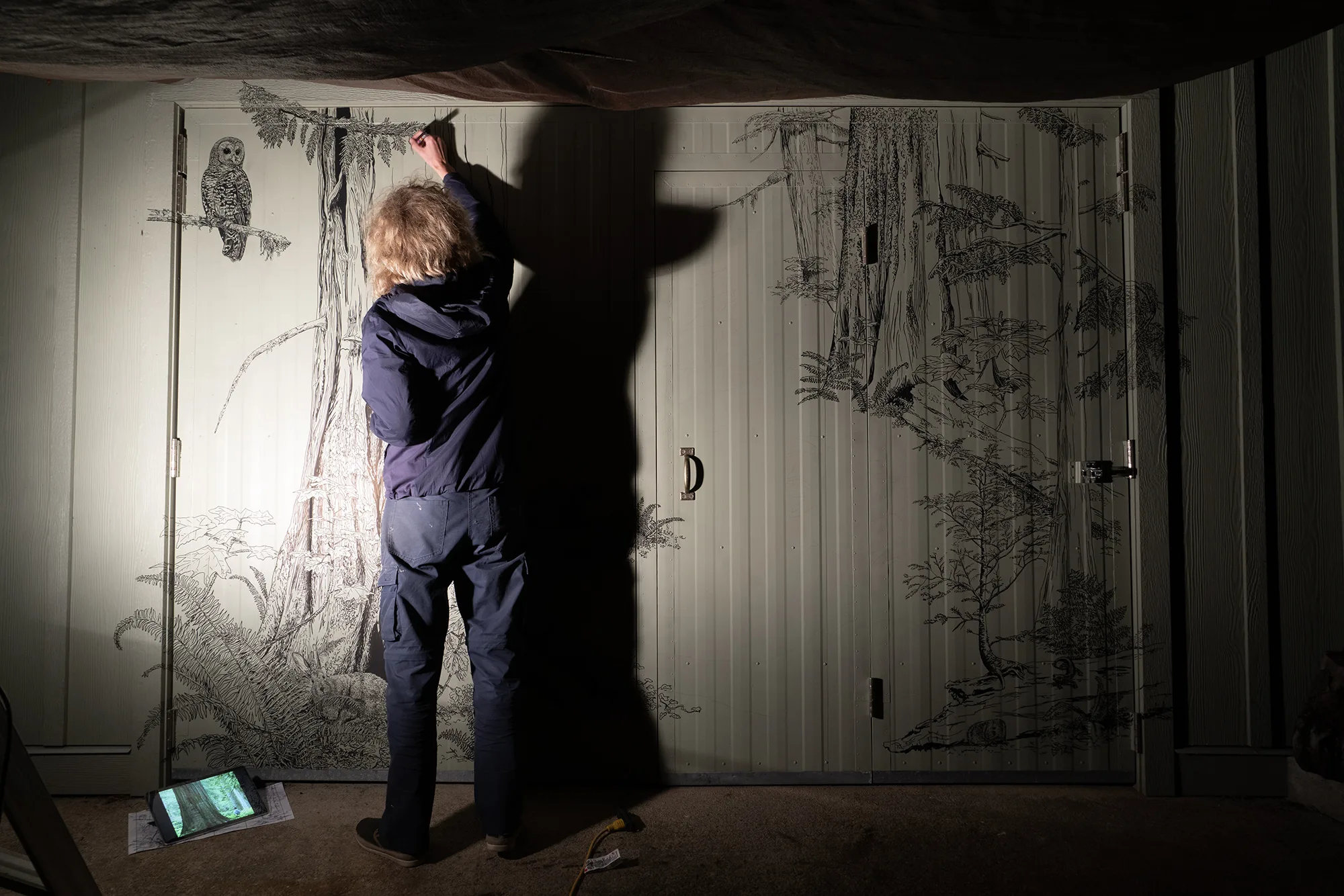
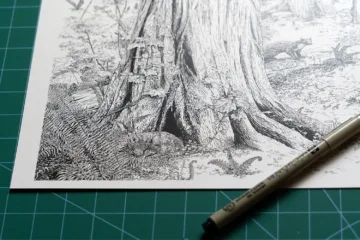
Petra sketched rough proportions of the image, then projected them onto the shop doors after dark. Once those initial marks were on the wall, it was all free-hand ink.
She initially planned for three days of drawing, but in the end spent eleven days bringing the forest to life with intricate lines and details.
For the wildlife, Petra sketched details in pencil first to ensure accuracy. But she composed the forest and trees entirely from memory and imagination, the first strokes laid down in permanent ink. “It was a bit strange to be the creator of a tree in a forest,” she laughs. “The big cedar in the front was my own made-up cedar in the end.”
Another challenge was finding the right materials for the job. The workshop door was south-facing, and Petra needed methods and materials that could withstand exposure to the elements over many years. Taking metal siding that matched the door, she experimented with different mediums, eventually settling on Posca paint markers and Montana matte varnish.
There’s another meaning that this piece holds for Petra on a personal level.
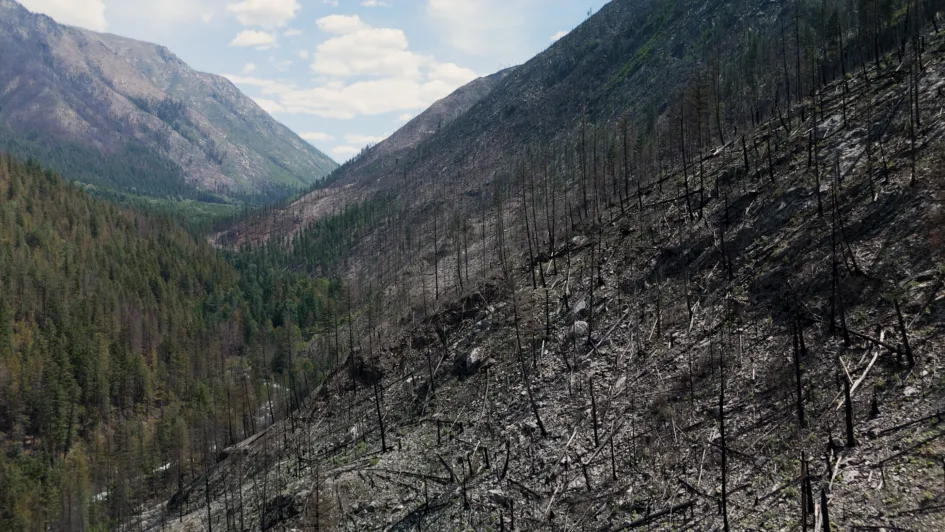
“In 2024, we had just had the Slocan Lake Complex wildfires. That whole park — it was pretty sacred to me. An ancient forest is just such a wise, peaceful, cool place. You can be at ease there. So the piece is also a bit of a memorial now. It’s a reminder of the trees we’ve lost — and the ones we keep losing.”
One of the Slocan Lake Complex wildfires.
Petra felt inspired to take steps beyond preserving beloved, dwindling wildlife and wild places in her everlasting art.
And in the middle of the project, an unexpected opportunity to do just that began to unfurl.
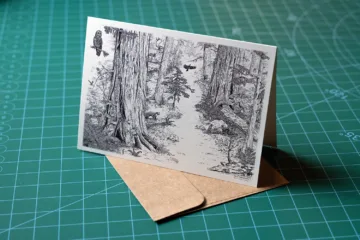
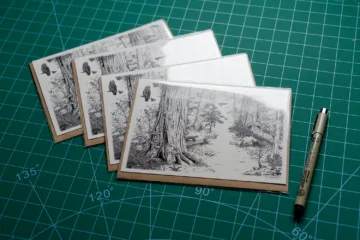
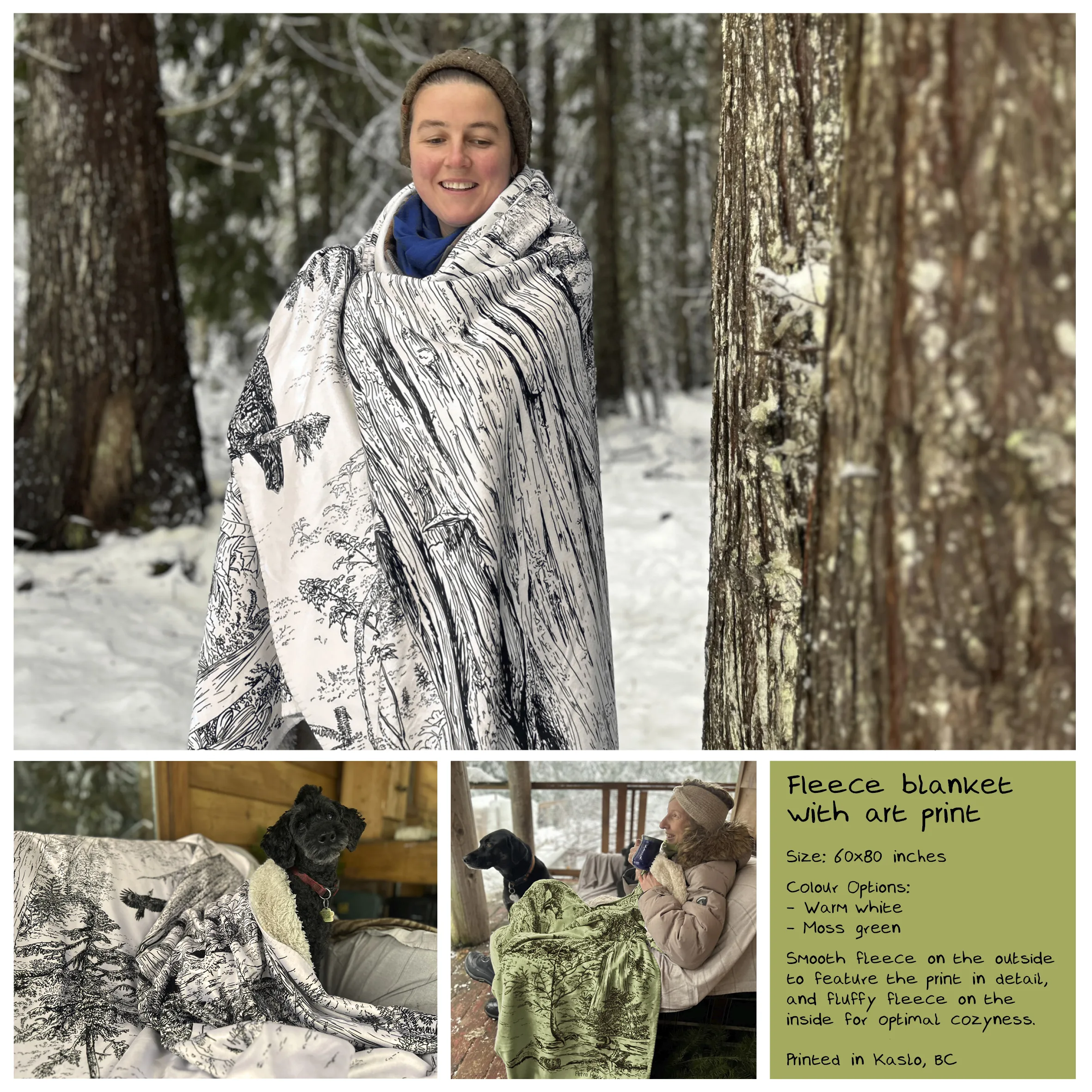
“I found out about a local printer in Kaslo who prints art on throw blankets. I thought it would be cool if I could have my mural on a throw… even for myself.” Before long, Petra decided she’d use the mural to create a series of prints, post cards — and of course, throw blankets — but not just for herself.
Petra wanted her prints to give back to the forests that inspired her commissioners and so many others.
So she sought out an organization focused on protecting the exact type of ecosystems her mural depicts — ultimately landing on Wildsight. She is now generously donating 50% of all proceeds from sales of the image to Wildsight’s campaign to protect old and ancient forests in B.C.’s Inland Temperate Rainforest.
The digitization of the mural was another unexpectedly huge undertaking. “It took three days. Taking just one photo of the mural, the resolution was not nearly good enough for printing.”
In the end, it took Petra 25 photographs and several days to meticulously stitch the images together in Photoshop. “I had to edit away by hand all the seams of the doors, the doorhandles, the screws…there were a lot of screws.” But the end result? Physical copies of the image anyone can take home and admire forever.
Head over to this link to view and order all the different versions of Petra’s mural that you can have on display for yourself at home.
Southern mountain caribou have been here in B.C. since the last ice age over 10,000 years ago, but they have been steadily declining in B.C.’s Inland Temperate Rainforest — from 2500 in the late 1990s to 1250 today.


 When a couple approached New Denver artist Petra Hekkenberg’s display at a market, she was surprised when it wasn’t her prints they were interested in: it was the Beech tree she’d line-drawn on her booth’s backdrop.