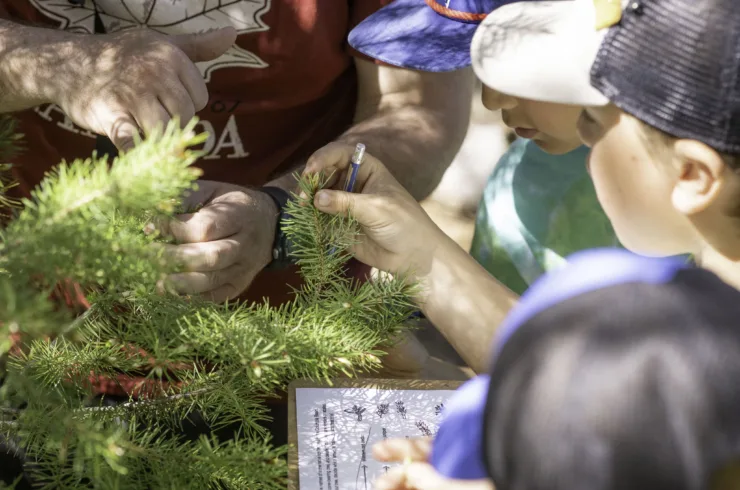


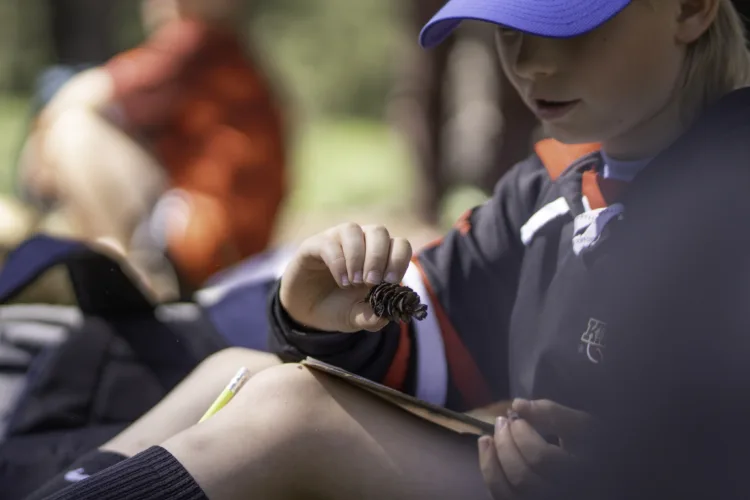
Once upon a time, a wildfire whipped through a forest. Flames ate ferociously through the land as animals dashed away in fear. Tiny mice, not fast enough to outrun the fire, sought shelter in the forest’s trees. They asked many to protect them; only the large and mighty Douglas-fir agreed. The mice scurried into the tree’s cones, and survived the flames. Today, if you examine a Douglas-fir, you can still spot tiny mouse tails sticking out from its cones.
Stories like this help children (and all of us) to know and understand our wild backyards. I still find myself honing in on the tiny ‘mouse tails’ peeking out of fallen Douglas-fire cones — perhaps now, you will too. By understanding what is around us, we can better connect with it.
This is what Wildsight Education is all about. This school year, we’ve helped more than 3,500 young people across the Columbia Basin learn in and from nature. Their experiences are rich with stories; one of them starts in Wycliffe Regional Park, north of Cranbrook.
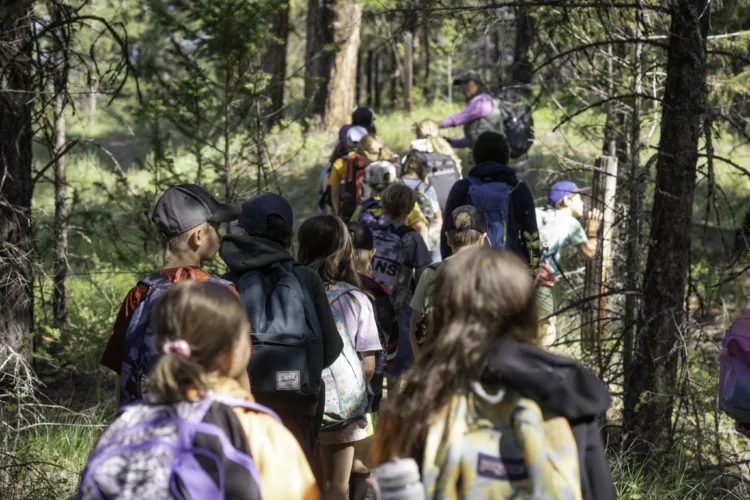
Students from Cranbrook and Kimberley spent a day exploring the forests of this 164-hectare park with Wildsight Educator Patty Kolesnichenko. They took a slow walk under boughs to bathe in the sights, sounds and smells of the forest. They counted needles to identify pine trees. They listened to the ‘cheeralee’ singing of robins and the ‘ki ki ki’ laughing of Northern Flickers hidden in the branches above. They played games, like ‘Who Am I’, asking questions to figure out which student was posing as a mountain caribou, an owl, a grizzly bear.
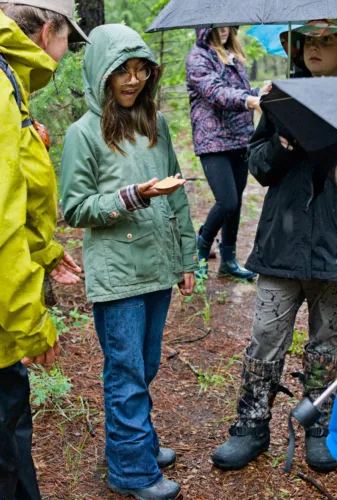
This school year, intermediate students studied amphibian lifecycles and the value of wetlands and forests through Classroom with Outdoors. Young students saw the wonder and awe of our snowy season through Winter Wonder, while high school students developed an appreciation for local watersheds through Watershed Matters.
Something special happens when you take kids outside. Students who can’t usually sit still will journal quietly underneath a tree canopy. Shy children can often become the bravest explorers. Kids who don’t excel at desk-based activities will ask thoughtful questions. In my more than 30 years as an environmental educator, I have seen it countless times: Nature brings out the best in us.
Patty says when students undertook forest bathing in Wycliffe Park, it was hard for them initially to move slowly. To walk with intention. But she modeled the practice, and students soon took to the art of slowing down. They calmed their minds as they took soft footsteps through the forest. They began to notice the world around them with new eyes. The forest gave them peace, even as their minds invited exploration. Experiences like this help students to learn about our wild backyards and build strong connections to place.
As we wrap up our 25th year of Wildsight Education, we look back with gratitude, and forward with hope at this journey. Thank you to all our Wildsight supporters for keeping the love of the wild alive and strong this school year.