

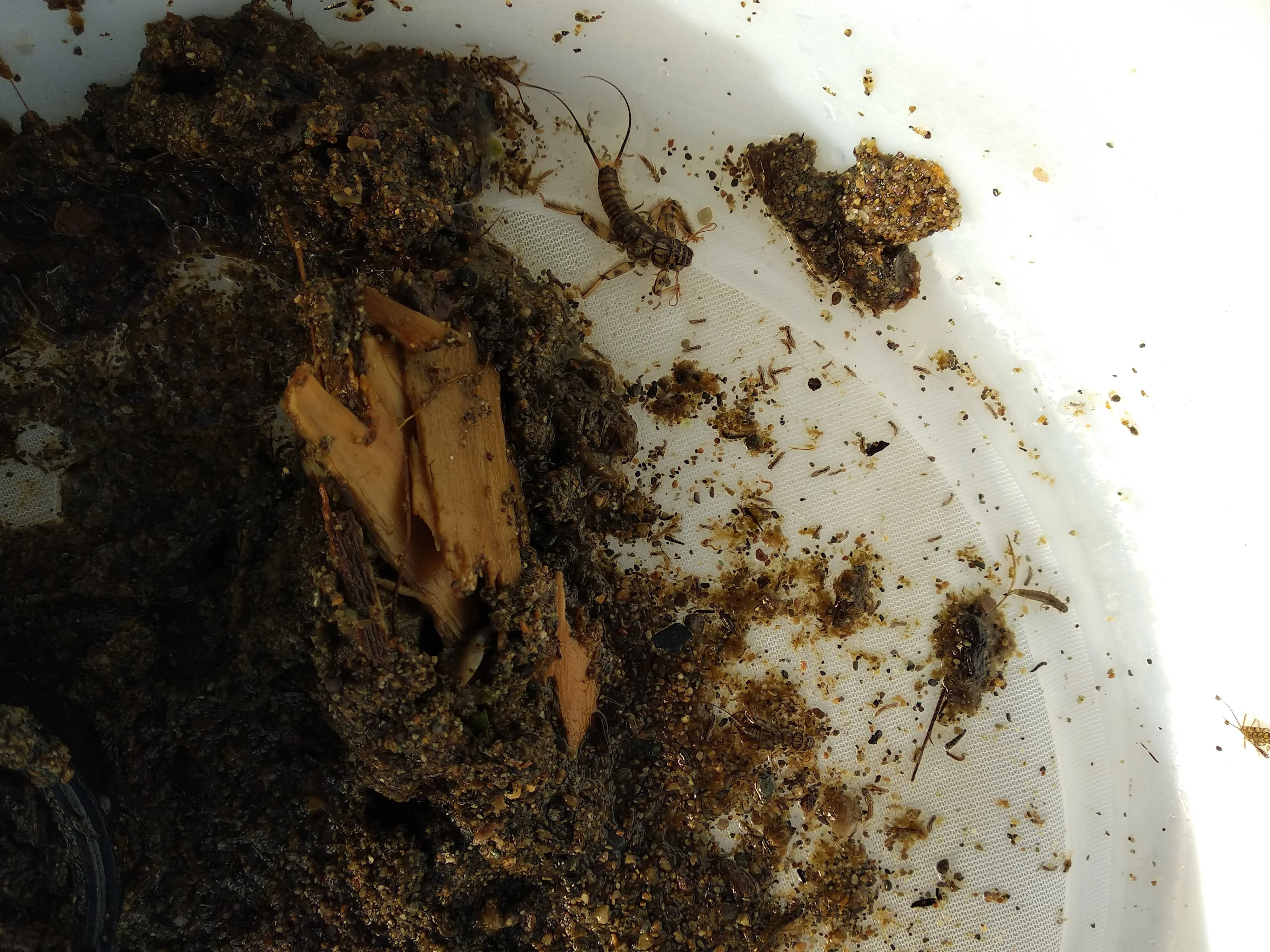
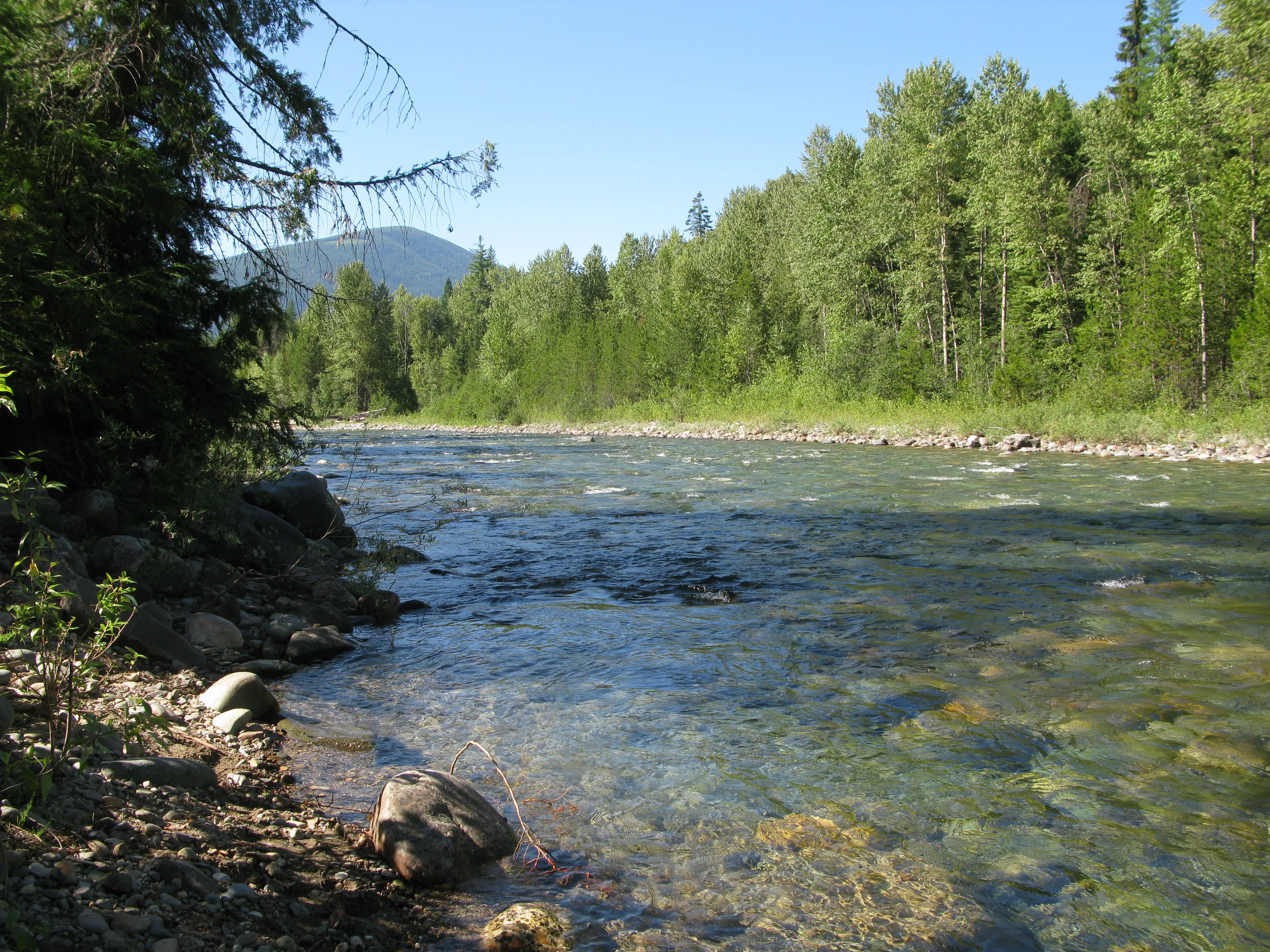
From 2022 to 2024 Wildsight Creston Valley has been monitoring the health of the Goat River. The monitoring program gathered baseline water quality data and sampled benthic invertebrates. Benthic invertebrates are the bugs that live in the streambed. The community of bugs (species, number and diversity) are indicators of water health.
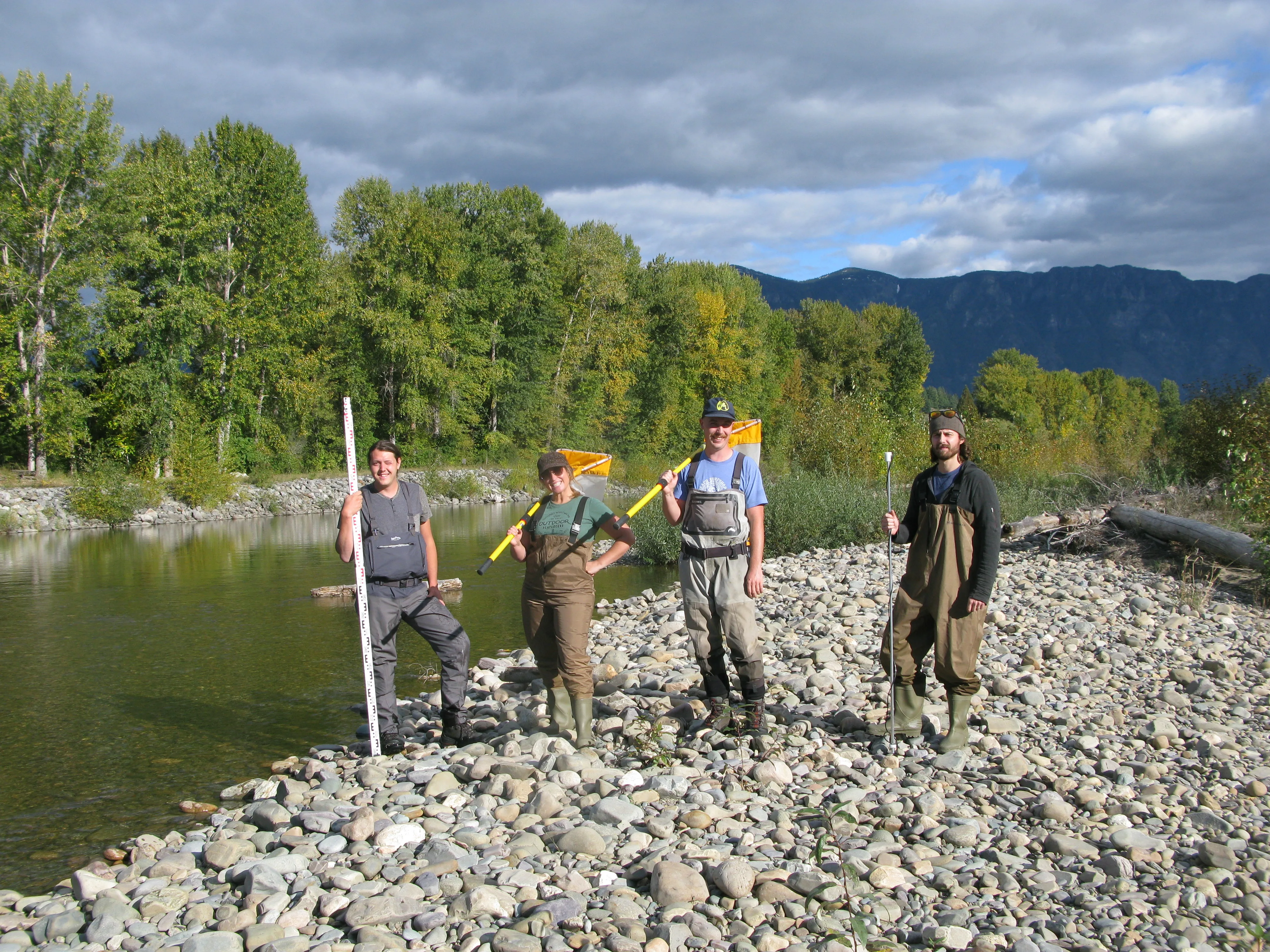
The water quality measurements from 2022-2024 give some baseline data for the Goat River. Wildsight Creston measured dissolved oxygen, temperature, conductivity, pH and turbidity once a month between May-October, 2022-2024. These were measured at two sites: one near the highway 21 bridge, and one upstream of Kitchener. Water quality parameters showed seasonal water variations. Temperature was the only measurement that flagged provincial guidelines. Temperature exceeded provincial aesthetic drinking water standards during the summers (2022-2024). Temperature also exceeded optimal Kokanee spawning temperatures during September 2024.
Lab tests for nutrients, metals, hardness, alkalinity and suspended solids were taken once a year during the fall. Fall lab results showed no significant findings.
Wildsight Creston sampled one site near highway 21 every year in the fall from 2022-2024. Wildsight Creston collected water bugs using CABIN (Canadian Aquatic Biomonitoring Network) methods. When compared to reference conditions, the benthic invertebrate communities trended from mildly divergent (2022, 2023) to highly divergent (2024). This means that the water bugs are showing signs of environmental stress.
Specifically, from 2022-2024 there was a lower proportion of the EPT taxa than expected. Ephemeroptera (mayflies), Plecoptera (stoneflies), Trichoptera (caddisflies), or EPT taxa, are sensitive to habitat disturbance and pollution. From 2022-2024 there was also a higher proportion of Chironomids (midges) than expected. Midges are generally more tolerant to habitat degradation. The benthic results from 2022-2024 showed the Goat River trended towards poorer aquatic health. Climate change, water withdrawals, habitat destruction, etc, could all contribute to these results.
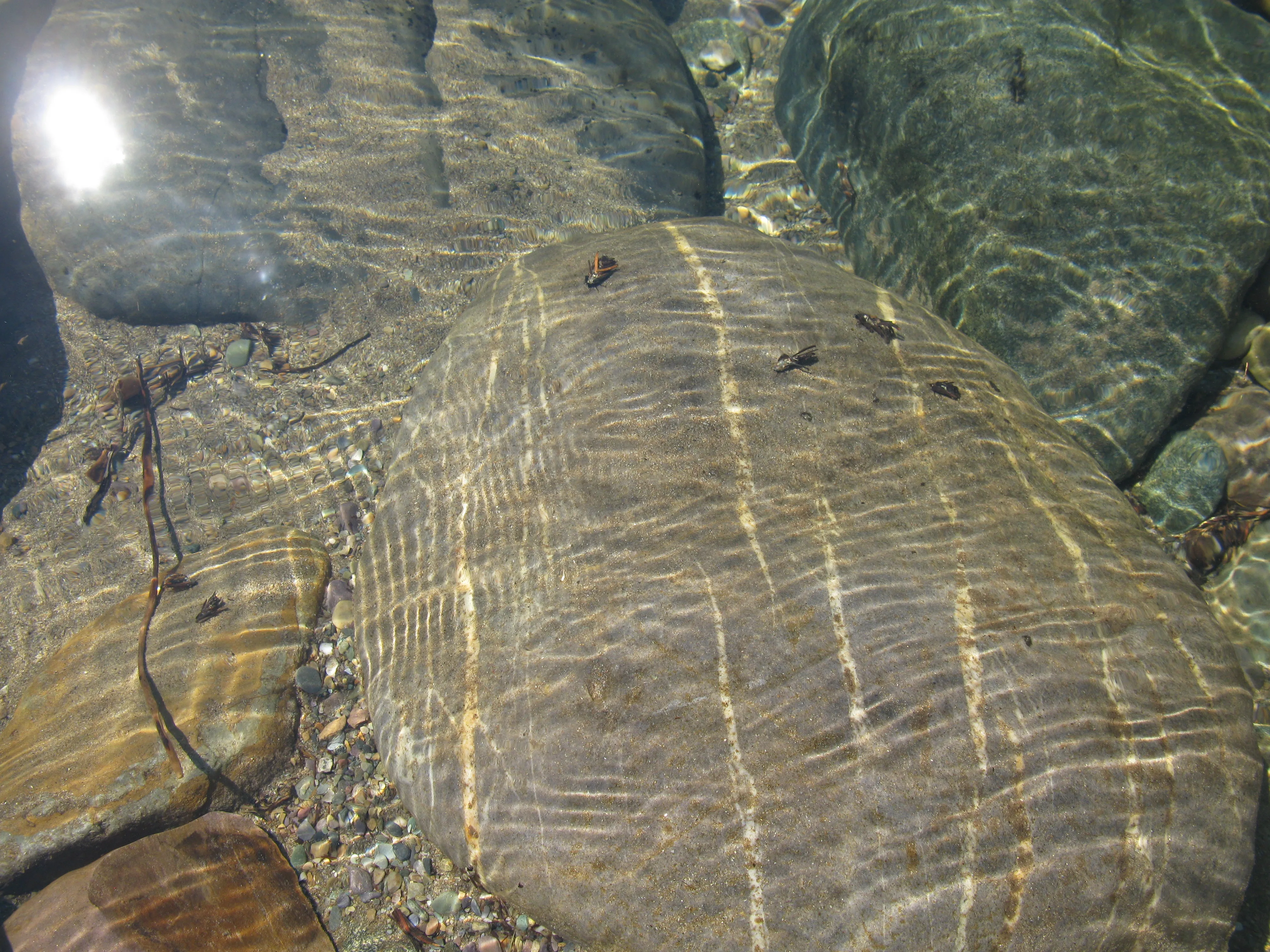
Continuous temperature and flow monitoring on the Goat River is being collected by Yaqan Nu?kiy (since 2023). Also, Living Lakes is monitoring ground water aquifers in, or next to the Goat River. Some of the ground water aquifers in Creston are ‘at risk’ due to agricultural demand and risk of drought. Both of these monitoring efforts with the benthic monitoring will help to understand the risks and protection opportunities for the Goat River watershed.
You can also get involved with the Goat River Watershed Sustainability Planning. The Regional District of Central Kootenay (RDCK), in collaboration with yaqan nuʔkiy, is doing water sustainability planning to respond to growing concerns about water availability in the Goat River Watershed (includes the communities of Canyon, Erickson, Kitchener, Lister, Town of Creston, West Creston, Wynndel, and yaqan nuʔkiy).
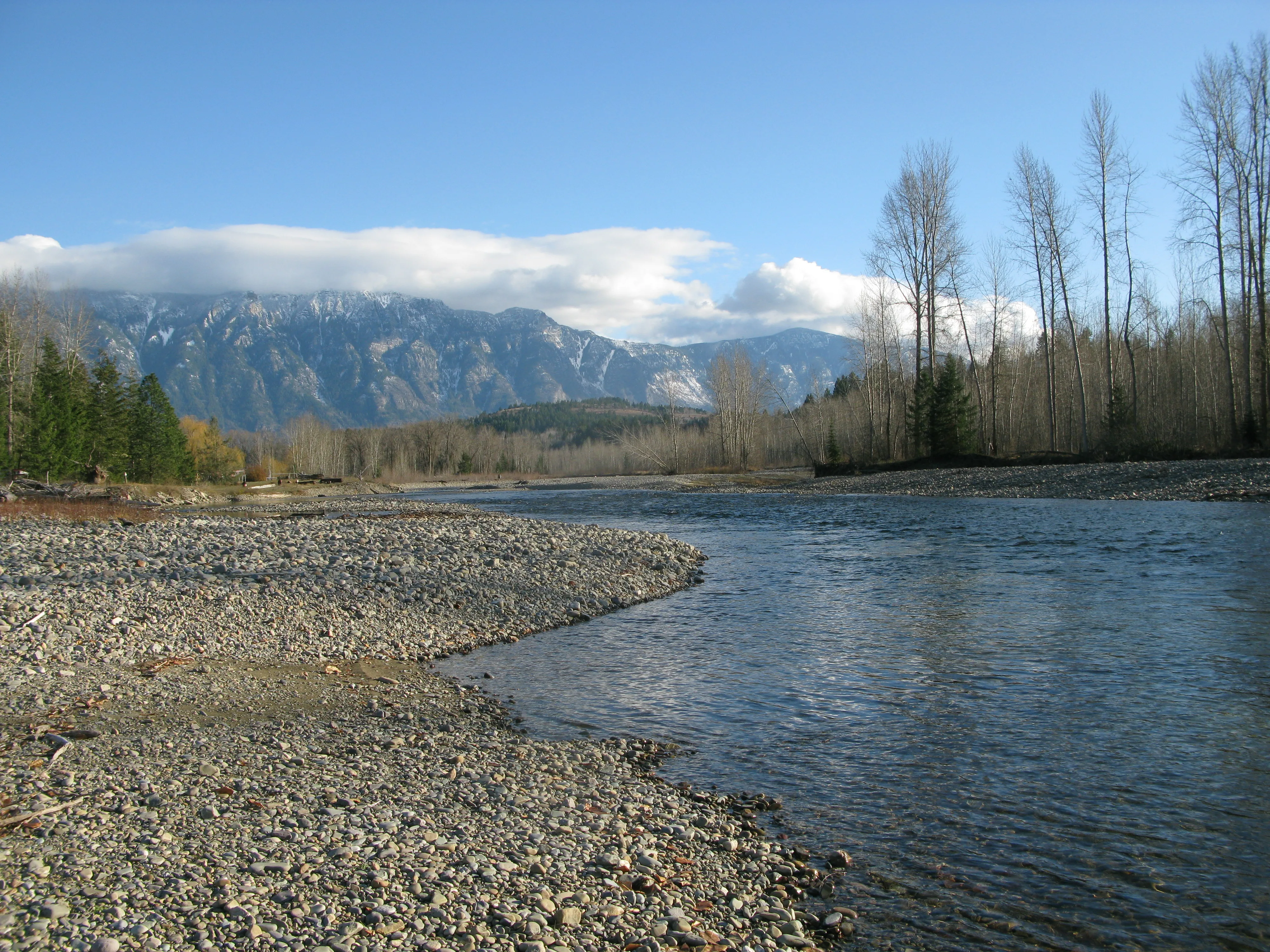
Activities to protect riparian habitat along the Goat River, enhance habitat, and to improve land management practices in this watershed would improve the resiliency of this watershed.
Want more data? Check out our water monitoring page here, and the 2022-2024 Goat River water monitoring report here.