


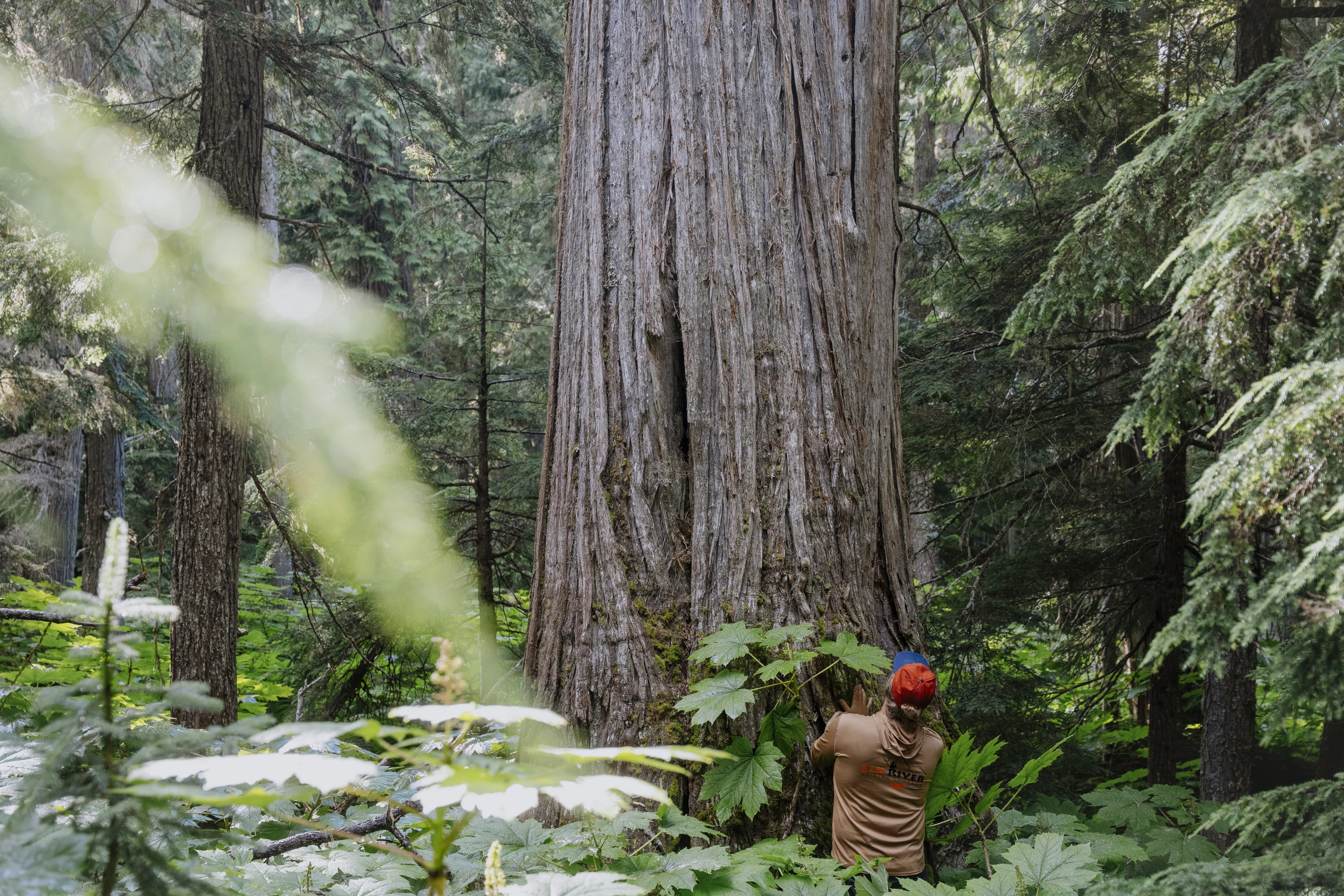
There’s an image etched in my head: rain is falling in a light drizzle and the occasional thunderclap echoes in the distance as we walk through soaking wet ferns and avoid tall spiny Devil’s Club. We reach a point in the ancient forest; the rain stops, the sun peeks out. My brother Davey makes his way towards an ancient Cedar, and the harsh contrast of beauty and future destruction becomes evident all around us.
These ancient Cedars are painted with numbers as part of a BC Timber Sales cruise plot1 that estimates the forest’s volume once logged.
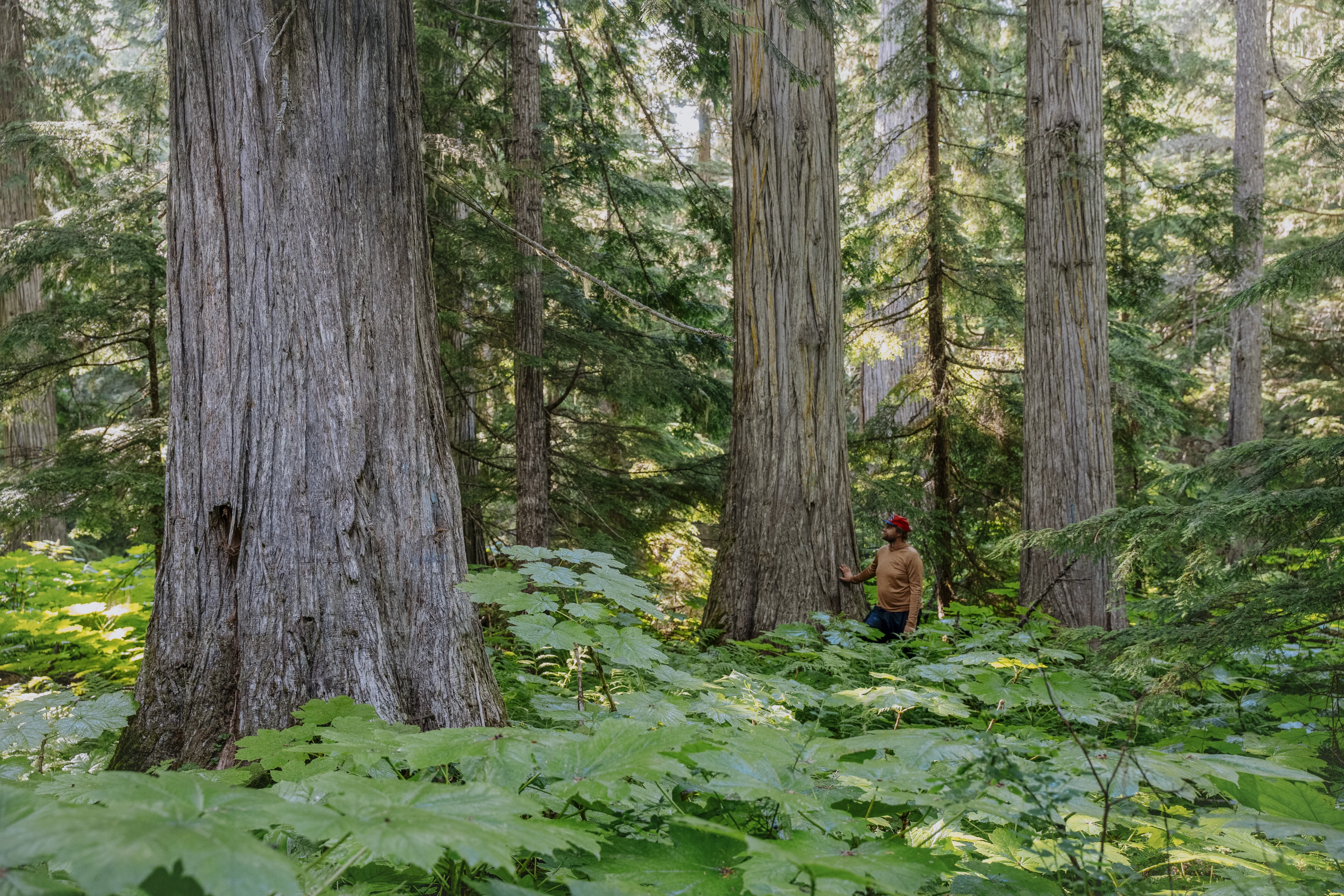
Dappled light paints the forest floor. Pacific Wrens sing their boisterous songs around us. It’s hard to imagine how anyone could look at this magnificent ancient forest and see dollar signs and timber volumes instead of the beauty that unfolds before us.
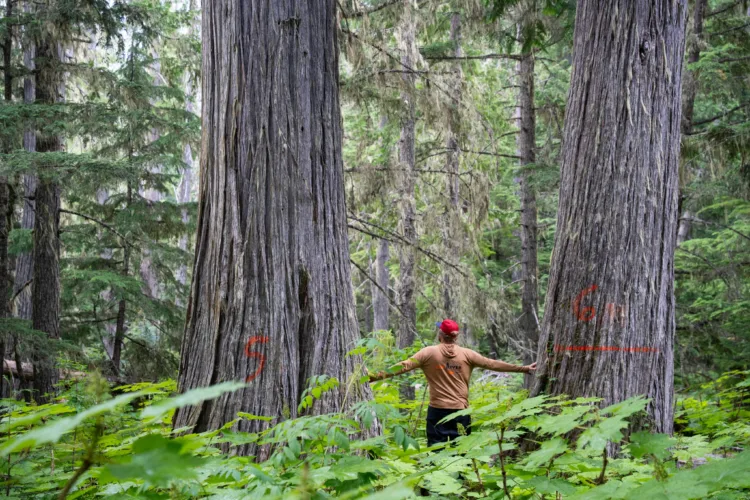
In the shadows of the Monashee mountains’ tallest peaks, 120 hectares of these old and ancient forests are slated to be logged. In the last few months, these forests have simply been removed from deferrals which identified them as some of the most at-risk and biodiverse forests in the province. We’re here just outside of the boundary of the Foster Creek Protected Area along the Kinbasket reservoir, roughly halfway between the Mica dam north of Revelstoke and Valemount.
It’s one of the most egregious proposals I’ve ever laid eyes on, and the impacts don’t justify the marginal economics of the proposal.
Not only do the proposed blocks overlap the Technical Advisory Panel’s recommended deferrals by over 100 hectares. We know from caribou censuses and collaring efforts that this area and the proposed cutblocks are used, occupied Caribou habitat. It’s part of a larger 6 square kilometre old and ancient forest patch that extends into the Foster Arm Protected Area. The larger Howard-Foster to Encampment area is likely one of the largest intact areas of low-elevation old growth left for the Columbia North Caribou herd. Broader, undisturbed areas of old forests like these allow Caribou to spatially separate themselves from predators, and create vital foraging habitat that contains critical early winter foods like falsebox. These large areas of intact low-elevation old forests are extremely rare in BC today.
The proposed blocks are composed of 350-367 year old cedar and hemlock forests according to the provincial Vegetation Resource Inventory. BCTS confirmed that the blocks were field-verified and did in fact meet the criteria as valued old-growth forests and deferrals, but that they were going to auction them off anyway as they had already invested in layout for the blocks. They sold the blocks in July.
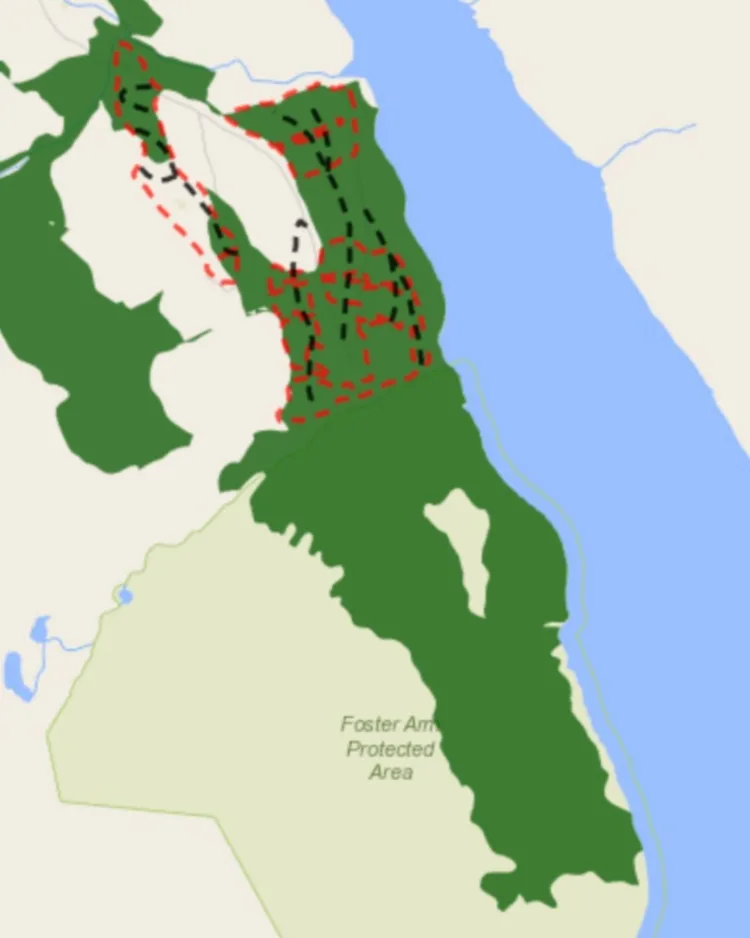
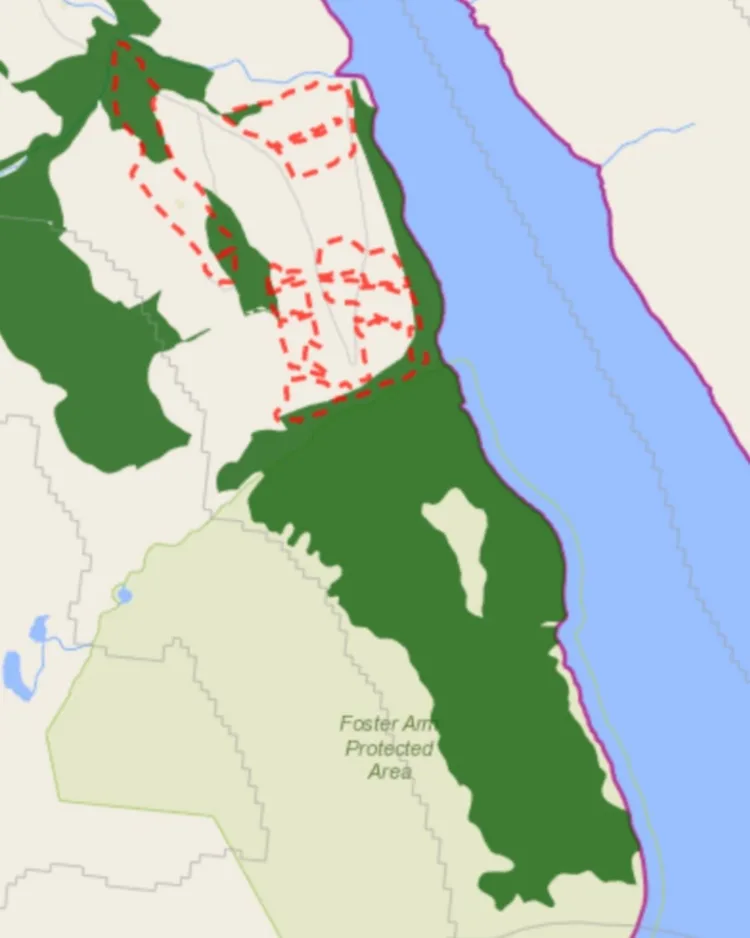
Maps of before and after deferral removals. Blocks in red. Technical Advisory Panel Recommended Old growth deferrals in green.
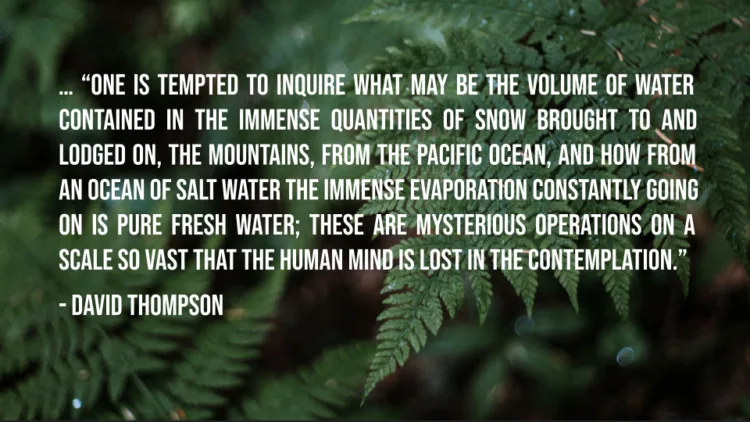
This area is remote — we took a 50-kilometre boat ride to get here. A bumpy ride past the now-underwater Boat Encampment where David Thompson pondered in his journals about the Inland Rainforest’s immense power and mystery. We passed various points on the Columbia and the Canoe, where as late summer and fall descended, prior to the dams, Indigenous Nations would have been harvesting Salmon and then Caribou later in the fall.
There’s an obvious beauty to places like Foster where a lack of disturbance has allowed ecological processes to play out over long time periods. A forest floor that is shaped by the last 6,000 years of old and ancient trees falling, decomposing and becoming the substrate for future growth. Epiphytes (plants that grow upon other plants in order to capture sunlight and nutrients) dotting every inch on a particular Hemlock branch. A group of Caribou following the same elevational migration patterns as their ancestors did 10,000 years ago.
The old adage is that this complex web of life is a lot like Jenga. You pull one piece out, and the tower might start to wobble. But if you remove enough pieces, the whole thing falls apart. These processes that have gone on for millenia can be wiped out in incredibly short periods of time.
Back in cutblock FOS003B, we work our way through the Devil’s Club. We follow pink ribbons hung on and adjacent to massive two-metre diameter Cedars marking the proposed road’s centreline through some of the most spectacular corners of this ancient forest.
Logging this area could reactivate up to 30 kilometres of overgrown and inaccessible road and push nearly five kilometres of new road through high-value caribou habitat, and the science on what that means is clear: caribou abundance is predicted to decline by 42 per cent for every 1 per cent increase in forestry roads in their habitat.
We spend two and a half days looking at the proposed development and the forests that surround Foster Creek. It’s remote, beautiful, and rugged country in a province where those things are becoming all too rare.
As our boat sputters on the choppy water in the direction of the Mica dam, I can’t help but wonder what this place will look like in 5 or 10 years. Will the Caribou still be here? Will it be chopped up by roads and stumps where ancient forests once stood?
At a certain point we have to decide if we are okay with logging the last-best large pockets of our old and ancient rainforest. If we are fine with extinction in the name of selling off our irreplaceable forests to the highest bidder.
While the cutblocks have been auctioned, there’s still time to stop it from being logged. This life-giving forest in the shadow of the Monashees’ tallest peaks’ needs your voice. The fight is far from over.