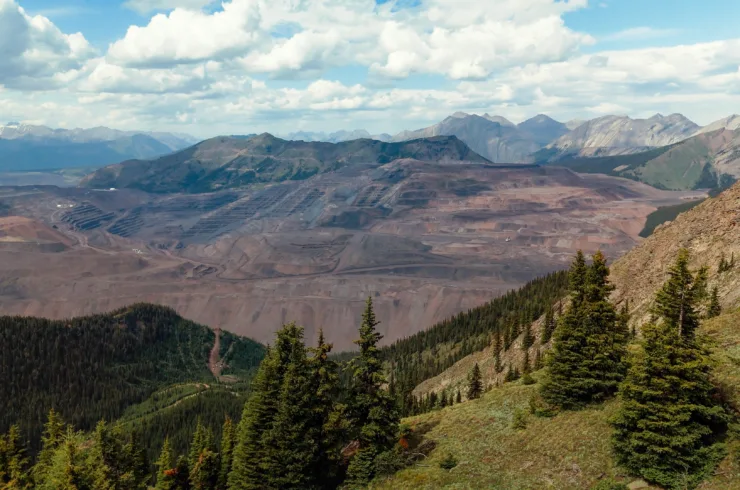


A river monitoring study in BC’s Flathead watershed is giving researchers an inside look into how natural and human-impacted landscapes change over time.
Danie Frevola, a Research Scientist at the Flathead Lake Biological Station (FLBS), has spent three years collecting water samples and surveying aquatic life across both the Elk and Flathead watersheds.
It’s a study of two very different basins: While the Flathead has remained largely undisturbed outside of recent logging, the Elk carries a long history of open-pit coal mining.
By replicating a study originally conducted 15 years ago and comparing results, this project aims to answer critical questions about river health: Is the local water system health improving or declining, and are current land management strategies actually working?

Who speaks for the water?
To answer those big questions, scientists often turn to some of the smallest creatures in the stream: aquatic insects and complex riverbed communities known as periphyton.
“Aquatic insects act as spokespeople for the health of the rivers,” Danie explains. “There are some insects that can only live in clean water, and others that can tolerate polluted water. By identifying bugs in the river, we can determine if the water is clean.”
Looking at these populations over time allows researchers to build long-term datasets, which are necessary for truly understanding a watershed.
“Long term data collection efforts lead to some of the most important data sets out there. It allows us to draw conclusions by interpreting trends, rather than using isolated events to make broad conclusions.” says Danie.

Earlier this month, Wildsight’s Mining and Impact Policy Lead Simon Wiebe joined the team at FLBS to help with data collection for this important research project.
“From this work, we will learn about the health of the water and the aquatic bugs that rely on the river. The scientific data helps all of us understand how human activities impact the rivers, and provides facts to bring to decision makers and the community to advocate for a more sustainable and less harmful footprint in the watershed,” says Simon.

Finding hope amid challenges
Hands-on fieldwork comes with real emotional weight.
“It is challenging to witness environmental harm and degradation at any scale, but seeing the consequences on a scale that impacts such a large area can be really hard on the heart,” says Danie.
“It is staggering what humans are able to do when they put their minds to it,” Simon reflects. “We cause immense damage to landscapes that would’ve seemed invulnerable to our ancestors. But we are also capable of doing great things, especially when we work together. It’s surprising how quickly nature can rebound when given a chance.”
Understanding the damages to the ecosystem and seeing the massively altered landscapes is hard, but it also drives the motivation to protect these spaces. It brings together a passionate community of experts, advocates, and land stewards working toward shared conservation goals.
“It is extremely rewarding to know that I get to work towards protecting and preserving this home we all share. It is such a privilege and is extremely humbling,” concludes Danie.
To learn more about this research project, reach out to Danie Frevola.
Environmental learning in action
Research like Danie’s does more than help scientists understand how watersheds are changing. It gives communities the knowledge they need to recognize what’s happening in their own backyard.
That connection between science, place, and action is at the heart of Wildsight’s Watershed Matters program. Through this program, Wildsight brings high school students into the field to look at aquatic insects and analyze the health of a local water body, much like the research conducted by Danie and her team.


Where hope takes root