

Project length: 5 years
Location: ʔAknuqⱡuk (Golden, B.C.)
Key partners & collaborators: ʔAkisq̓nuk First Nation; Dr. Annette Lutterman (scientific advisor)
Funders: This project is supported by the Columbia Basin Trust, with further funding sought to complete the project
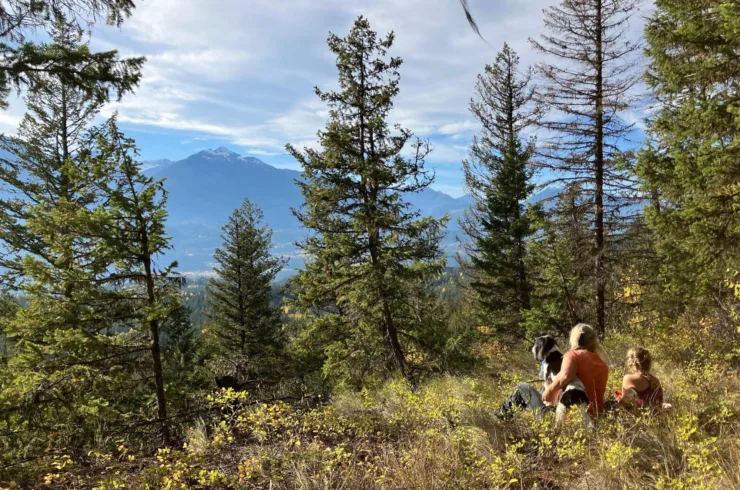
Working with regional partners, including ʔAkisq̓nuk First Nation Land Guardians, Wildsight is leading a five-year project spanning 16 hectares to restore existing beaver dams and enhance beaver habitat on Golden’s West Bench.
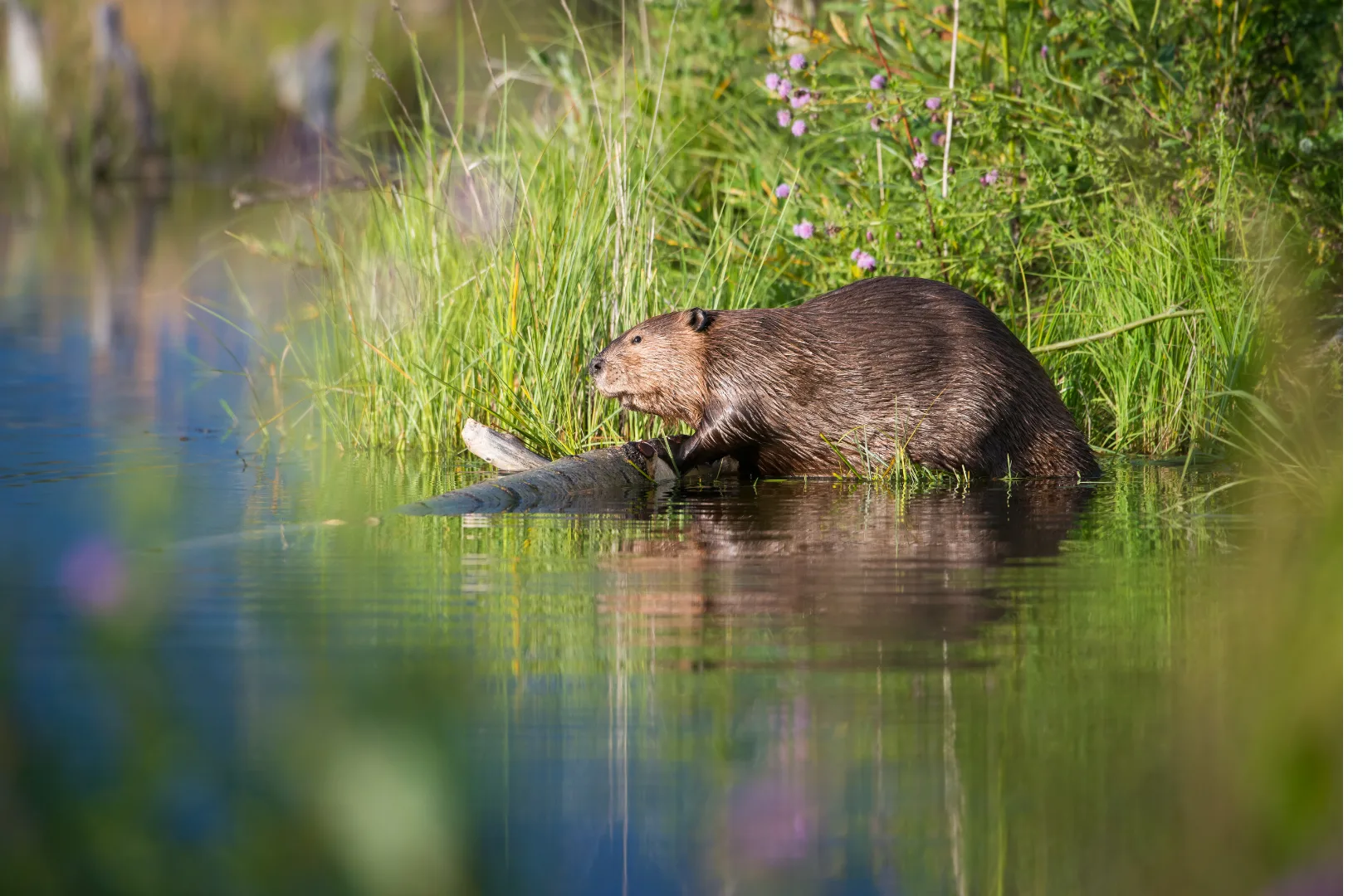
Sina (beaver) populations on the West Bench, above ʔaknuqⱡuk (Golden, B.C.), have been steadily declining for the last 20-25 years. The lakes and wetlands dotted across this landscape were created and shaped by the studious work of what were once significant beaver populations. Today, only a few active beaver colonies remain.
Within Ktunaxa understanding of ʔa·kxam̓is q̓api qapsin (all living things), beavers are integral to the interconnected systems that sustain the health of land and water. As beaver populations on the West Bench decline, ʔa·q̓ankiȼqaʔis sina (beaver dams) are slowly degrading and the landscape is losing its ability to hold onto water.
This water loss, coupled with future climate change, threatens the long-term health and existence of these aquatic ecosystems, and increases wildfire risk to both human and ecological communities.
“Healthier beaver populations increase resilience to natural disturbance, improve water retention critical to freshwater systems, and provide natural fire breaks across the landscape.”Graeme Lee Rowlands, conservation director, wildsight
Project activities
From 2026 to 2030, Wildsight will work with regional partners to manually reinforce existing beaver dam structures built on the outlet of water bodies that have not been maintained since beavers abandoned the sites.
We will also plant beaver preferred foods ʔa·quⱡuk̓pak (willow), mukwuʔk (dogwood), and ʔa·kⱡumak (aspen) in areas where these species are depleted. This work aims to encourage the few beavers remaining on the bench, and potentially others from the valley-bottom wetlands, to repopulate the higher elevation wetlands more quickly.
We gratefully acknowledge the generous support we have received for this project from the Columbia Basin Trust.
Anticipated timeline
The timeline below reflects our current project plan; restoration activities may be adjusted in response to permitting, weather, site conditions, partner input, and lessons learned through ongoing monitoring.
2026 (current and ongoing)
-
- Baseline field surveys to assess beaver presence in the area and inform future monitoring (completed)
- Engagement with First Nations, local community members, stakeholder groups, and volunteers (ongoing)
- Project refinement and permitting ( ongoing)
2027 (planned)
-
- Initial propagation and planting of aspen, willow, dogwood, cottonwood, birch and alder seedlings in spring and fall
- Ongoing monitoring
2028 (planned)
-
- Initial beaver dam repair and trail work
- Supplementary planting, depending on survival of earlier plantings
- Ongoing monitoring
2029 (planned)
-
- Continued repair and reinforcement of beaver dams, and trail work
- Additional supplementary planting, if needed
- Ongoing monitoring
2030 (planned)
-
- Comprehensive survey of project water bodies
- Final project reporting and information sharing
About our scientific advisor, Dr. Annette Lutterman
Annette has spearheaded research on local beaver populations in the Golden region for over a decade, becoming a champion for these amazing animals and the important role they play in the ecosystems around the Upper Columbia.
Through her research, Annette found that Golden’s West Bench was once home to, and shaped by, a large beaver population, yet only a few active colonies remain. This led her to investigate what was happening — “I bushwhacked to a lot of beaver swamps,” Annette remarks.Her research continues today, with many on-the-ground projects to protect and preserve local beaver populations.
Read more about Annette’s work and research, including investigating the impacts of hydroelectric dams in Manitoba and Eastern Canada.
About the ʔAkisq̓nuk Guardians
The ʔAkisq̓nuk Guardians watch over, nurture and help bring healing to ʔamak (land), wuʔu (water) and cultural places that are foundational to Ktunaxa life. Guided by ʔa·knumuȼtiⱡiⱡ (Ktunaxa natural law) and ʔa·kxam̓is q̓api qapsin (all living things), their work combines Ktunaxa knowledge, language and cultural practices with on-the-land monitoring to strengthen ecosystems, cultural revitalization, community well-being, governance and self-determination for future generations.