

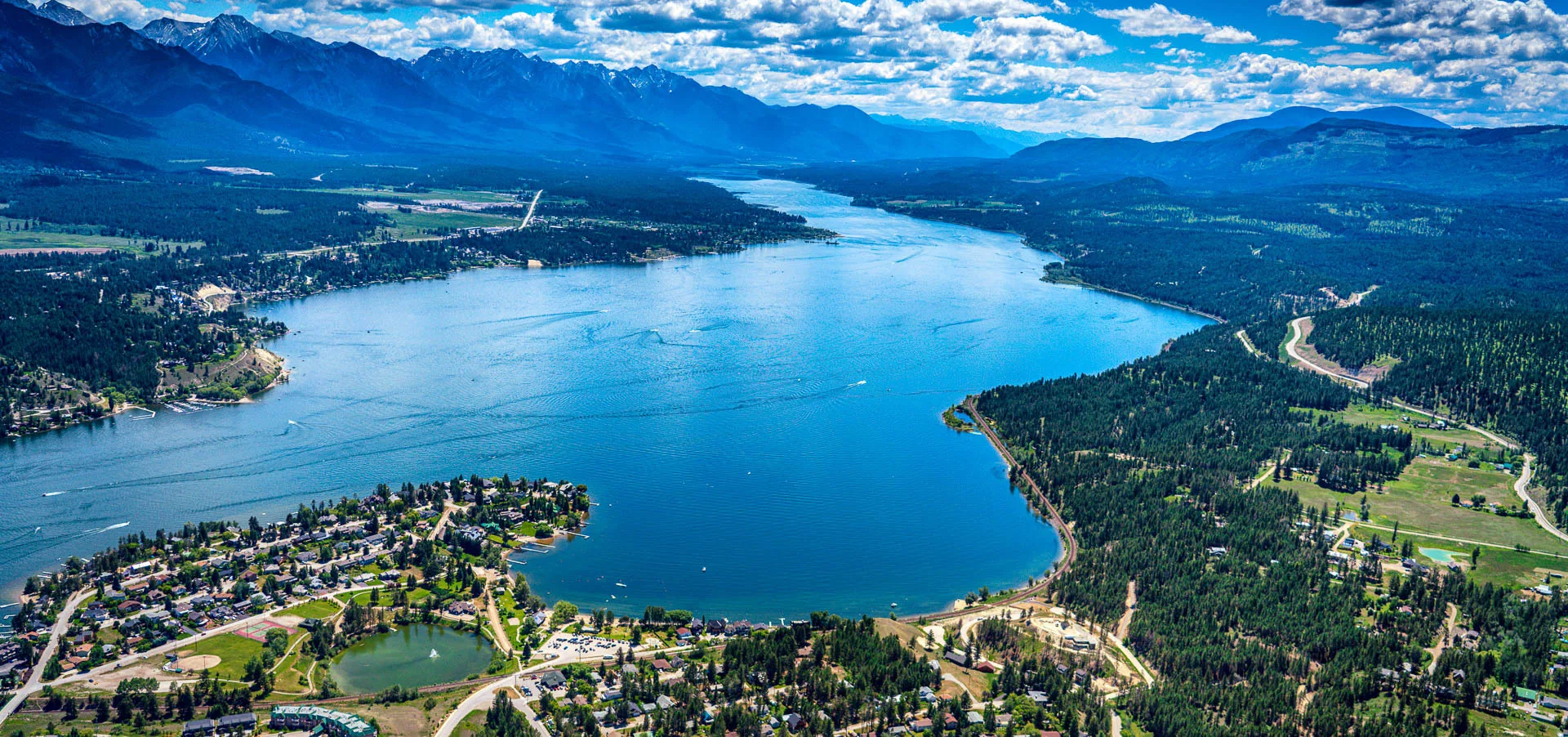
Two of the Columbia Valley’s most popular lakes, Lake Windermere and Columbia Lake, average less than 3.5 metres deep. In lakes this shallow, wakes from boats can reach the lakebed and shoreline before they lose their energy. Wildsight’s new report, Ecological Effects of Wakesports: Implications for shallow lakes, including Lake Windermere and Columbia Lake reviews current scientific and technical evidence on what that means for our lakes, and is now available to read online.
The report proposes a framework that assesses how susceptible each lake is to boating-related effects, and maps whether it has enough deep, open water away from shore to support wakesurfing. Lakes that do not meet these criteria could be considered for lake-wide restrictions, while the same framework can help identify potential wakesports operating areas on others.
How do we match wakesports to our lakes?
Wakeboats use ballast and wake-shaping devices to create waves large enough to surf. But what makes a lake suitable for those larger wakes? Wildsight’s report proposes a way to answer this, lake by lake.
What the evidence shows:
-
Wakesurfing wakes carried roughly six to nine times the wave energy of conventional boats operated at planing speed, when measured 30 metres from the boat’s path.
-
Wakeboats uprooted plants in water 2.7 metres deep, stirred up fine sediment at 4.3 metres, and in another trial their wakes visibly moved aquatic plants and algae 8 metres deep.
-
Lakebed disturbance can reduce water clarity and affect aquatic habitat, while larger wakes can increase erosion risk on susceptible shorelines.
-
On Lake Windermere, wake-surf boats were the most frequently observed boat type, and busy areas exceeded a safe-boating-density benchmark on summer weekends.
What comes next for Wildsight’s wakesports report?
The East Kootenay Safe Wakes Coalition, which includes Wildsight and other local organizations, is asking the Regional District of East Kootenay (RDEK) to lead a coordinated regional application to Transport Canada using the framework. The RDEK is expected to decide in 2027 whether to make this a regional priority.
Wildsight will have more on this in the spring, stay tuned!