

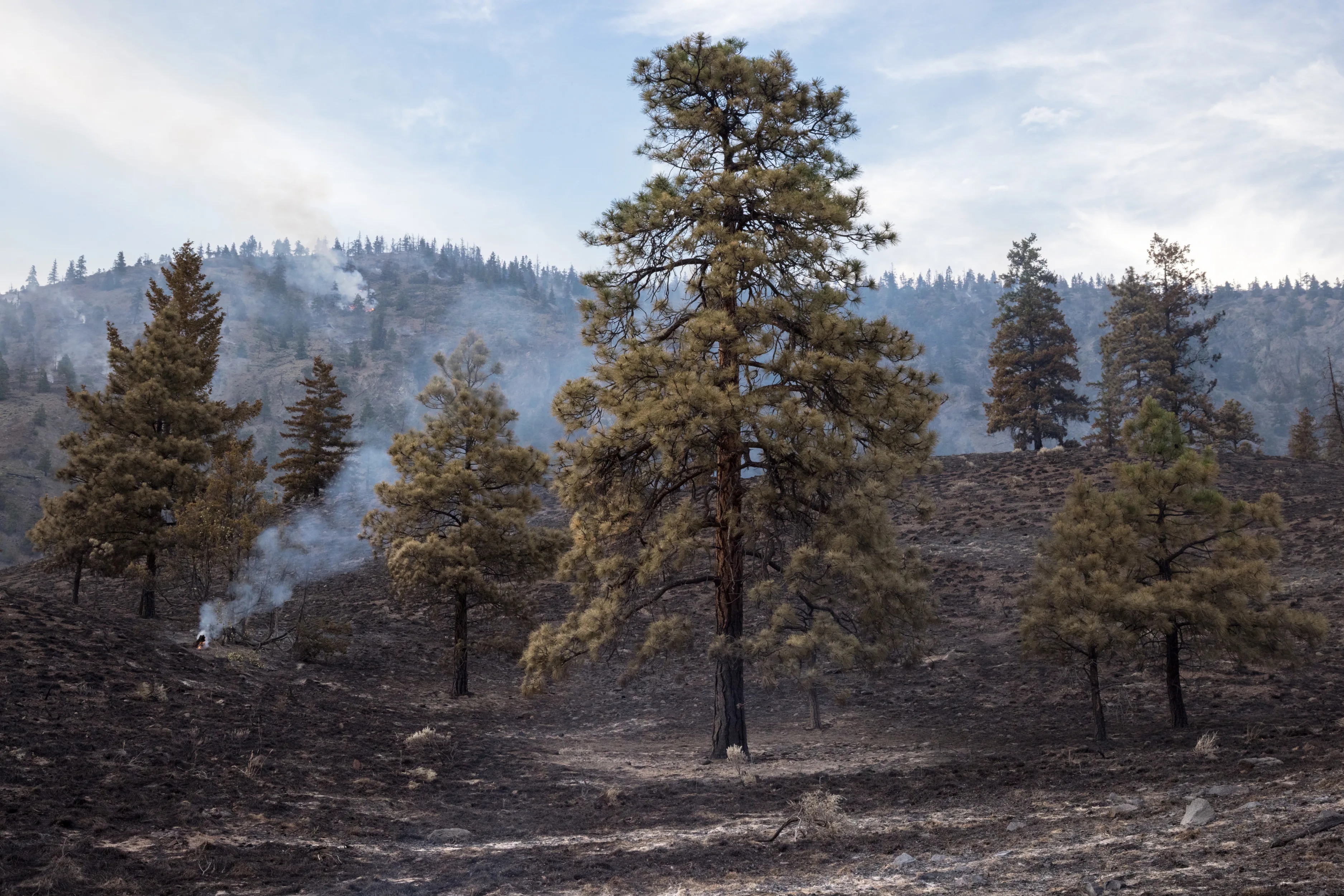
My footsteps sift through ash and scorched soil.
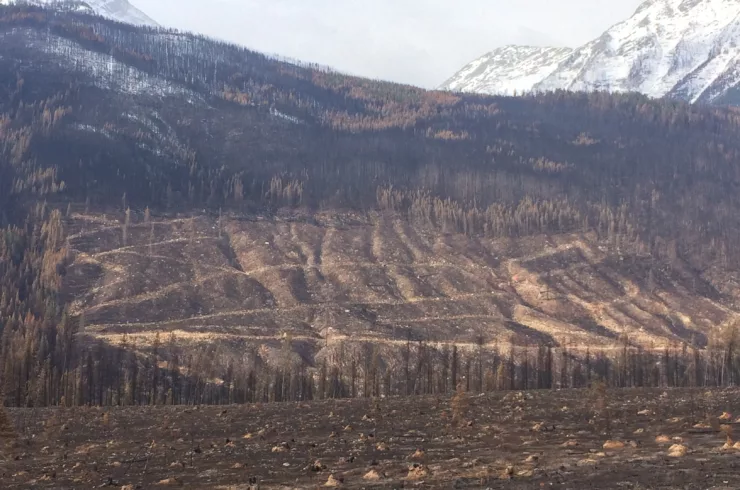
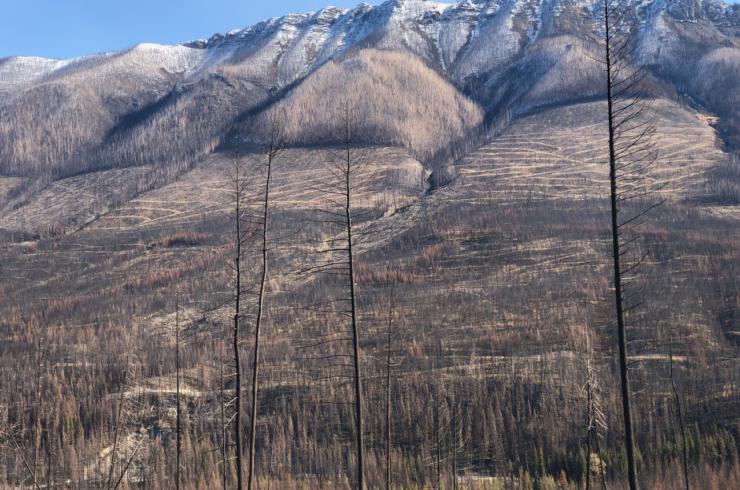
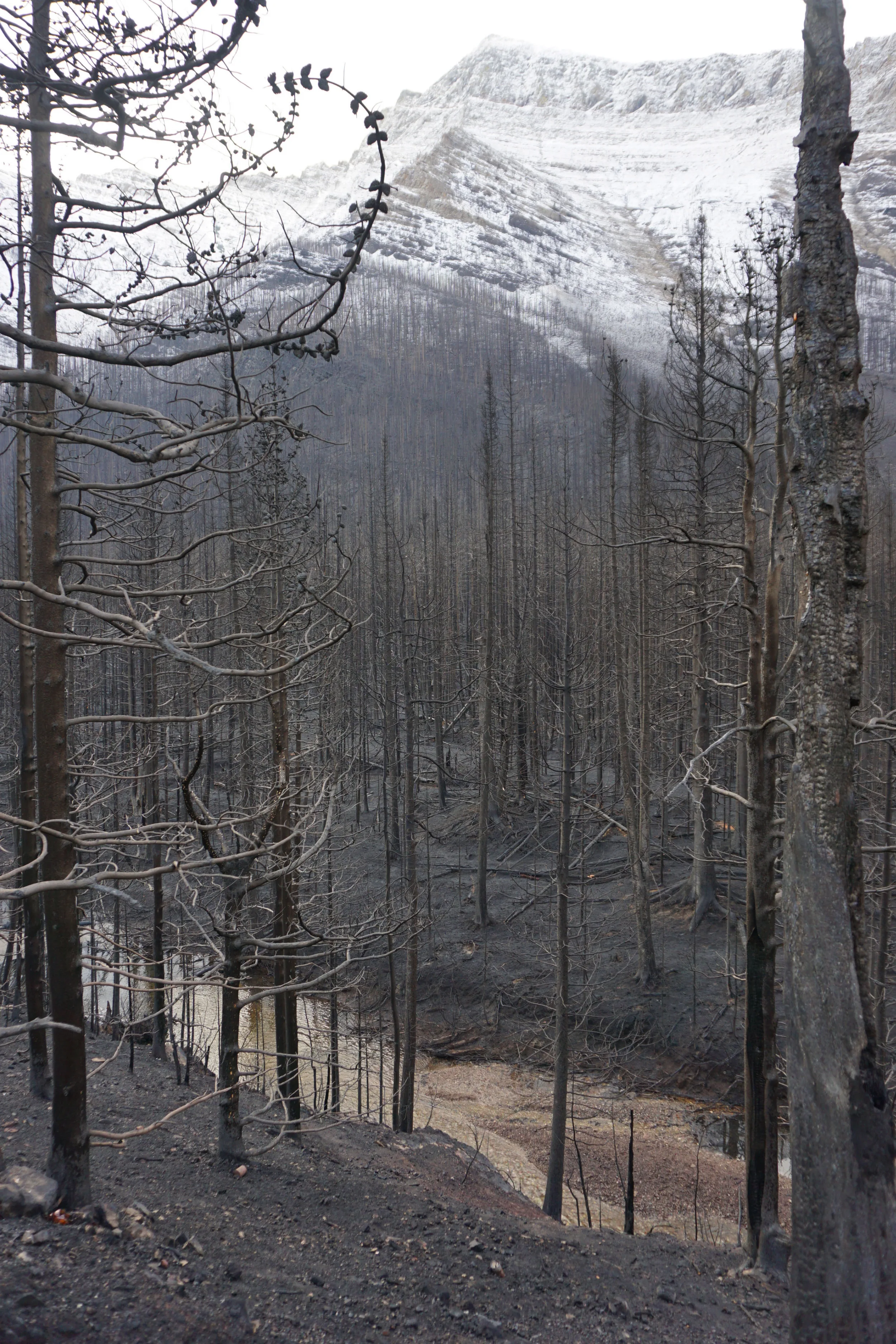
Every tree around me is charred black — bark sloughing off in pieces. A forest after wildfire can feel otherworldly, like a lunar landscape.
Suddenly, a rapid blur of motion followed by high-pitched jackhammering draws my attention to an ashen Douglas Fir. A Black-backed Woodpecker has descended from a nearby tree and is now drilling into the conifer’s trunk in front of me, feeding enthusiastically on the insect larvae taking refuge inside.
At first glance, you might assume this place is dead simply because the trees look it. But a few minutes spent here is all it takes to see that you are in fact witnessing the inception of an entirely new ecosystem.
Until the 1980s,
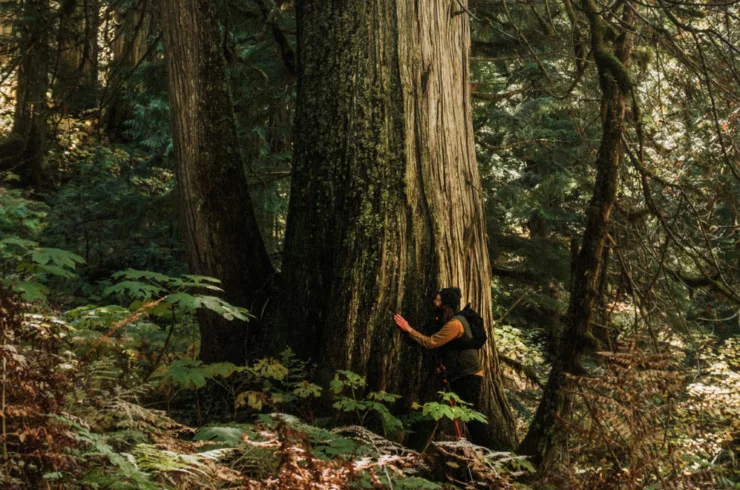
old-growth forests were often written off by policymakers as ‘biodiversity dead zones’.
At the time, the ecology of a forest was valued only for its density of huntable species — and relatively few deer and moose live in old forests.
We now know ‘dead zone’ couldn’t be a more inaccurate descriptor — old-growth forests are among the most biodiverse ecosystems on the planet.
Yet today, successive provincial governments are making the exact same mistake in how they label and manage burned forests.
Now, instead of game, they primarily value forests only for their sellable timber, and once that timber is no longer capable of growing, officials deem it ‘unproductive’ and incentivize it being sent for salvage.
It’s a critical mistake.
Life in a burnt forest is abundant.
Wood-boring and bark beetles are the first to set the stage for an explosive comeback after fire.
Burned trees offer a twofold advantage to insects: dead, dying, and stressed trees’ defense mechanisms are weakened or nonexistent — and they provide an abundance of food and refuge for forage and reproduction. Spectacularly well-adapted, some insect species locate forests immediately after a burn using specialized sensors that detect infrared radiation or smoke. Others’ olfactory systems pick up on the chemicals released when trees burn — like monoterpenes from scorched resin.
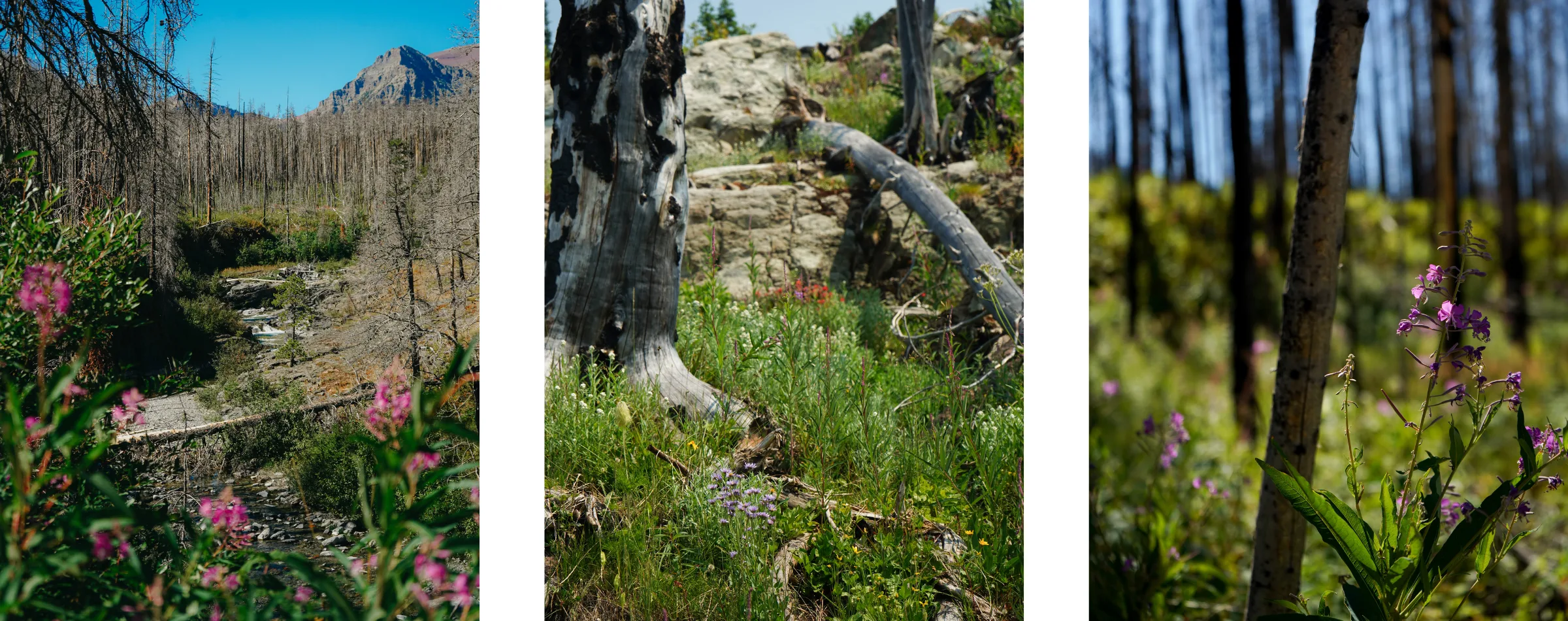
This healthy and growing population of insects draws a plethora of wildlife into burned areas, kickstarting a whole new cycle of renewal. From woodpeckers and owls to ungulates and bears, wildfire is a critical step in the regeneration of many forests.
Woodpeckers pave the way for many other species.
They excavate cavities for their nests which are in turn used by other birds and small mammals for years afterwards. This single act helps repopulate a forest after it has been burned.
Here are two species that not only thrive in burned forests, but depend on them for survival.
Black-backed Woodpecker
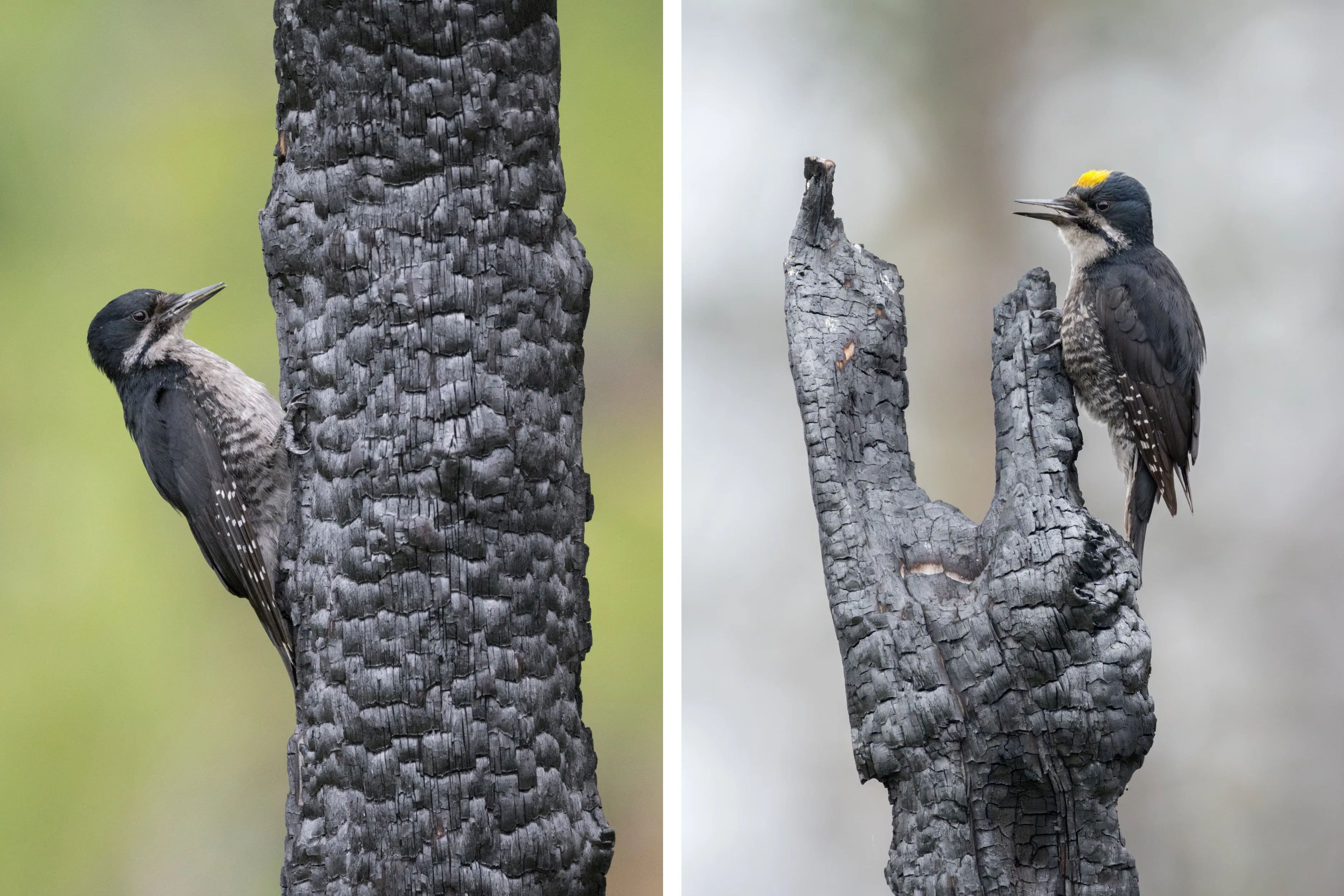
These birds are the poster children of burned forests, having evolved their black-backed colouration solely to camouflage against charred trees. They often locate forests just weeks after they’ve burned to feed almost exclusively on the beetle larvae that explode in numbers after wildfire. Black-backed Woodpeckers primarily nest in wood-burned cavities, and will survive on wood-boring beetles and larvae for their entire 5-8 year post-fire insect population cycle.
Canada is home to more than 90% of the global breeding population of Black-backed Woodpeckers, and as such, the federal government identified them as a priority for conservation in 2013. However, since then, little action has been taken to obtain data or create strategies to monitor their numbers.
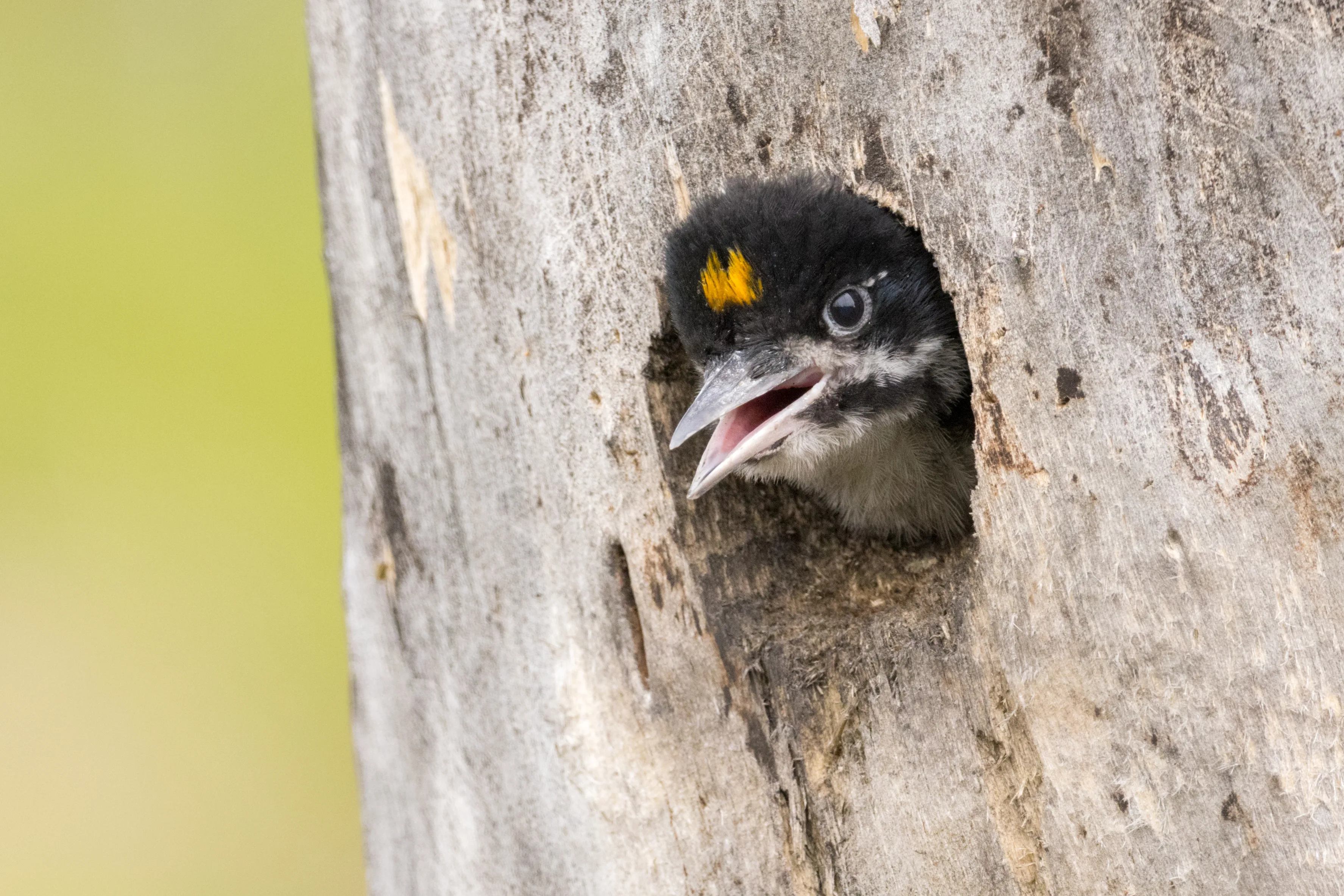
A 2018 study projected an overall decline of 81-92% in Black-backed Woodpecker productivity by 2100, due to climate change and forest harvesting. Salvage logging destroys the habitat these birds need to forage, nest and survive.
Given that the vast majority of the world’s Black-backed Woodpeckers live here, Canada plays a huge role in balancing global populations of this incredibly specialized species.
American Three-toed Woodpecker
Obvious relatives of their larger Black-backed cousin, Three-toeds forage in a very different way — typically flaking or sloughing off bark from tree trunks, rather than excavating right into the wood.
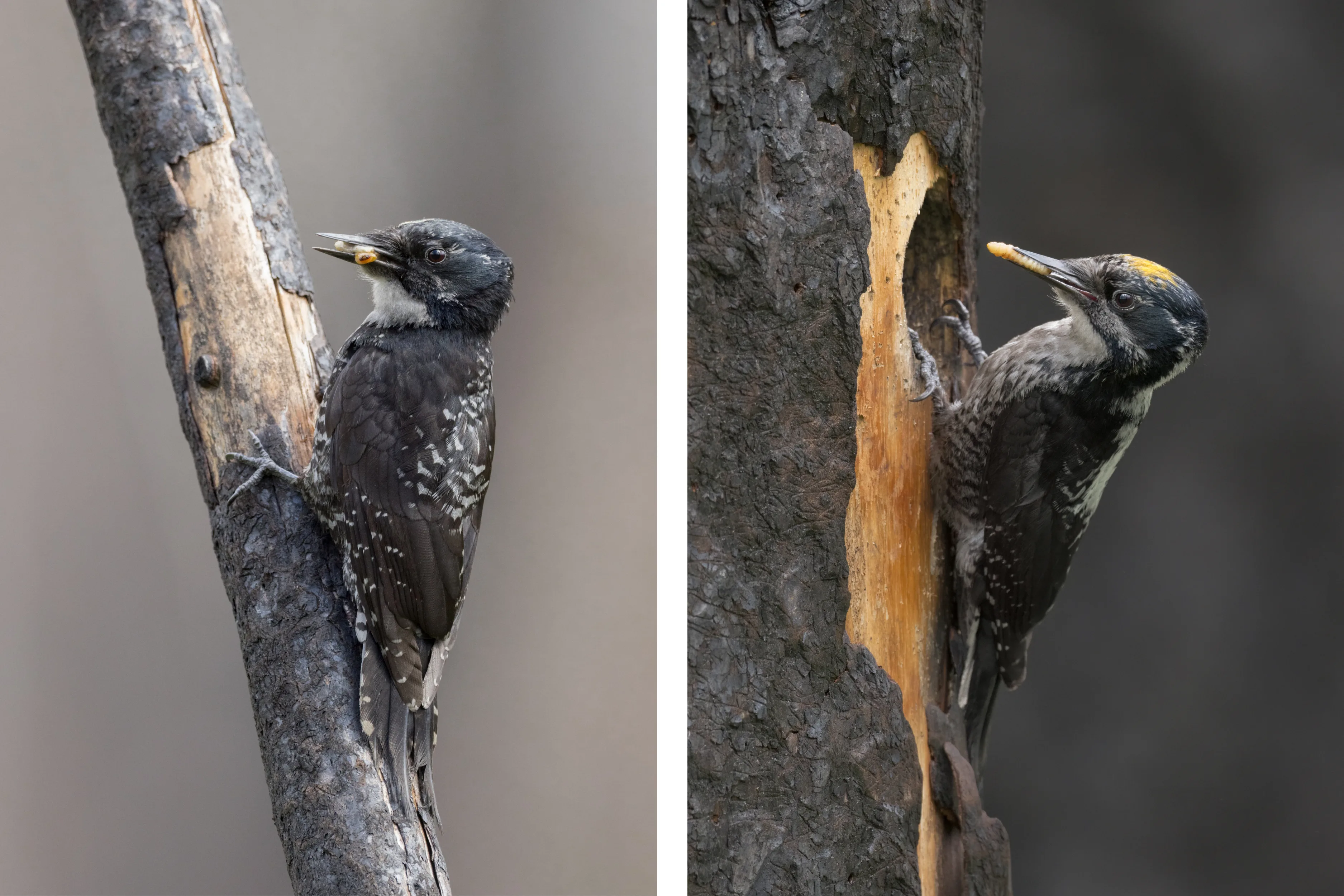
Most woodpeckers have four toes — two in the front, two in the back — but this species (as well as the Black-backed) evolved to boast only one hind toe. It is believed that this supports a more vertical rigid stance, enabling the little birds to lean back further and hammer trees with more power than they would otherwise. This is a brilliant adaptation to foraging in dead and burned trees, which are typically harder and more brittle.
Three-toed Woodpeckers are strongly tied to naturally disturbed forests because of their abundance of snags, dead and dying trees necessary for the woodpecker’s feeding and breeding. These birds prefer mature forests, and because Three-toeds largely do not inhabit areas that have been logged, salvage logging and other types of deforestation threaten their survival.
Data is lacking for Three-toed Woodpeckers due to their elusive nature, but they are still listed as a priority species for conservation — as Canada contains 78% of the global breeding population.
Mountain Bluebird
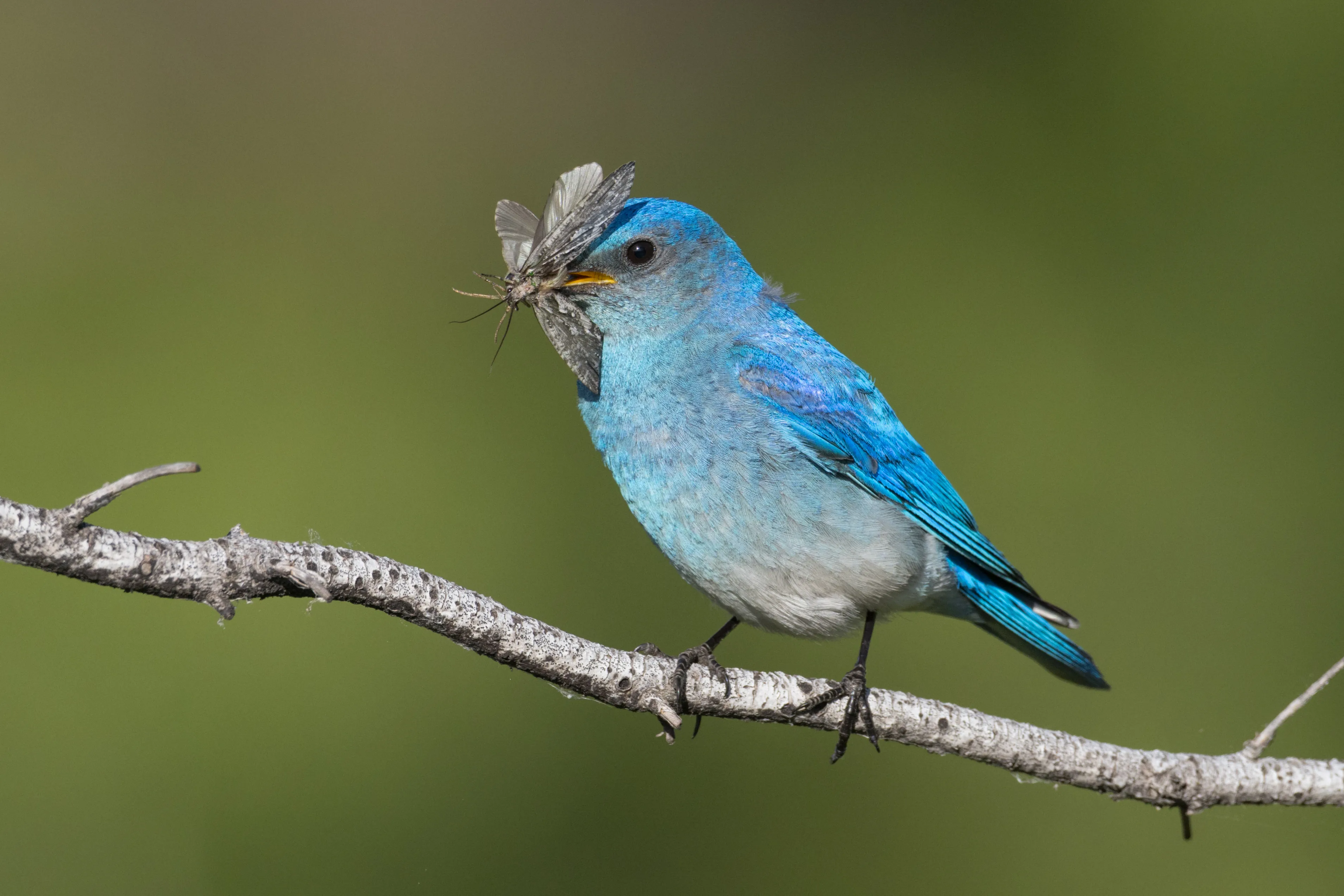
Although these eye-catching birds can be spotted in a range of habitats, they frequently seek out burned areas. This is primarily for the abundance of woodpecker-created tree cavities — the foundation of most Mountain Bluebird nests.
Competition is fierce for these cavities. Mountain Bluebirds must vie against House Wrens, Nuthatches, Western Bluebirds and a whole host of other birds, highlighting why it’s so important to leave burned trees standing.
Mountain Bluebirds benefit from the open habitat created by fire, as well as the plethora of insects and larvae that occur after the fact. Grasshoppers, in particular, are a delicacy for Mountain Bluebirds and their protein-hungry nestlings (these insects move in shortly after wildfire due to the hot, dry conditions that aid in their reproduction).
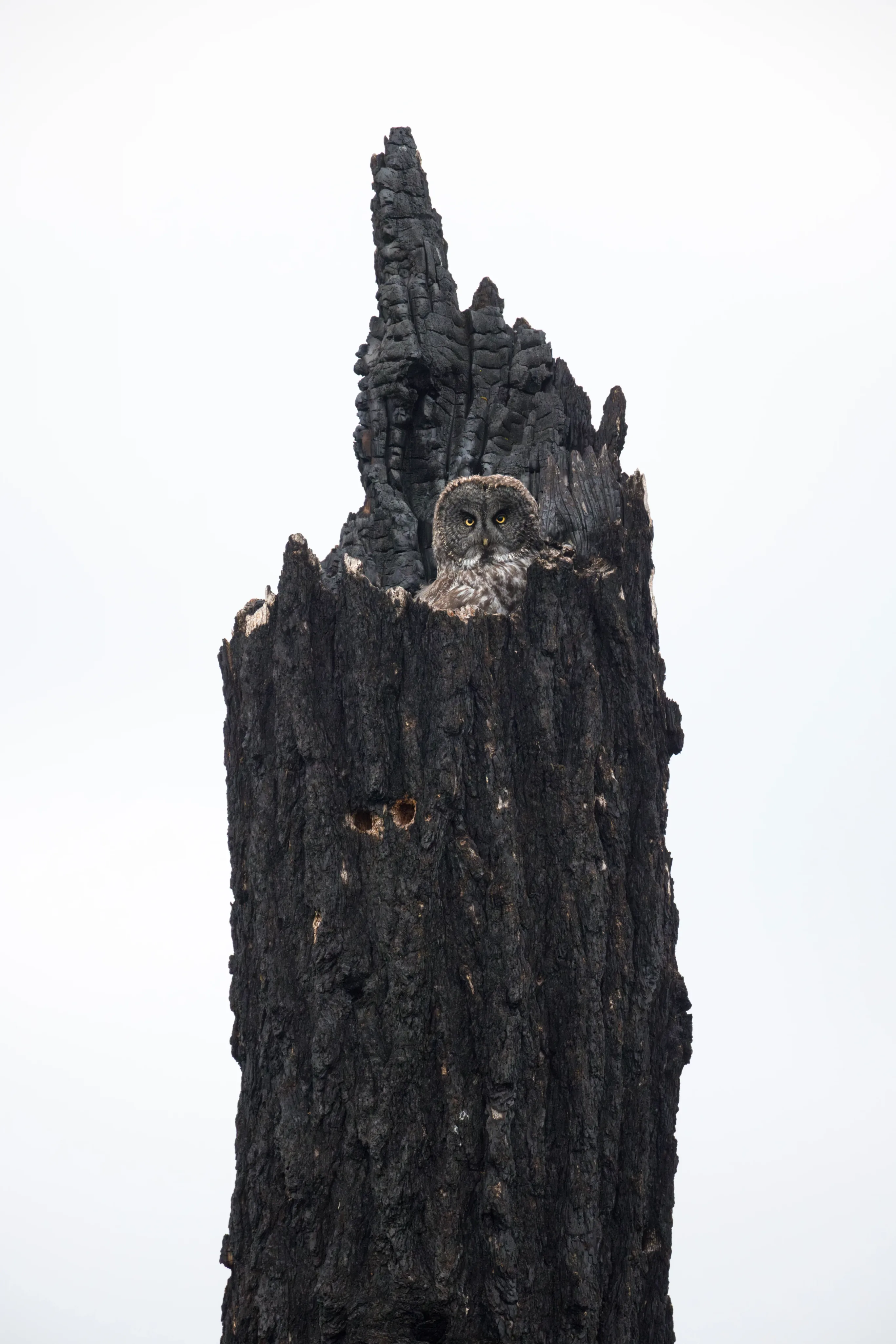
The Douglas-fir pictured was flagged by a forestry professional as a Wildlife Tree before the area surrounding was salvage-logged. This individual’s diligence allowed this fir to become a vitally important nest tree the following year. It should be noted that leaving trees like this is only considered a ‘best management’ practice and is not mandatory — meaning trees like this are often disregarded.
Great Gray Owl
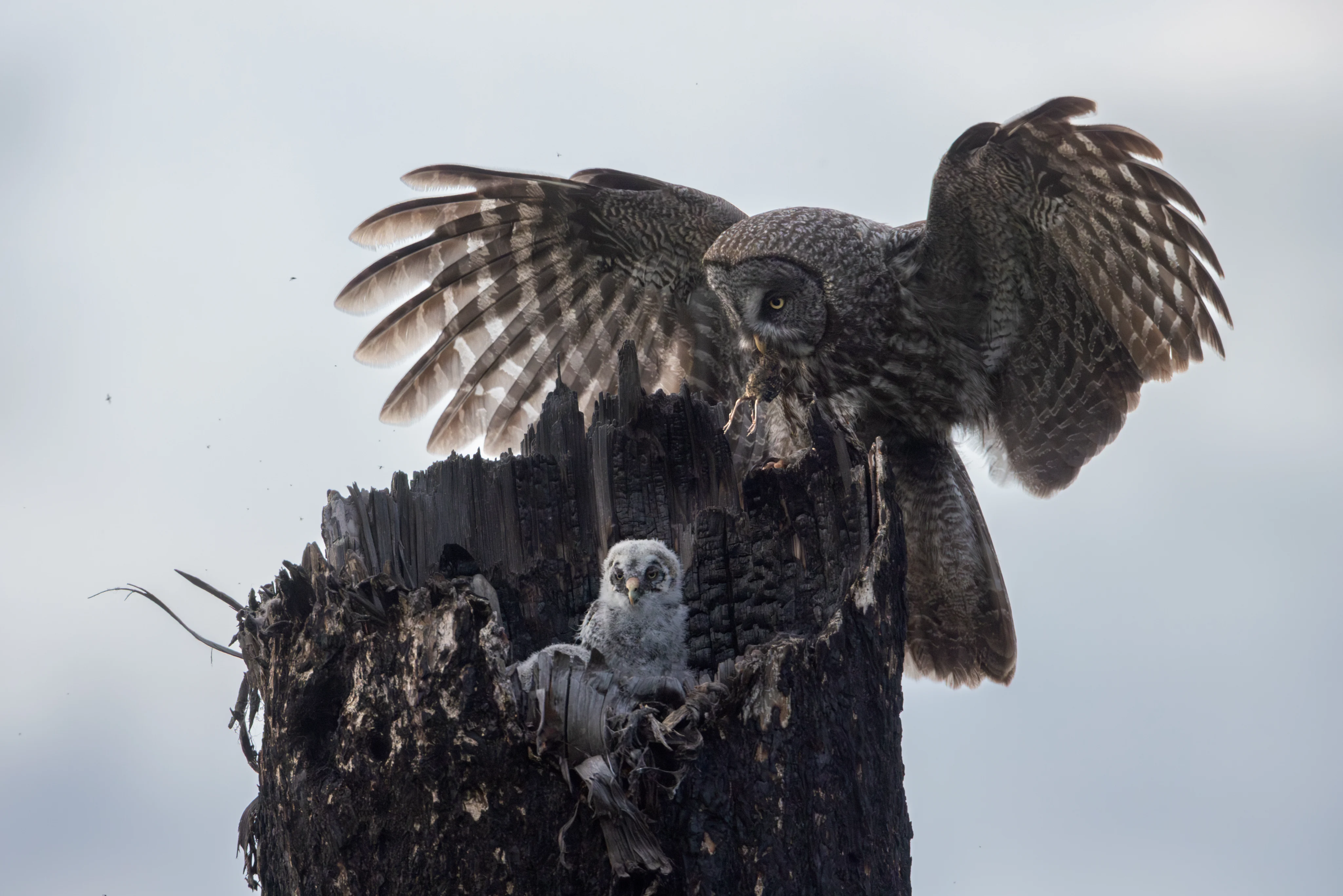
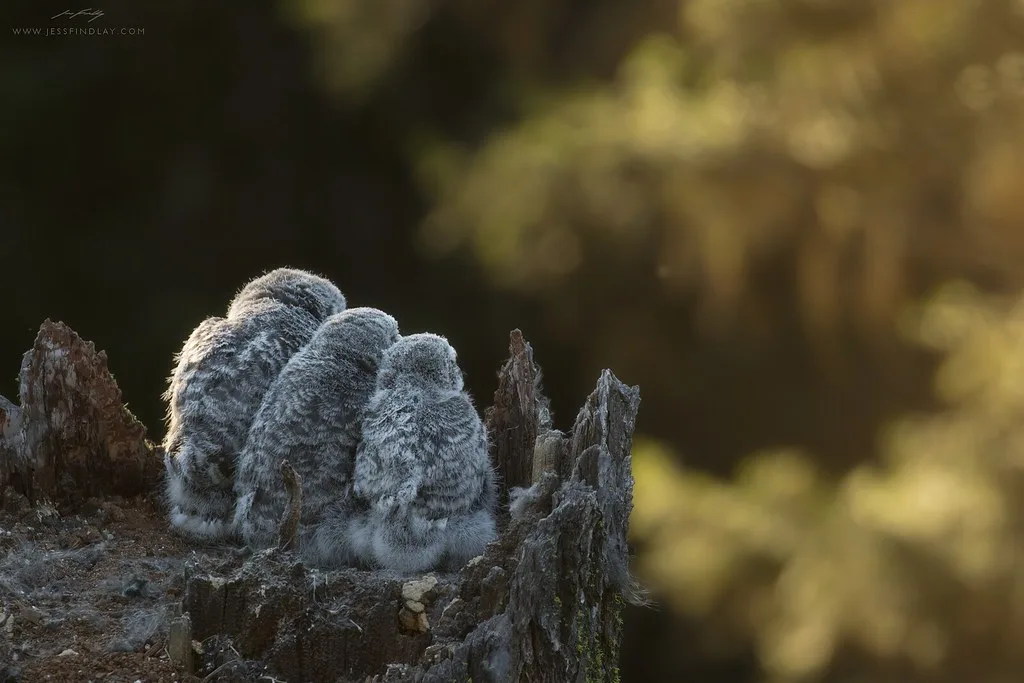
Great Grey Owls thrive after wildfires — frequently inhabiting burn areas for as long as two decades post-fire. Great Greys generally nest in broken tree tops such as this one, which become readily available after fire kills the large trees that break and provide this type of nest.
These owls select nesting sites in open areas in the forest where they can more easily hunt their prey: small mammals. Burned forests enhance conditions and foraging for rodent populations, while simultaneously providing easy hunting grounds for owls where rodents aren’t buried under thick understory.
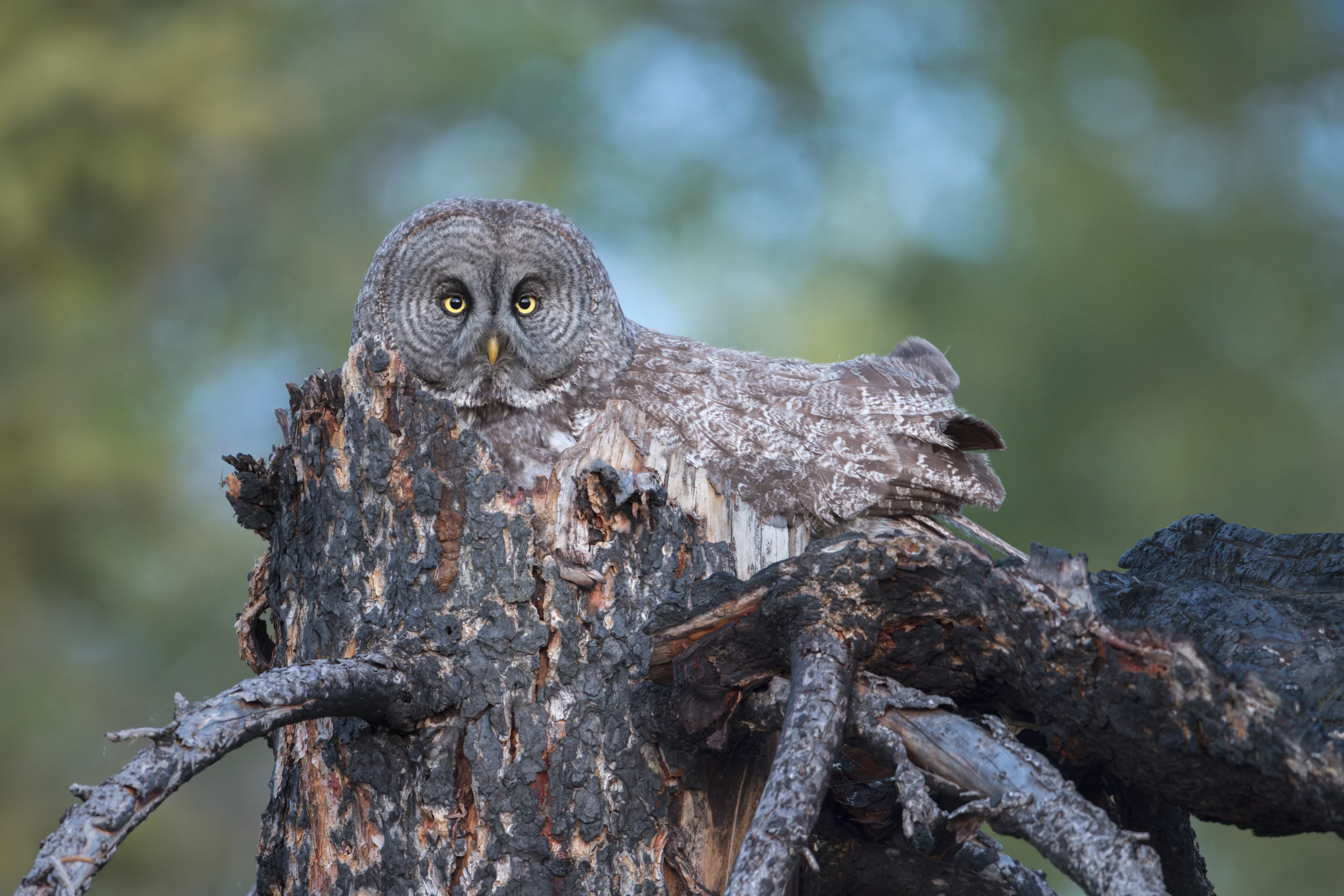
A 2019 study by the American Ornithological society found that in California, where Great Grey Owls are endangered, populations grew significantly in the first three years after a massive wildfire.
Ecosystems pay the price for sending burned forests to the mill.
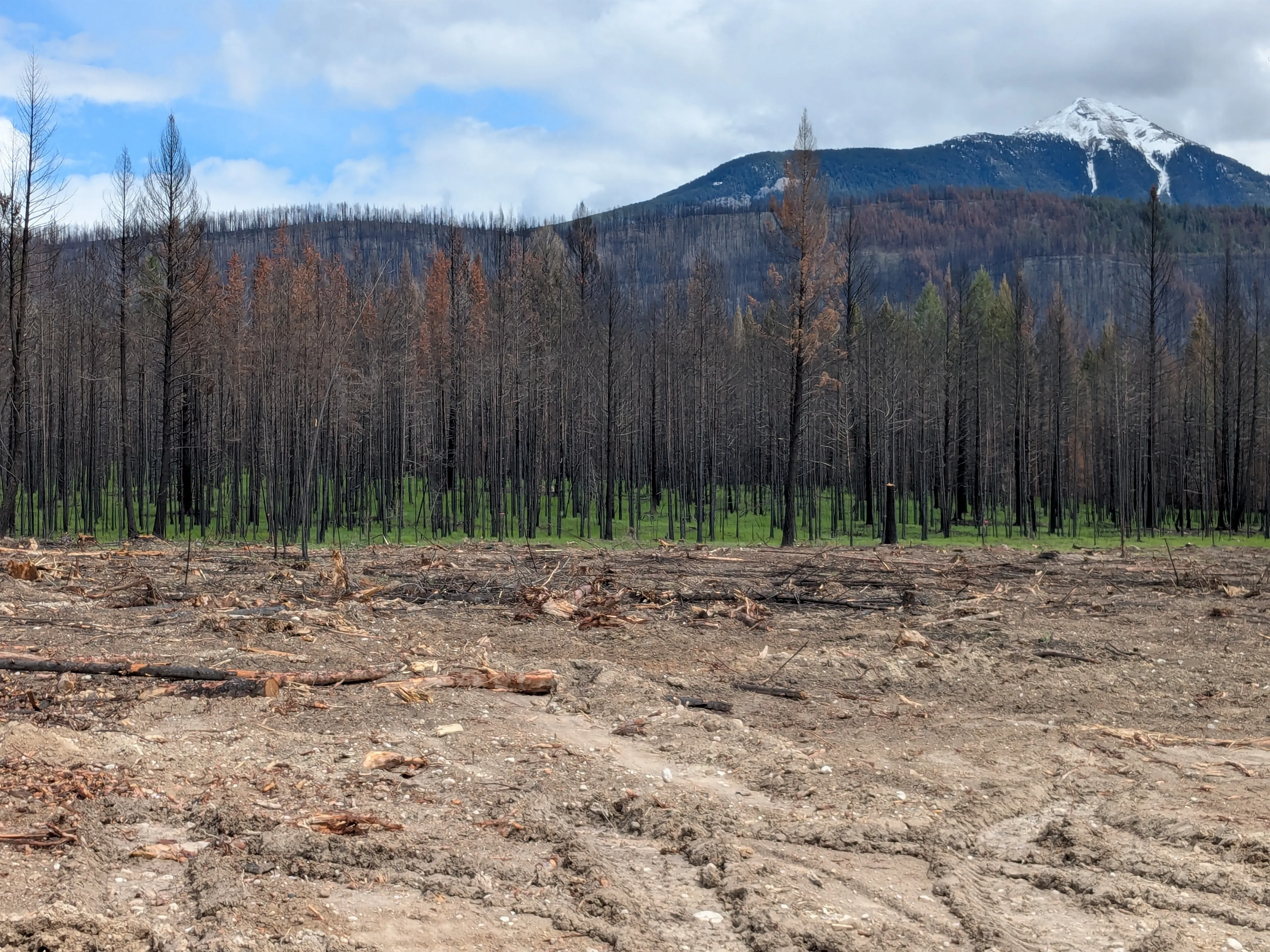
Many provinces, including British Columbia, incentivize post-wildfire salvage logging through reduced stumpage rates — the fee that businesses and individuals pay to harvest timber from Crown land. After the 2023 wildfires, B.C. issued salvage cutting permits for 28,000 logging trucks worth of wood.
While salvage logging might have short-term benefits for timber supply, science indicates that large-scale industrial salvage logging impedes ecological recovery and makes our province less resilient in the face of climate change.
Life in a burnt forest is anything but dead.
It teems with life — quietly, unassumingly building more complexity than it had before. Most species in our province evolved with, and rely on, natural disturbance such as wildfire. It is imperative we pay more attention to the life that dwells within our charred forests — rather than writing off their homes as nothing more than salvage.