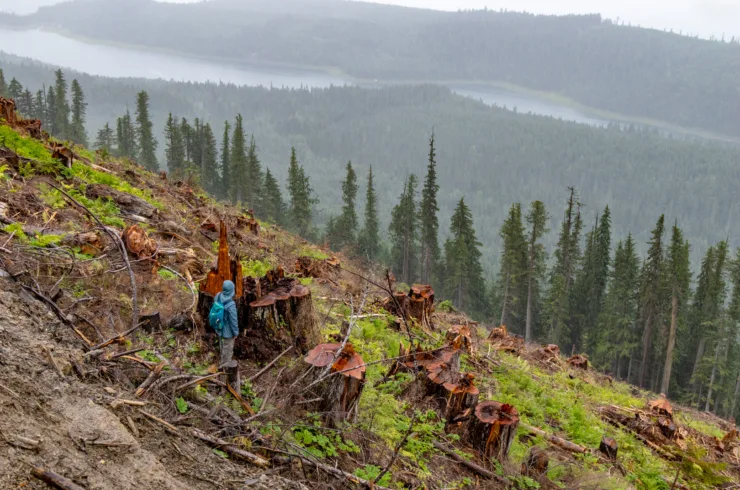
Zincton All-Season Resort is a proposed skiing, hiking, sightseeing and mountain biking operation slated to be built within a critical wildlife corridor in the Selkirk Mountains. The British Columbia government has refused to require a full environmental assessment. Wildsight is challenging that decision in court.
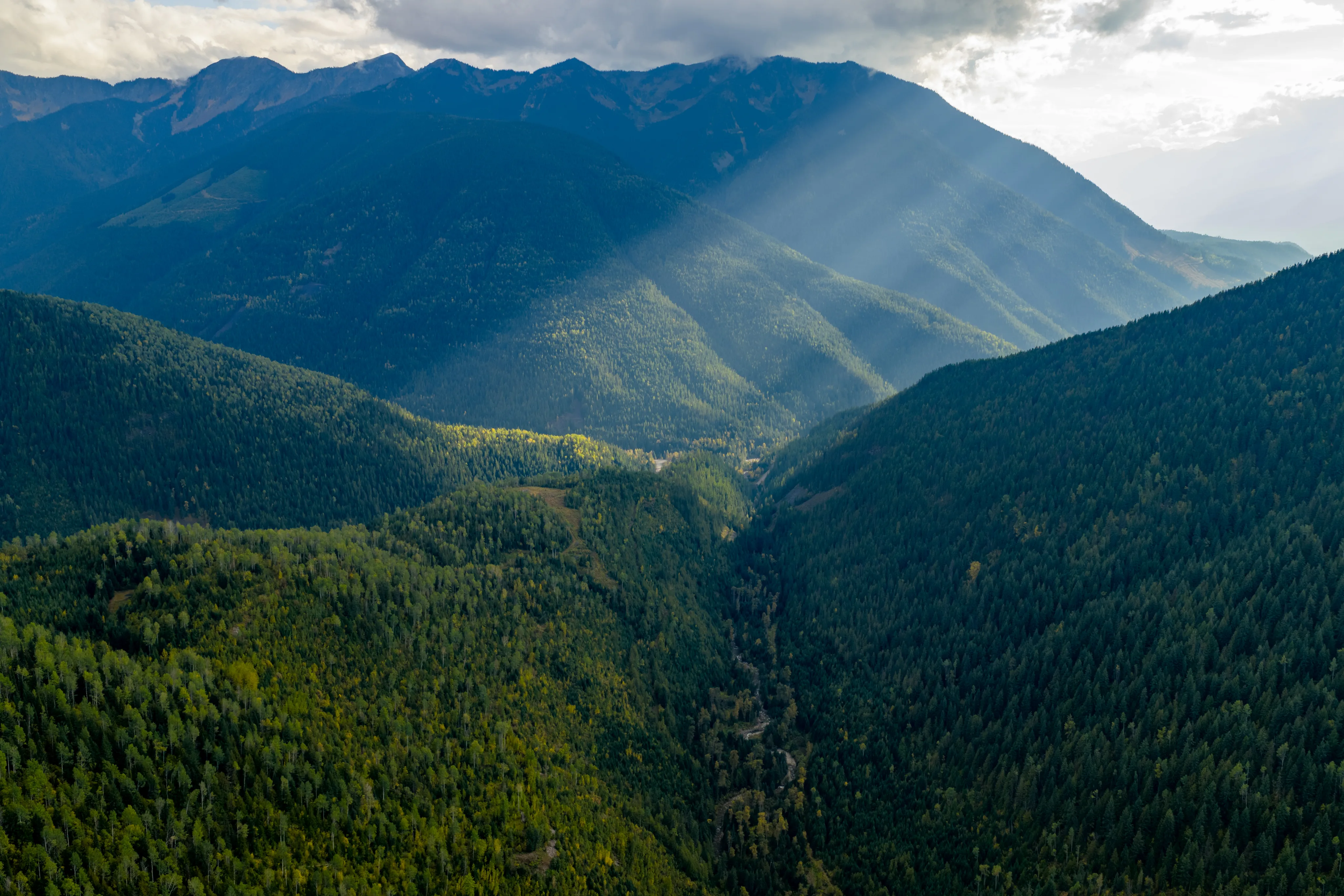
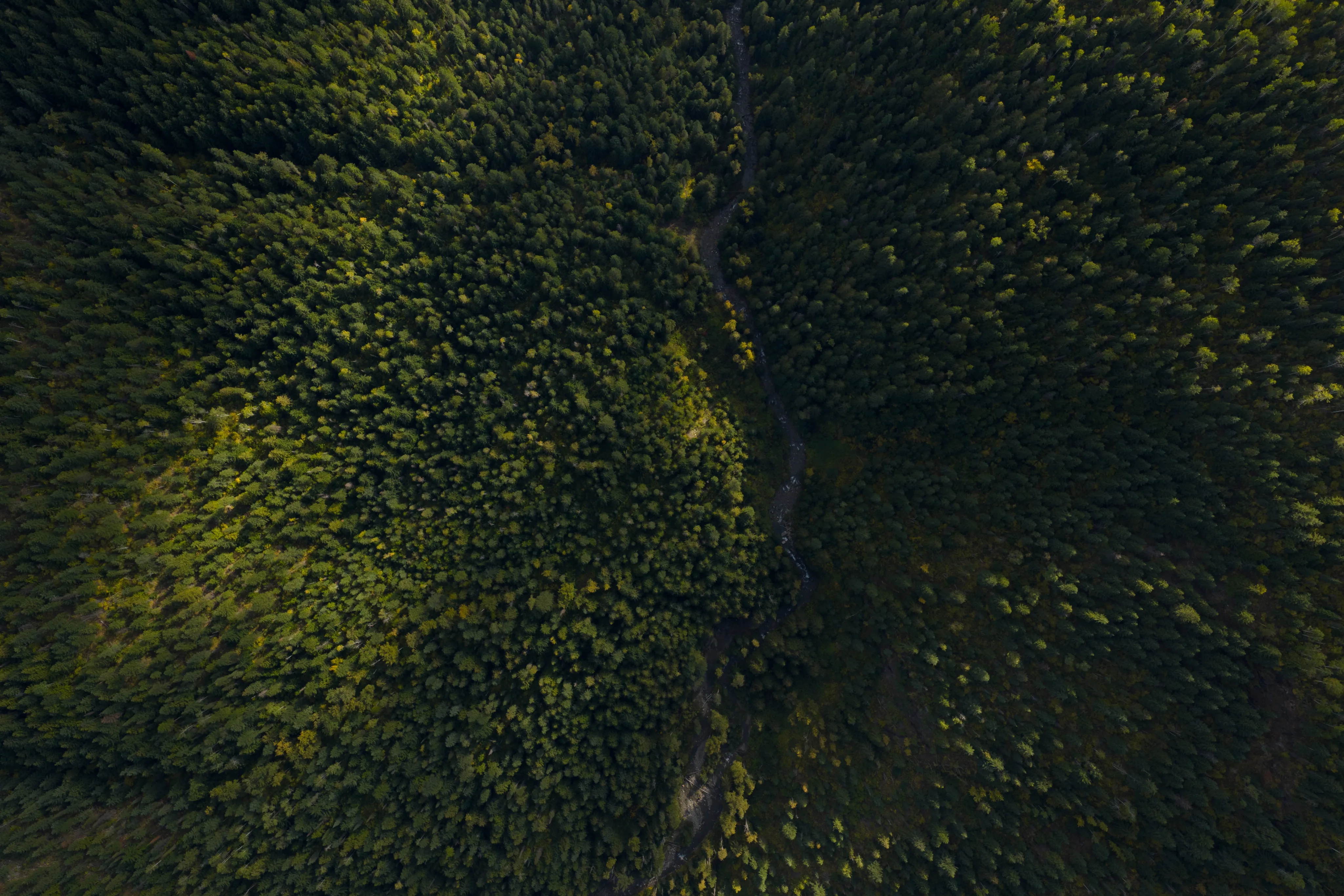
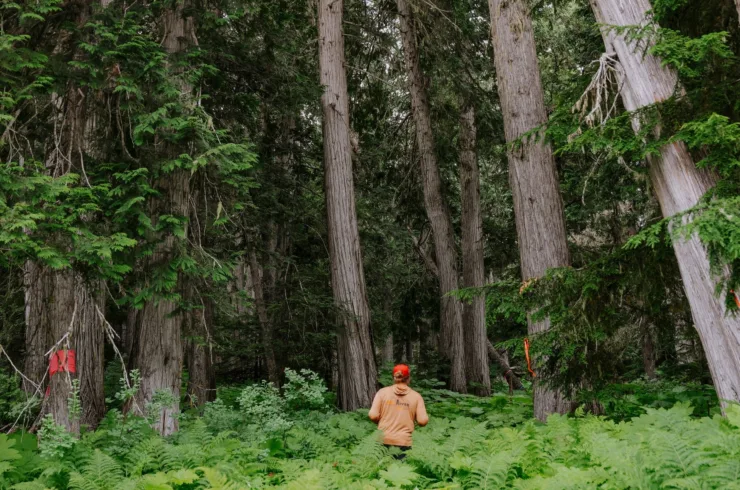
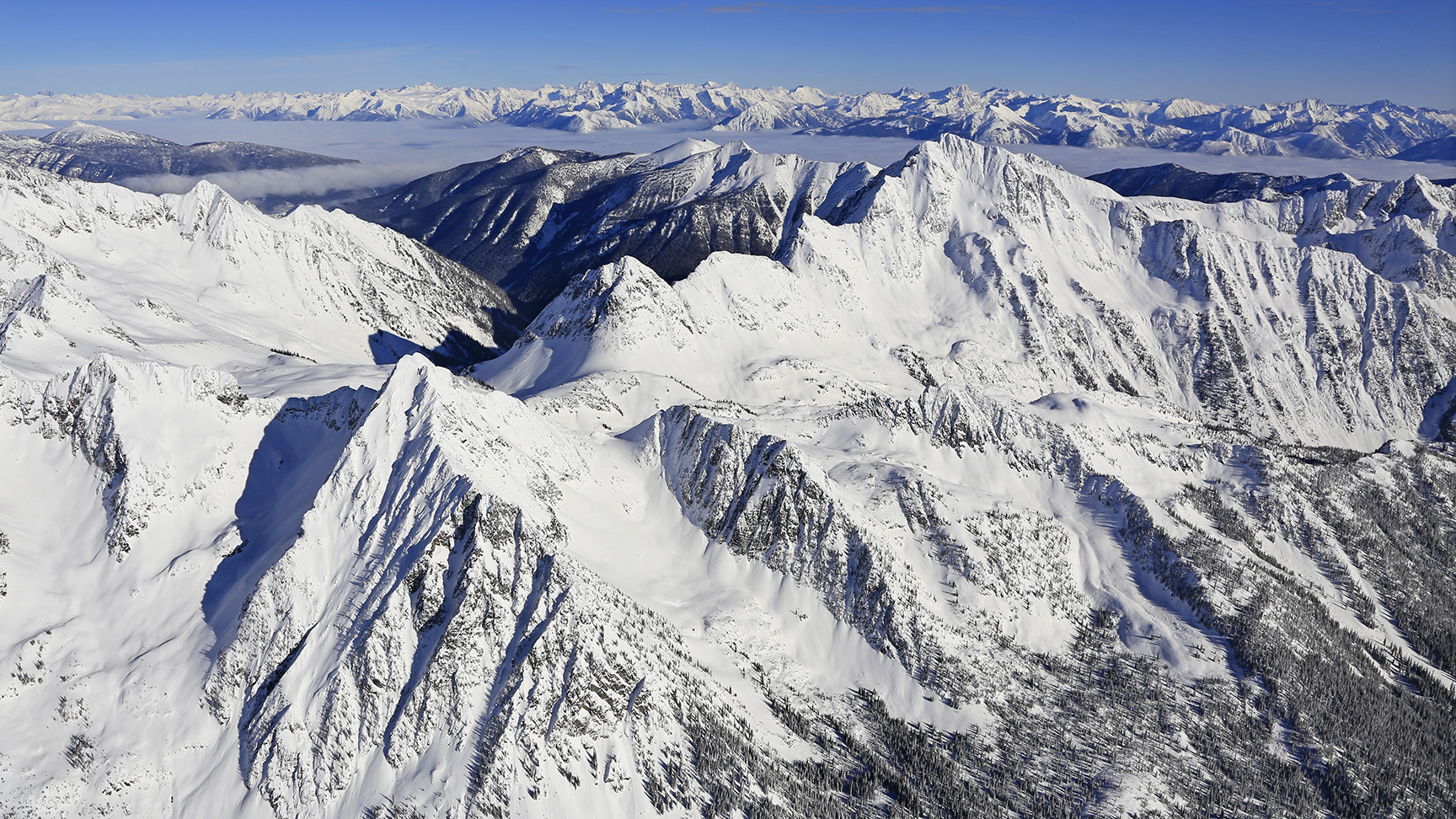
BC’s central Selkirk Mountains are known for soaring peaks, cool wetlands, clear creeks, sprawling subalpine valleys and untouched old-growth forests. These ecosystems provide invaluable habitat and passage for wildlife, and are beloved by locals and visitors alike.
First Nations have connections to this area spanning back thousands of years.
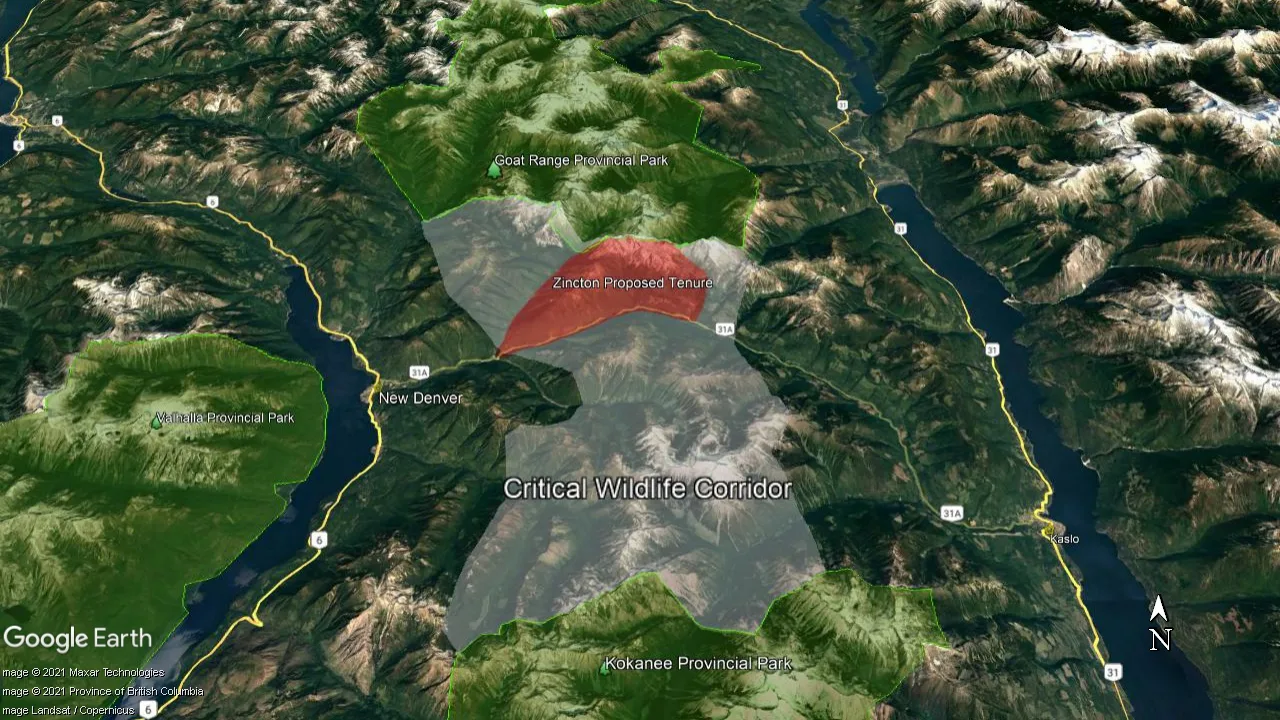
The proposed resort would cover 55 square kilometres of private and Crown land in the Goat Range of the central Selkirks, between the small West Kootenay towns of New Denver and Kaslo. In winter, it would be a hybrid backcountry and lift-serviced ski resort with the capacity to host 1,200 people a day. In summer, it would attract hikers, sightseers, overnighters and mountain bikers.
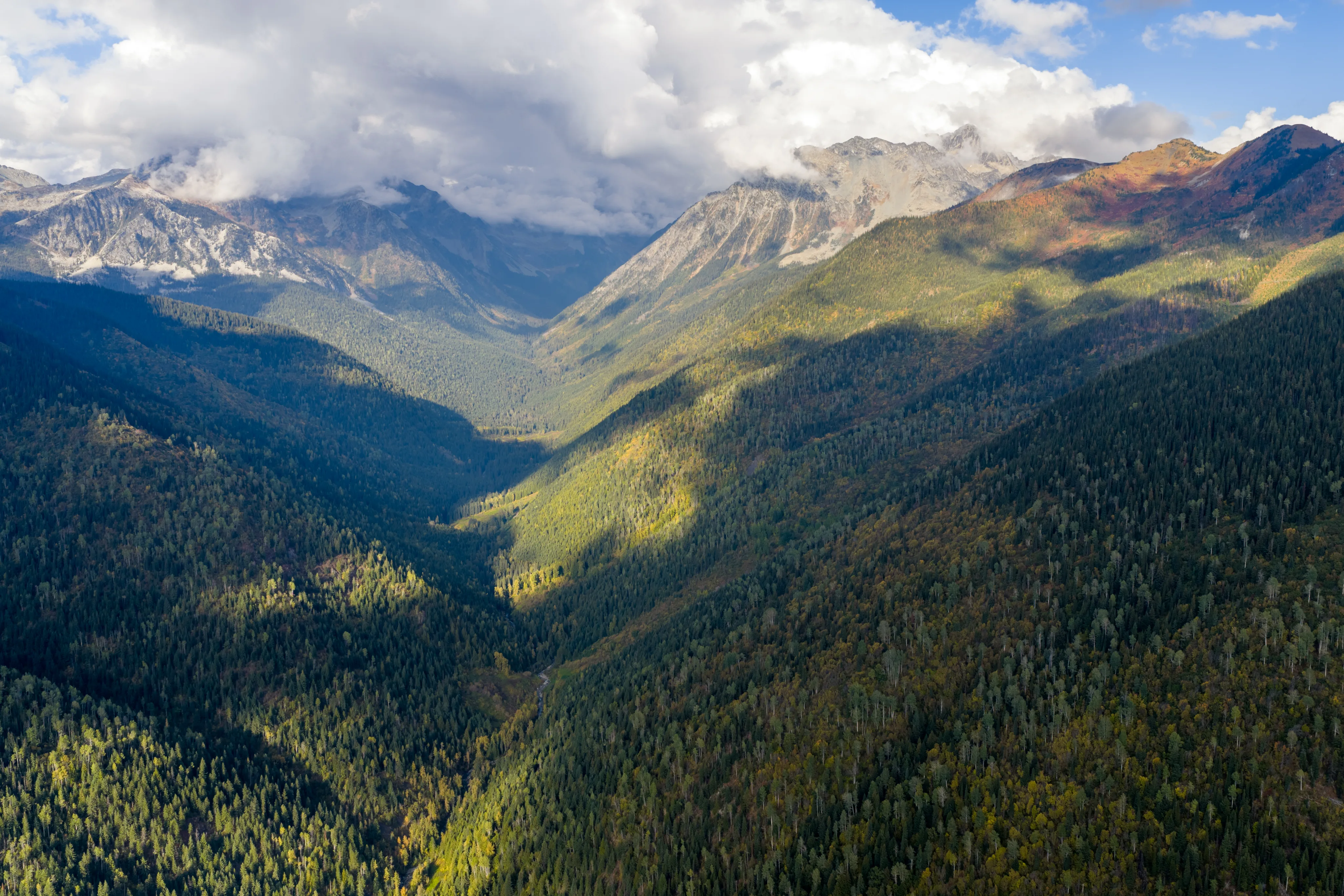 Overlooking a valley of old growth and untouched riparian areas, where lift-serviced ski terrain for Zincton is proposed. Kane Creek, Mount Whitewater. Photo: Siobhan Williams
Why no Environmental Assessment despite obvious risks?
Because of the project’s scale and risks, Wildsight, First Nations, local governments and many others argue the proposal should undergo a full environmental assessment. This would involve detailed studies, technical analysis, consultation with First Nations and the public, as well as consideration of the cumulative environmental effects resort operations would have over time on wildlife, the local ecosystem and adjacent communities.
Under BC’s current legislation, bed count is the determining factor for whether a resort is required to have an environmental assessment — little to no consideration is given to the overall project footprint or impact. Resorts containing 2,000 beds or less do not automatically trigger an environmental assessment. With 1,700 planned beds, Zincton falls below this threshold. Due to the project’s scale and location, Wildsight has asked the BC Environmental Assessment Office to require one anyway.
We join the Ktunaxa Nation, Sinixt Confederacy, Shuswap Band, Okanagan Indian Band, Skwlāx te Secwepemcúl̓ecw, Village of Kaslo, Village of Nakusp and Regional District of Central Kootenay in making this call.
Why challenge the BC government in court over Zincton?
In July, 2025, the Province denied requests for Zincton to undergo a formal environmental assessment, instead sending the proposal to the Ministry of Tourism’s Mountain Resorts Branch for review. This government agency was set up to facilitate resort development; its review process is not equivalent to an environmental assessment.
Wildsight is now seeking a judicial review of the Province’s decision to not require an environmental assessment. In December 2025, our lawyers filed a petition in the Supreme Court of British Columbia arguing that the minister of Environment and Parks’ decision was unreasonable. The case will be heard in court in late fall 2026.
If Wildsight wins, it could mean rigid thresholds like bed count could no longer be used to skip an environmental assessment, and a project’s broader scope would have to be considered.
How is Zincton a bad idea for wildlife?
The proposed resort is sandwiched between four provincial parks: Purcell Wilderness Conservancy to the east, Goat Range to the north, Kokanee Glacier to the south and Valhalla to the west.
Zincton’s development would bring thousands of people and permanent infrastructure into a critical movement area for animals like Grizzly Bears and Wolverines.
Movement corridors are vital to the survival of species — they ensure that young animals can disperse, that there’s adequate territory and food supply and that genetic mixing can occur. The wilderness areas around the proposed Zincton resort are home to source populations that supply Grizzlies and Wolverines to the wider region. In addition, the area itself comprises important habitat for Mountain Goats, Western Toads and other sensitive species.
How will Zincton impact Grizzly Bears?
If Zincton proceeds, it would isolate an already vulnerable population of Grizzly Bears from larger populations to the north, potentially contributing to local extinctions over time. Based on estimates by Grizzly Bear expert Dr. Michael Proctor, only 30 Grizzlies are left in the population south of Highway 31A, directly south.
The Trans-border Grizzly Bear Project, a team of biologists across the U.S. and Canada, states that the area should remain unfragmented for the long-term health of the regional bear population.
Ski areas aren’t inherently bad. The issue for me is it’s right smack dab in the middle of what is probably the only viable corridor to this population [of grizzly bears].Michael Proctor, Independent Ecologist
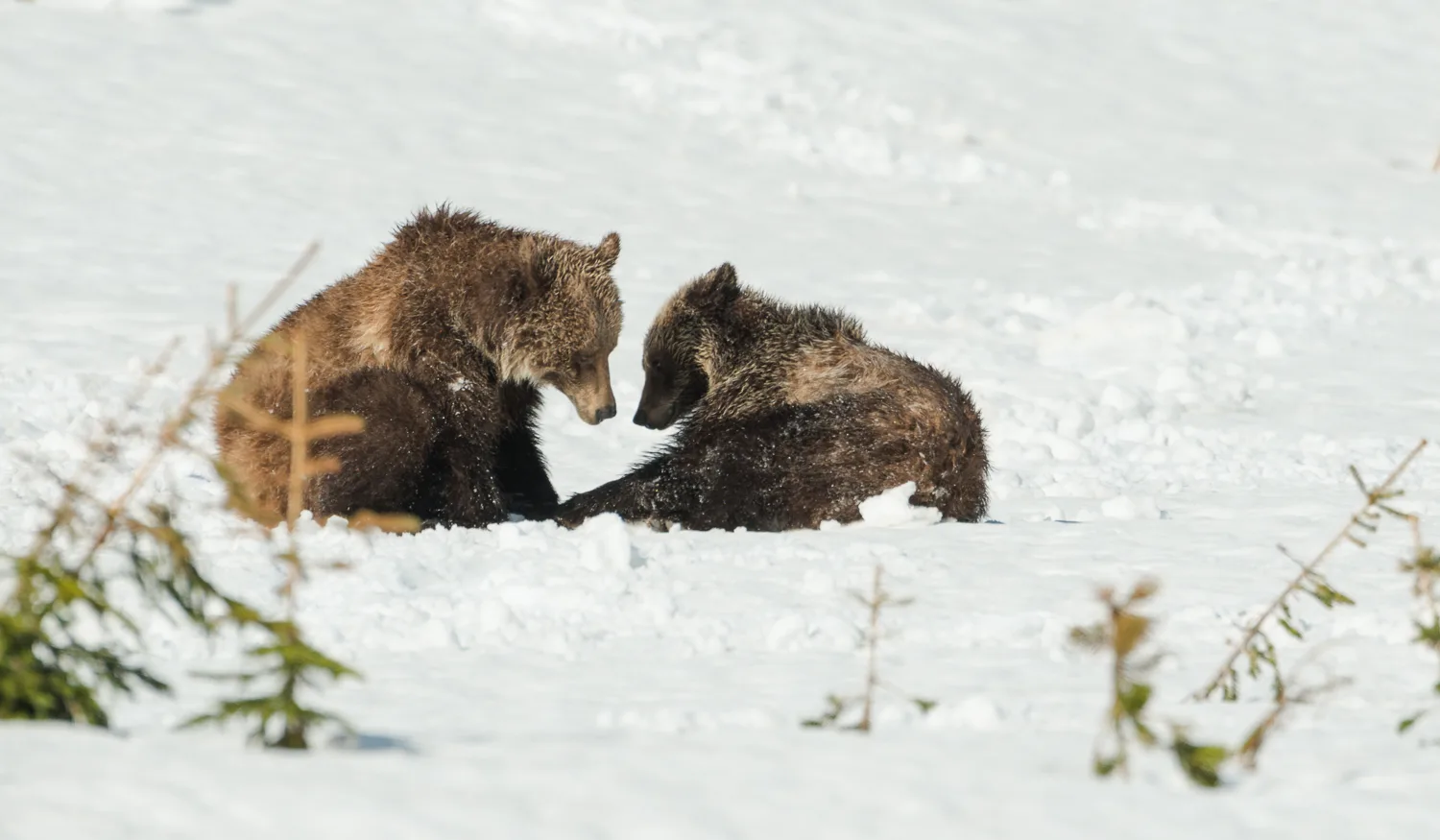
Zincton All-Season Resort would also impact the bears’ access to important food sources, like huckleberry patches. A Ktunaxa Nation-led study published in the journal Environmental Management found that the resort’s development could result in the loss of up to 94 per cent of high-quality huckleberry patches in the resort area.
How will Zincton impact Wolverines?

The Ktunaxa Nation has found that Zincton could have serious consequences for local Wolverines. The area currently contains the highest confirmed Wolverine density in the region, connects important Wolverine denning areas, and contains habitat qualities that are preferred by sensitive breeding females.
Wolverines are notoriously shy creatures — as few as three human user groups over two weeks have been shown to reduce Wolverine numbers in their preferred habitat. That’s why maintaining connectivity between wilderness areas is important for Wolverine survival. By dramatically increasing the presence of people in this landscape, Zincton would fragment Wolverine populations in Kokanee Glacier and Goat Range provincial parks.
What would Zincton mean for Indigenous rights and cultural values?
BC’s own Environmental Assessment Office determined “the Project could have potential effects on Indigenous nations and the rights recognized and affirmed by Section 35 of the [Canadian Constitution].”
In 2023, the Ktunaxa Nation Council completed an independent cumulative effects study that raised serious concerns about fragmentation impacts in the area, particularly for local Grizzly and Wolverine populations. Instead of looking at Zincton as a standalone project, the Nation argues we must consider the proposed resort as one of many concurrent impacts to this landscape that are adding up over time.
In 2025, they followed this study up with the Wolverine Project, a paper that used the One Heart Method — combining western science and Indigenous knowledge — to provide a holistic view of land, wildlife and people.
Where do First Nations land on Zincton?
- To Ktunaxanin̓tik (Ktunaxa people), this landscape is known as ʔamakʔis ʔaȼ̓pu (Wolverine’s Land). In December 2025, the Ktunaxa Nation and Yaqan Nuʔkiy (Lower Kootenay Band) released a statement reiterating their opposition to Zincton. “We have expressed our opposition to the project from the outset. And we have subsequently done extensive, Ktunaxa-led, scientifically sound research which indicates our opposition is well-grounded,” said Kathryn Teneese, chair of Ktunaxa Nation Council.
- The Sinixt Confederacy has stressed that, in combination with other developments in the area, the project will affect Sinixt people’s ability “to hunt and steward wildlife population and deprive the Sinixt of their food, social, and ceremonial practices.”
- The Okanagan Indian Band raised concerns around both wildlife impacts and watershed contamination risks, citing the Okanagan Nation Water Declaration and the responsibility of Syilx people to safeguard siwɬkʷ (water) for current and future generations.
- The Shuswap Band stated that the project threatens traditional practices such as hunting and plant gathering while increasing risks of soil erosion, wildfires and climate-related degradation.
- Skwlāx te Secwepemcúl̓ecw (Little Shuswap Indian Band) agreed the project has potential impacts to wildlife, plants, soil and water integrity. The Nation specifically stressed the need to consider broader management objectives, such as protecting the Central Selkirk Mountain Caribou herd, which inhabits the area.
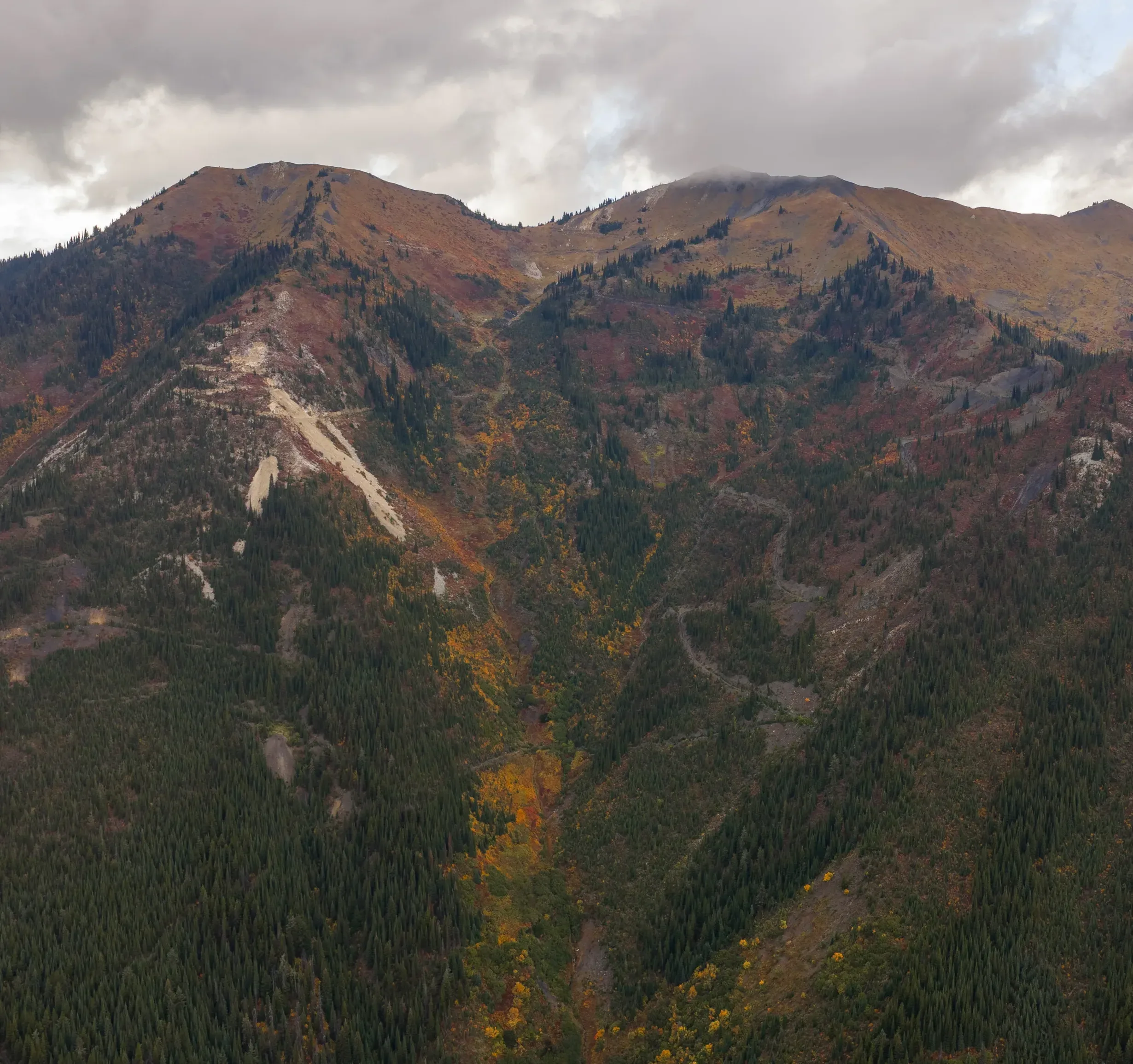
What would Zincton do to the water?
Wildsight’s conclusion on Zincton
Zincton is being marketed as a low-density, low-impact, backcountry resort that’s a “radical departure” from existing resorts. The reality is a 55-square-kilometre resort with the capacity to comfortably host 1,200 skiers a day is not a small project in a mountain ecosystem as sensitive as the one in which Zincton is proposed. And it shouldn’t be treated as such. BC’s overly simplistic criteria for triggering an environmental assessment need to change.
Zincton would attract problematic numbers of skiers and riders in winter, along with never-before-seen numbers of hikers, overnighters, sightseers and mountain bikers in summer. It would see roads and infrastructure developed in a sensitive alpine environment, and that infrastructure would remain for decades, if not centuries.
This is exactly why environmental assessments exist: to study risks before damage is done. A project of this scale in a sensitive mountain ecosystem deserves nothing less.