


The heat map graphic below shows data from seven PurpleAir monitors around Golden this February. These monitors measure PM2.5—microscopic particles from vehicle exhaust, wood smoke, and industrial operations. Because they are so small, these particles can lodge deep in our lungs and even enter our bloodstream.
The US EPA PM2.5 (AQI) is an hourly index ranging from 0–500, used to indicate immediate health risks from fine particulate matter.
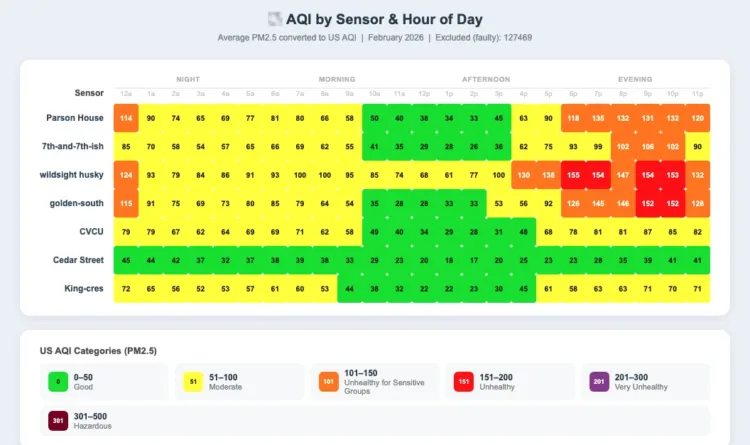
As the data shows, air quality often worsens in certain areas during the afternoon and evening—just as children are heading home. During these peak times (shown by the red blocks), our air quality is classified as “unhealthy” for everyone, not just sensitive groups. At these levels, some members of the general public may experience health effects within 24 hours of exposure and people in sensitive groups (including children, older adults, pregnant women, and those with heart or lung conditions) may experience more serious effects.
Poor air quality is linked to:
- Headaches and irritated eyes, nose, or throat.
- Worsened asthma and reduced lung function.
- Increased risk of heart attack and stroke.
Almost every sensor, almost every day, reports at least one 10 minute period in which the average exceeds dangerous.
Here is another way of looking at this data:
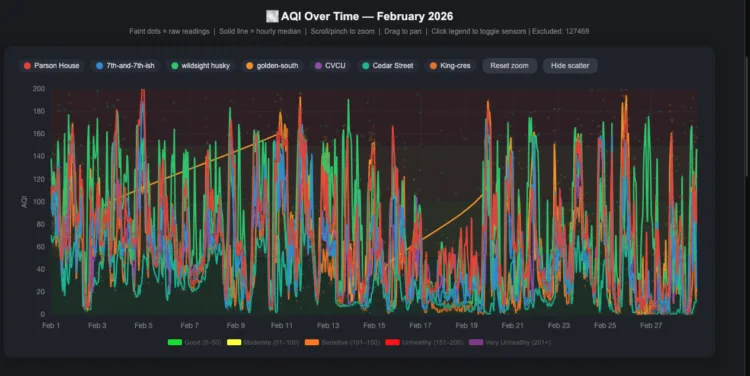
Our valley frequently exceeds safety limits for PM2.5. Additionally, road dust levels have been excessively high this past month, leading to official air quality warnings from the Province and advice to limit outdoor activity. Click here to view the latest warnings. You can also visit the provincial air quality data webpage for real-time observations.
We all breathe the same air. Let’s work together to clear it up.
Click here to learn more about our local air quality and what you can do to help. There you will find other news articles with resources including “Burn it Smart” tips and information on how to use your wood stove more efficiently.