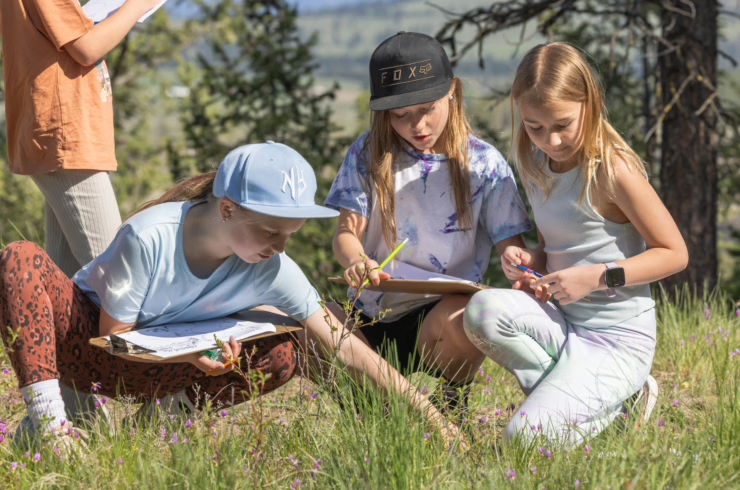


For the past four winters, I’ve taught a Winter Wonder program to the same incredible group of students at Kimberley Independent School. One of them is my daughter. Experiencing the magic of winter alongside Ella and her classmates has been a gift, not only as a mother, but also as an educator and an advocate for the natural world.
From their earliest days as bundled-up Kindergarteners in one-piece snowsuits to the curious and confident learners they are now in Grade 3, we’ve embraced the wonder and awe of winter together.
In 2023, it was the incredible Black-capped Chickadee that guided our learning: a tough little bird with a big personality and an even bigger memory.
In 2024, we tunnelled beneath the snow to discover how mice survive in the secret underground world known as the subnivean zone, where the insulating power of snow protects them from the elements.
In 2025, we shifted our focus to a powerful chionophile (an organism that can thrive in cold weather), the Mountain Caribou, and explored the remarkable adaptations that allow them not only to survive, but to thrive in the harsh winter.
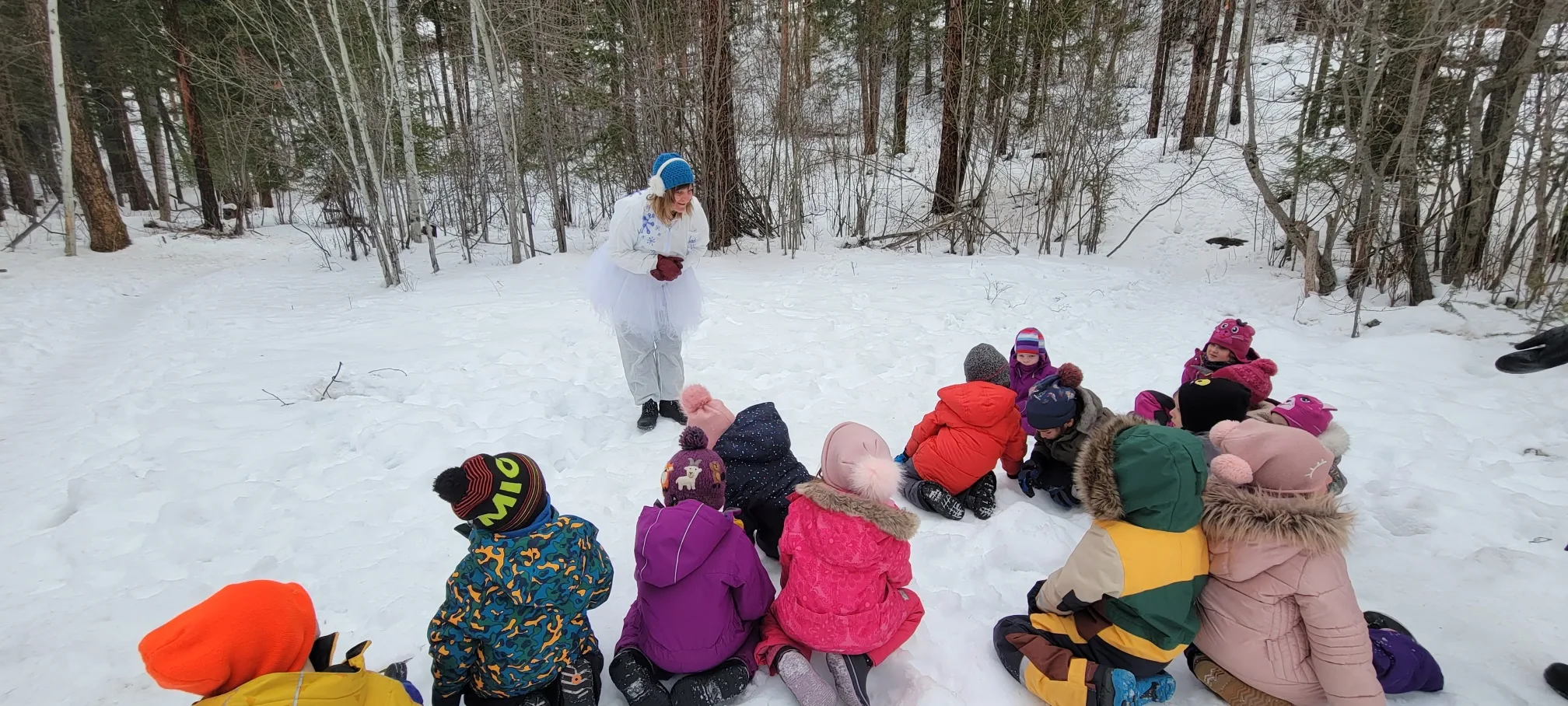
This year, we spent our final Winter Wonder exploring another true snow specialist. With its large, feathered feet and incredible ability to blend into its surroundings, the Ptarmigan makes winter look effortless. The students brought real science to life by investigating thermal energy and learning how Ptarmigans stay warm in the cold. They even built shelters for their own “Ptarmigans” (hot potatoes) and discovered how insulating materials like snow and feathers help them retain heat.
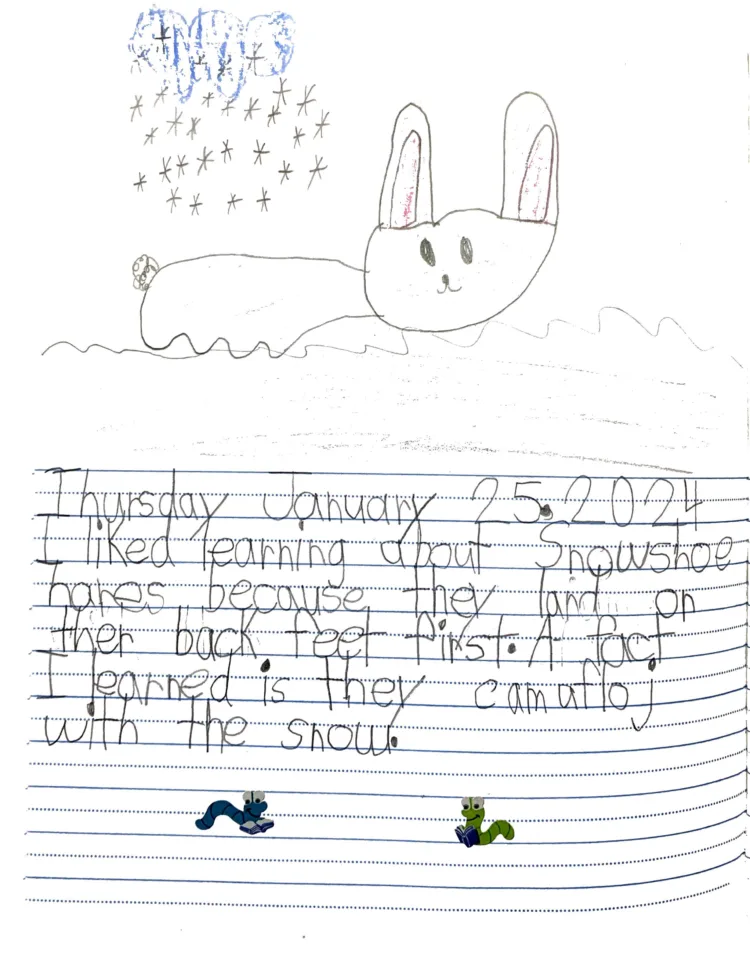
Through storytelling and puppet shows, these programs help children to see the world through the eyes of our wild neighbours, nurturing compassion, relatability, and a genuine love for the natural world. From Sally the Snowshoe Hare (enthusiastically explaining how she gets extra nutrients by eating her own poo) to a hibernating frog named François (who made a special appearance to share his magnifique adaptation of turning himself into a “frogcicle”), Winter Wonder is full of learning and giggles.

We’ve tracked prints pressed into fresh snow, built cozy mouse houses, and had fun reenacting “a day in the life” of some of our wild neighbours. A particular favourite was hiding “seeds” (coloured ice cubes) to experience how the Black-capped Chickadee caches up to 80,000 seeds and snacks on them all winter long.
We’ve played games that got our hearts racing and our minds buzzing, and we’ve paused in quiet awe to admire the intricate patterns of snow crystals and to listen closely to the forest using our “deer ears”. Time and again, I’ve witnessed that magical spark of genuine wonder, seeing kids simply being kids and falling in love with the winter season.
By building empathy and connection with, and for, the natural world and all its inhabitants, we give children the strongest foundation for understanding why caring for our one precious planet matters. When children feel connected, they are far more likely to become thoughtful, compassionate stewards of the places and creatures they grow up alongside.

The succession of themes and content in Winter Wonder is deliberate. It’s meant to nurture knowledge, resilience, and a deep sense of connection. As a whole, this inspires our children to face a changing climate with hope rather than doom. We keep the learning full of magic, which isn’t difficult when Mother Nature is our greatest teacher.
When Ella sees “Winter Wonder” written on the calendar, she begins counting down the days. She knows it’s the day I transform from mom to Lady Winter and step fully into the magic and responsibility of teaching. When I asked her what she loves most, she didn’t hesitate: the dressing up, the tending of animals by building mouse houses and Ptarmigan shelters, the feeling that she is caring for something small and wild.
She has told me she wants to be an educator one day like me; there is no greater affirmation of this work than that. Teaching my own child has shown me that environmental education is, at its heart, an act of love — one that binds us more closely to each other and roots us more deeply in our responsibility to protect the natural world. For her. For all children. We hope that the confidence, curiosity, and connection to nature these kids have built over four years of Winter Wonder will stay with them as they grow.
Teaching my own child has shown me that environmental education is, at its heart, an act of love — one that binds us more closely to each other and roots us more deeply in our responsibility to protect the natural world. Jill Jennings
Who knows? Maybe one day one of them will be a conservationist protecting the wild, an artist capturing the beauty and awe of the natural world, or even a future Wildsight educator, helping the next generation fall in love with their wild backyards. And it all started with a little chickadee, fierce and noble, inspiring kids one program at a time to become stewards of our wild backyards.

Thank you to Columbia Basin Trust REDi grants, Copernicus Education Products, the Province of British Columbia, Teck Trail, TD Friends of the Environment, and all of our individual donors for making this program possible.