
Winter often feels quiet—secretive, even.
Blankets of snow absorb sound, valleys empty, and wildlife sightings taper. But the quiet is deceptive. For most animals, winter is not a dormant season but the most demanding time of year, when survival depends on conserving energy with extraordinary precision. Every step, every calorie, every place of refuge is a careful calculation to help get them through until spring.
Looking closely at how some iconic species manage this season reveals why winter habitat is some of the most vulnerable—and the most critical to protect.
Wolverines: Built to endure, designed to roam
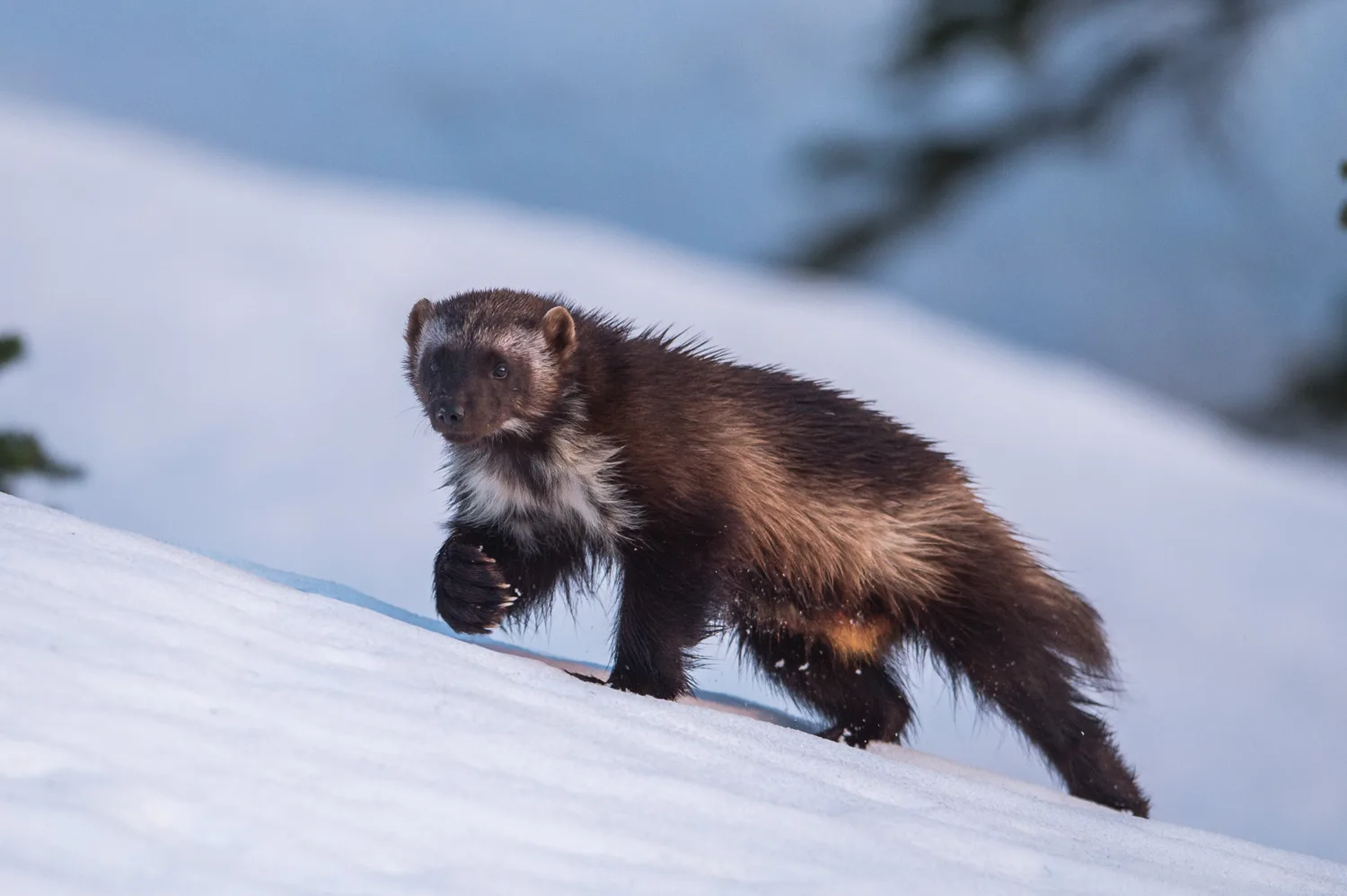
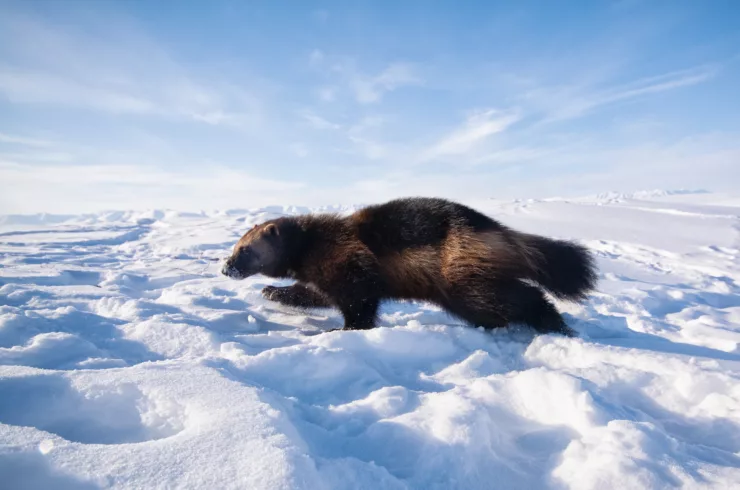
Wolverines are among the most cold-adapted mammals in the Kootenay–Columbia region. Their dense, frost-resistant fur can shed ice and insulate even when wet, and their oversized paws distribute weight so efficiently that wolverines can travel long distances over deep snow without sinking. In winter, they rely heavily on cached food they cache in the warmer months, often revisiting frozen carcasses weeks or even months after first locating them. Wolverines are capable of covering dozens of kilometres in a single day, yet they balance this mobility with remarkable calorie-preserving efficiency. Female wolverines den deep within stable snowpacks, where temperatures remain relatively constant even during extreme cold snaps—conditions that are critical for kit survival during the harshest months of the year.
Owls: Economy in motion
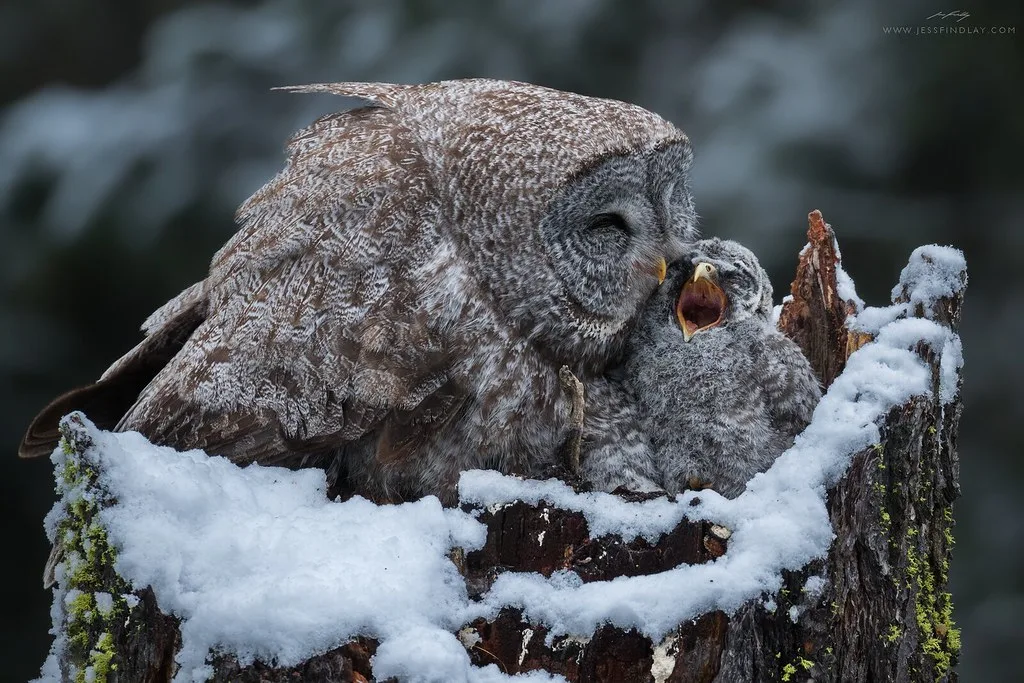
Owls exemplify restraint in winter. Western Screech Owls, along with Great Horned and Northern Saw-whet Owls, rely on exceptional feather insulation that extends all the way down to their toes, reducing heat loss during long winter nights. Their asymmetrical ears and acute hearing allow them to detect prey beneath snow without moving extensively.
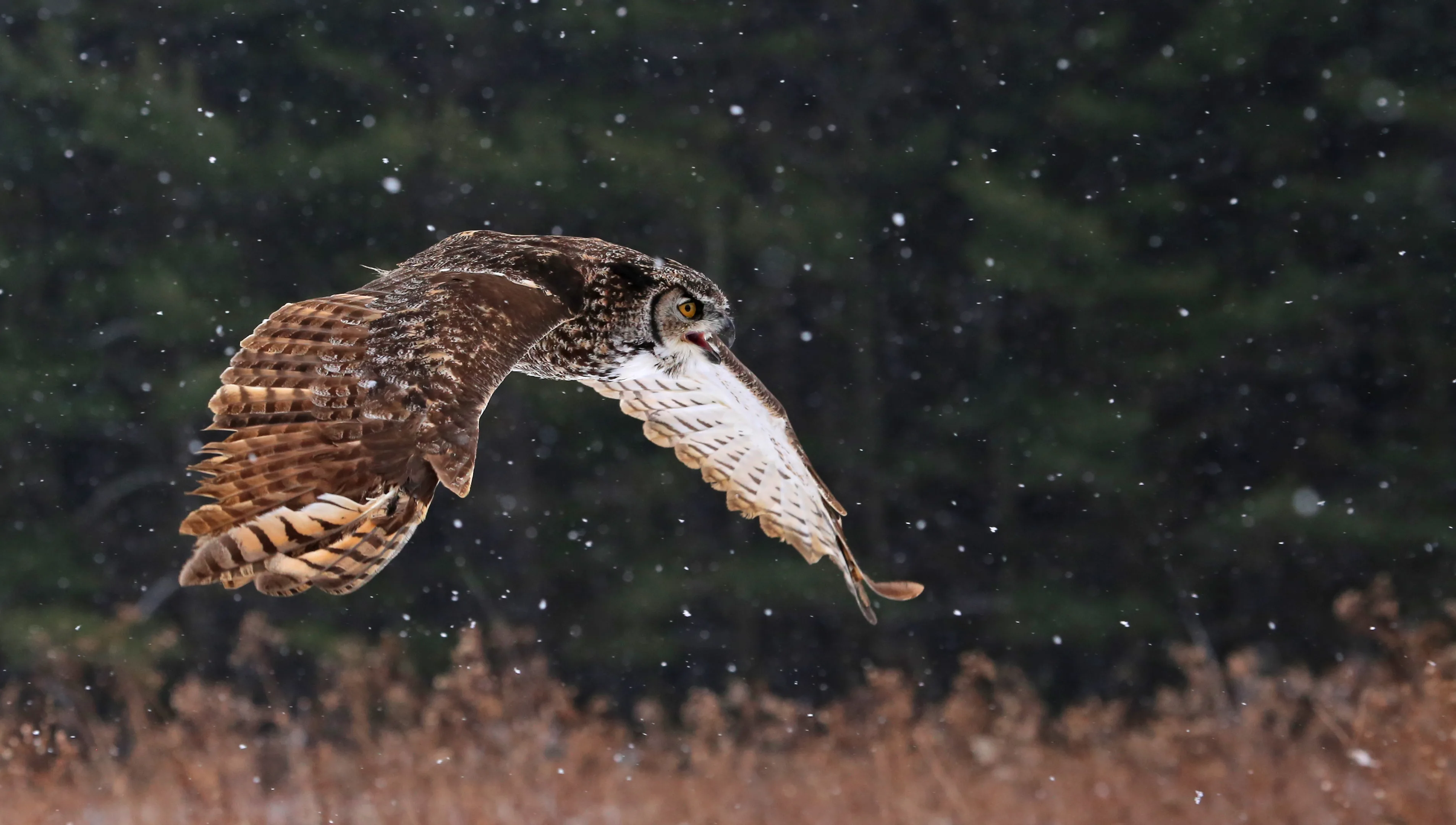
Owls hunt using short bursts of precise flight from perches, otherwise conserving energy by remaining still for long periods. Mature forests and standing dead trees — microclimates that buffer extreme cold — provide the cavities and shelter these owls depend on.
Pikas: Haying by summer, tunneling by winter
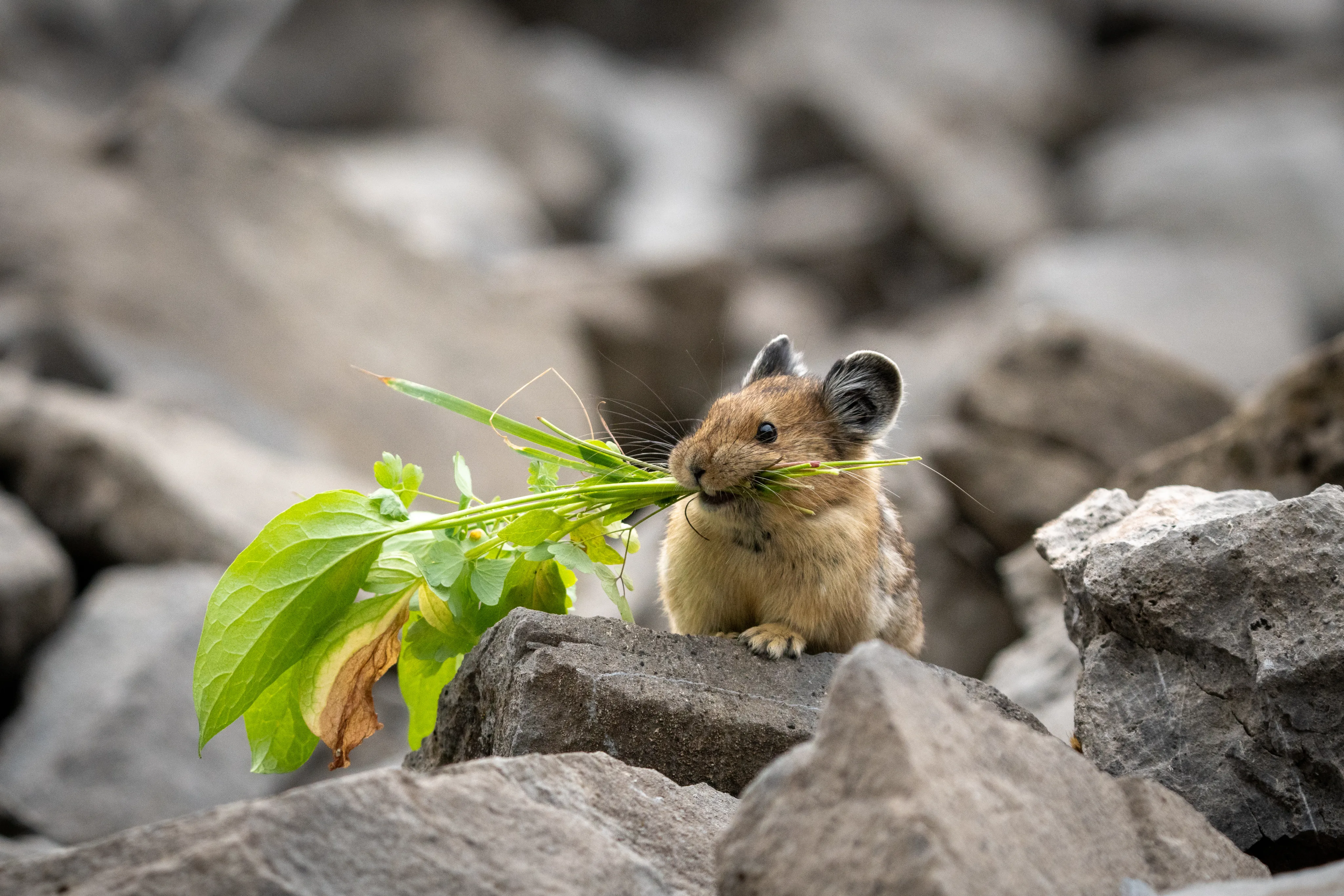
American Pikas are not only the most adorable creatures to grace our mountains—their winter strategy is among the most finely tuned. Living in alpine talus slopes, pikas do not hibernate or migrate. Instead, they spend summer gathering grasses and wildflowers; drying them into carefully curated “haypiles” stored deep within rock crevices. Snowpack acts as insulation, keeping winter temperatures within the talus remarkably stable, even when air temperatures above plunge far below zero. Pikas remain active beneath the snow, relying entirely on stored food and conserving energy by staying within their insulated environment. Their dependence on predictable snow cover makes them particularly sensitive to changing winter conditions.

Martens: Thriving beneath the snow
American Martens are small predators incredibly adapted to winter forest life. In the Kootenay and Columbia region they rely on complex, mature forests that provide subnivean access—spaces beneath the snow where temperatures remain far warmer and more stable than above. Martens have semi-retractable claws and elongated bodies that allow them to hunt efficiently under the snowpack, preying on voles and mice that stay active all winter. Marten fur is exceptionally dense, providing insulation despite their small size. Rather than enduring winter above the snow, martens largely live within it, using fallen logs, root wads, and forest structure to conserve heat and energy.
Southern Mountain Caribou: Masters of calm
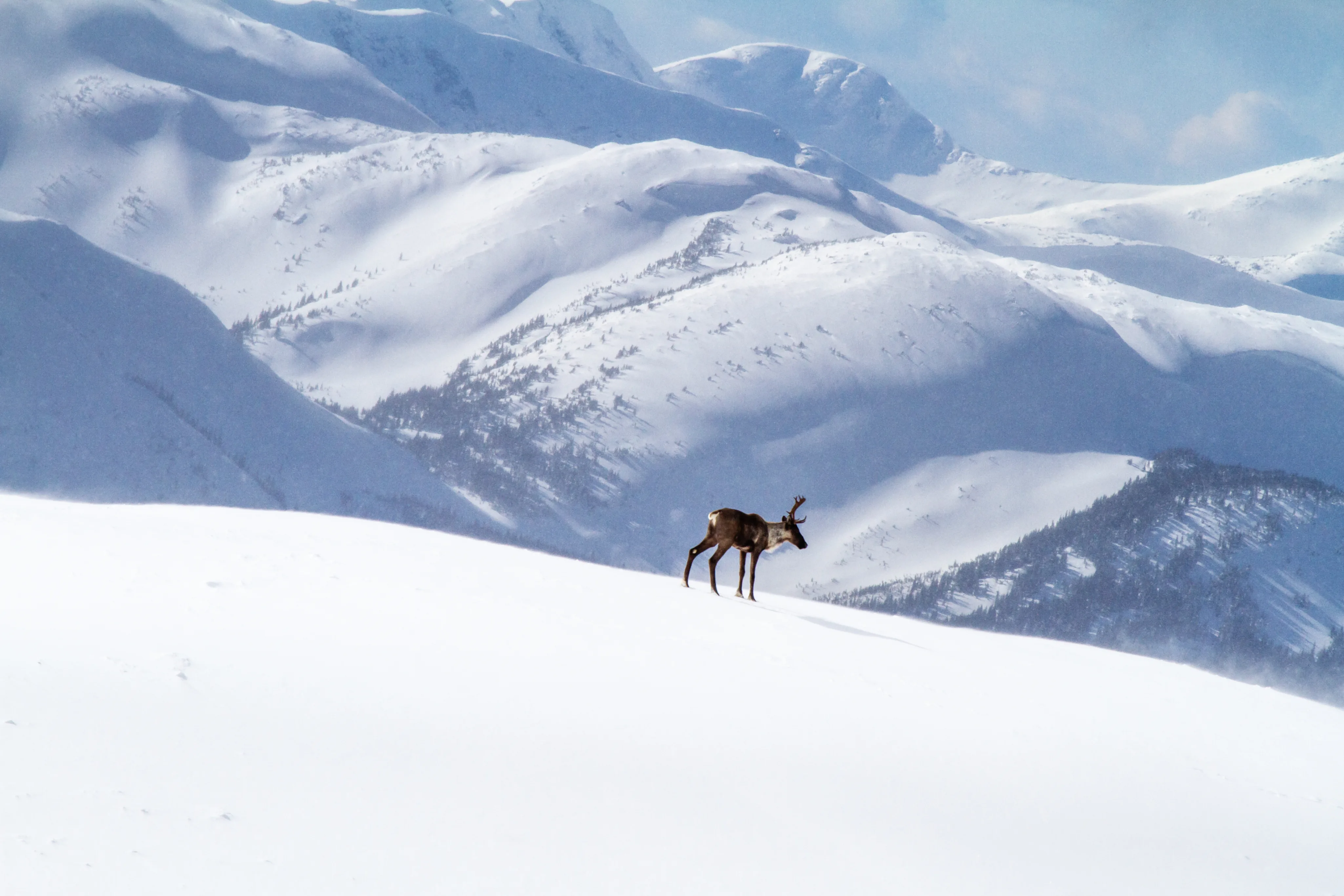
Southern Mountain Caribou are uniquely adapted to winter in the high-elevation forests of the Selkirks and Purcells. As the snowpack deepens, they move upward into old-growth cedar and hemlock forests where soft, deep snow limits predator access. In contrast, mountain caribou use their perfectly evolved wide hooves like snowshoes to travel atop deep snow, and often reuse the same trails to reduce effort. Their winter diet consists almost entirely of arboreal lichens, which are highly digestible but extremely low in nutrients—forcing caribou to conserve energy rather than seek richer food. Caribou move slowly and infrequently, sometimes spending long periods bedded down to conserve calories in a season when replacing them is nearly impossible. Their winter survival depends on large, intact tracts of mature forest that allow them to remain efficient, concealed and undisturbed.
Mountain Goats and Bighorn Sheep: Precise in place
Mountain Goats and Bighorn Sheep survive winter in part through their highly calculated habitat selection.
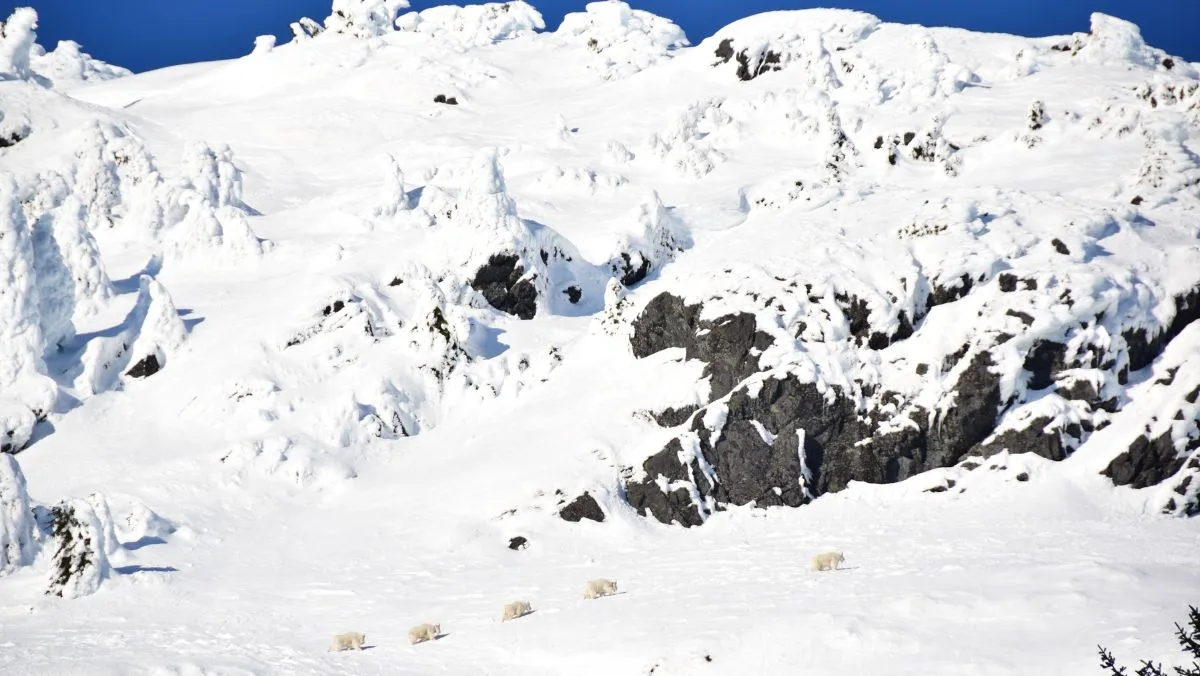
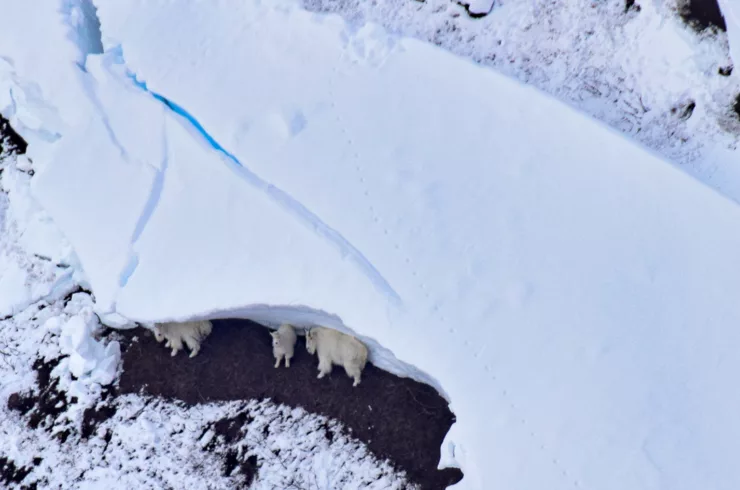
Mountain Goats favour steep, wind-scoured ridges and sunny south-facing cliffs where snow accumulation is minimal and escape terrain is close at hand. Their specialized hooves, with rubbery pads and sharp edges, provide traction on icy rock.
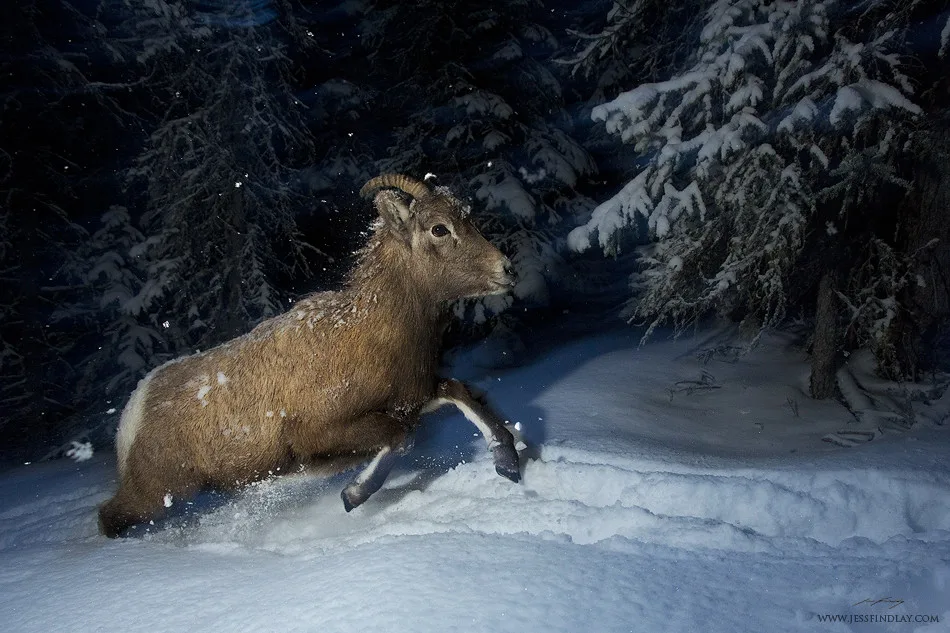
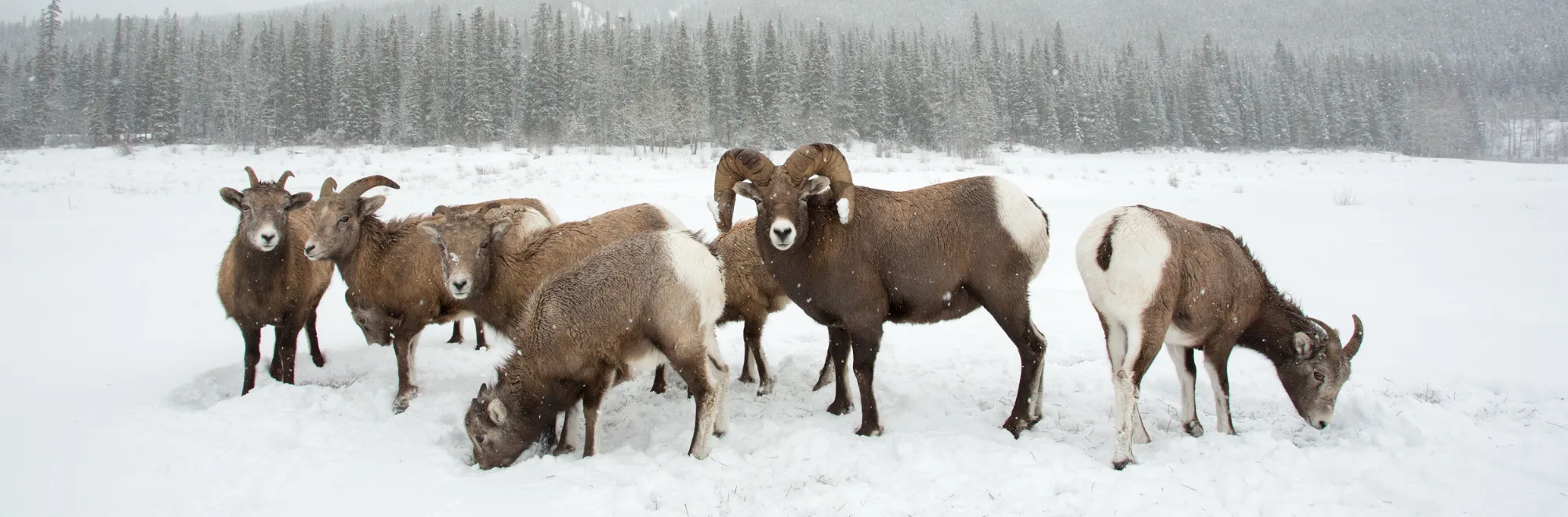
Bighorn Sheep, typically at lower elevations, select open slopes where solar exposure reduces snow depth and forage remains accessible. Both species reduce movement dramatically in winter, often using the same slopes year after year. This minimizes energy expenditure and allows them to survive on limited forage.
When winter strategies collide with human landscapes
Across the Kootenay and Columbia region, these finely balanced winter strategies increasingly overlap with logging, mining exploration, road networks, recreation, and expanding human settlement. Removal of mature forests eliminates denning sites, thermal cover, subnivean habitat, and winter forage.
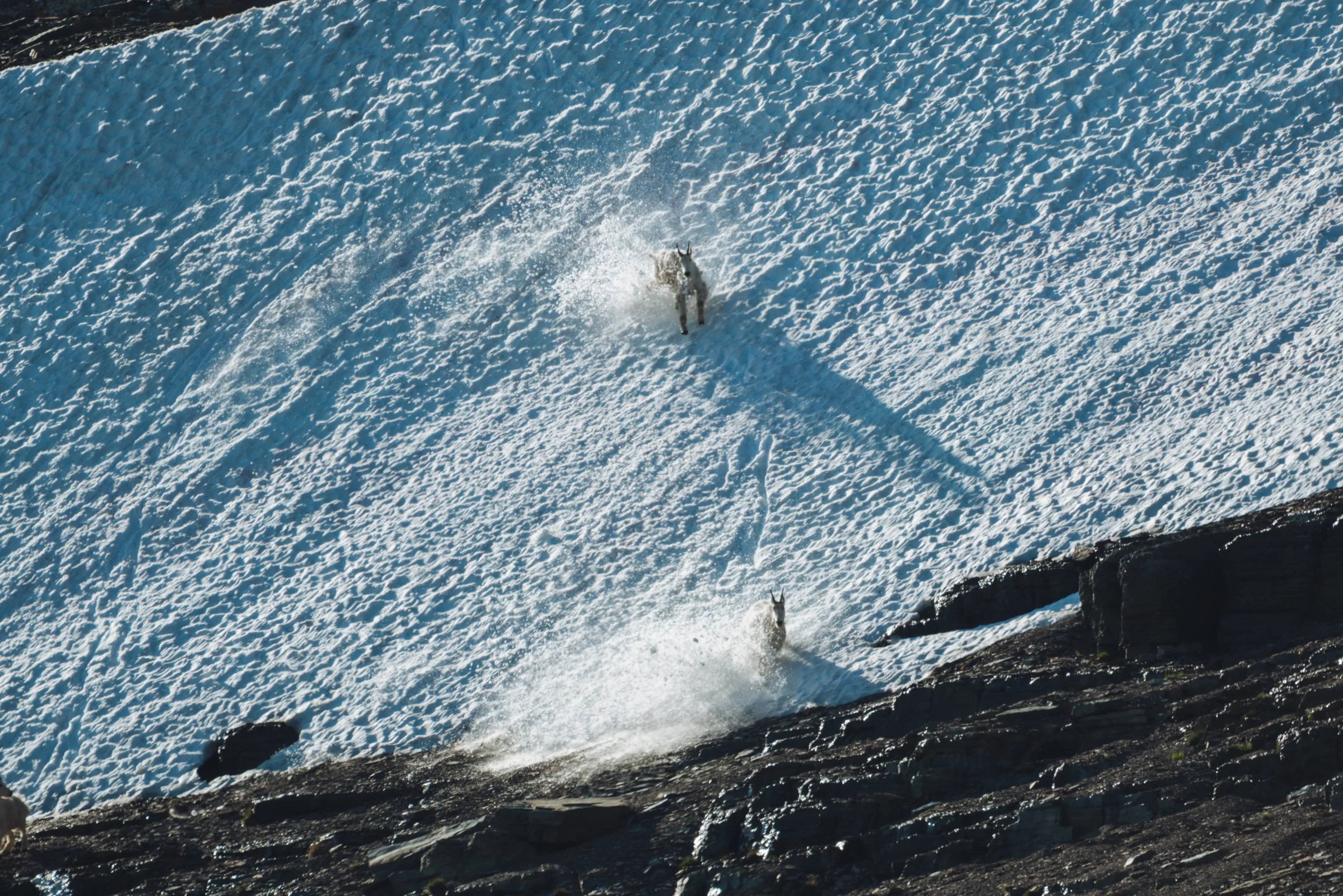
Winter is the season when disturbance carries the highest cost: forcing animals to flee, disrupting denning or roosting sites, fragmenting habitat, or altering the protective role of snow. Snowmobile tracks, ski activity, and plowed roads can increase predator access and erase the energy-saving advantages of deep snow. For some species, winter closures for certain human activities are in place within sensitive habitat—for example snowmobiling closures in Ungulate Winter Ranges. It is important to understand both the reasoning for these closures, and the consequences for these animals if they are not respected. It may seem as though you are ‘just one group’ and will have little to no impact, but research has repeatedly shown that human disturbance easily pushes wildlife into perilous terrain, and can cause them to avoid areas that are critical for their survival. Even brief or unintended disturbances can push animals beyond their energy limits, with effects that ripple into spring reproduction and long-term population health.
Listening to the quiet

Winter’s silence is not emptiness. It is the sound of systems working exactly as they must. During our coldest months, wildlife survives by doing less and moving less — relying deeply on the landscapes that allow them to do so.
Between habitat loss, climate change, and threats from human expansion, it is up to us as individuals to ensure we don’t add additional strain during a time of year when wildlife’s survival hangs in the balance.