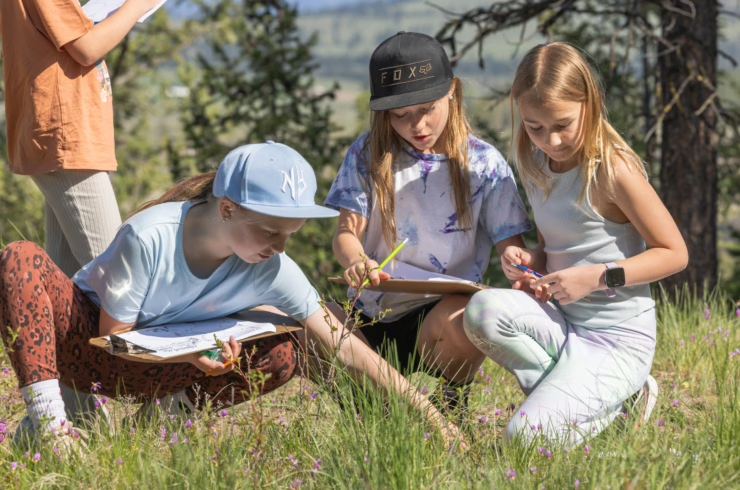

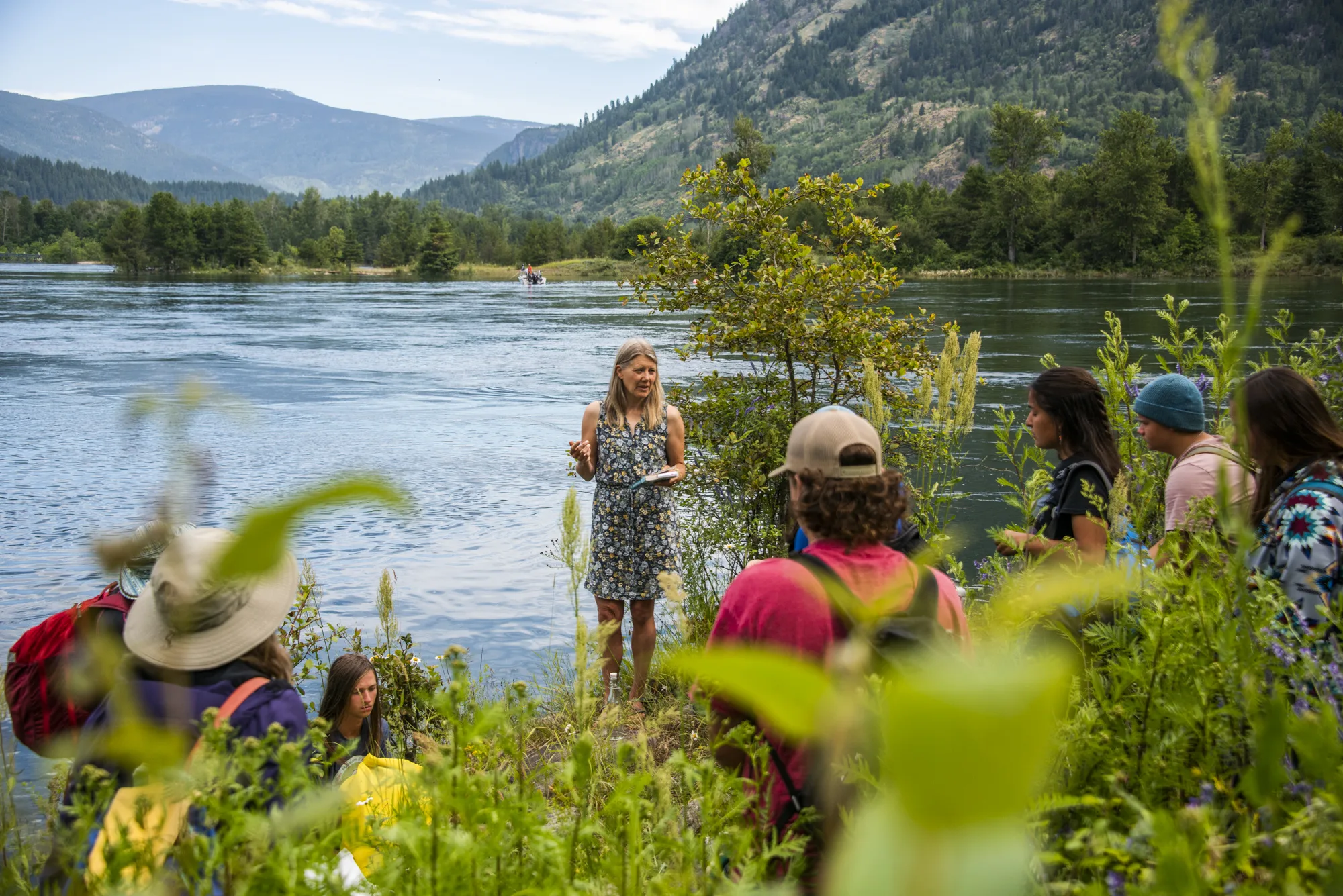
To build a world rooted in reciprocity and respect, we must start with the education we give our children.
Hundreds of British Columbians gathered in Nelson last month to stand up for British Columbia’s last old-growth forests. That evening, Dr. David Suzuki delivered a stunning lecture. He traced the arc of human history on this planet and named, clearly and unapologetically, how we arrived at this moment of climate crisis, biodiversity loss, and the potential ecological collapse — by gravitating towards a worldview that sees humans as separate from the Earth: exceptional, and entitled to dominate instead of reciprocate.
He called on us to stand up, to fight for the future of the next generation, and for the planet itself. And he talked about education. He said that children aren’t being taught the most fundamental ecological truth: humans are not separate from nature; we are part of nature, a single strand in the web of life.
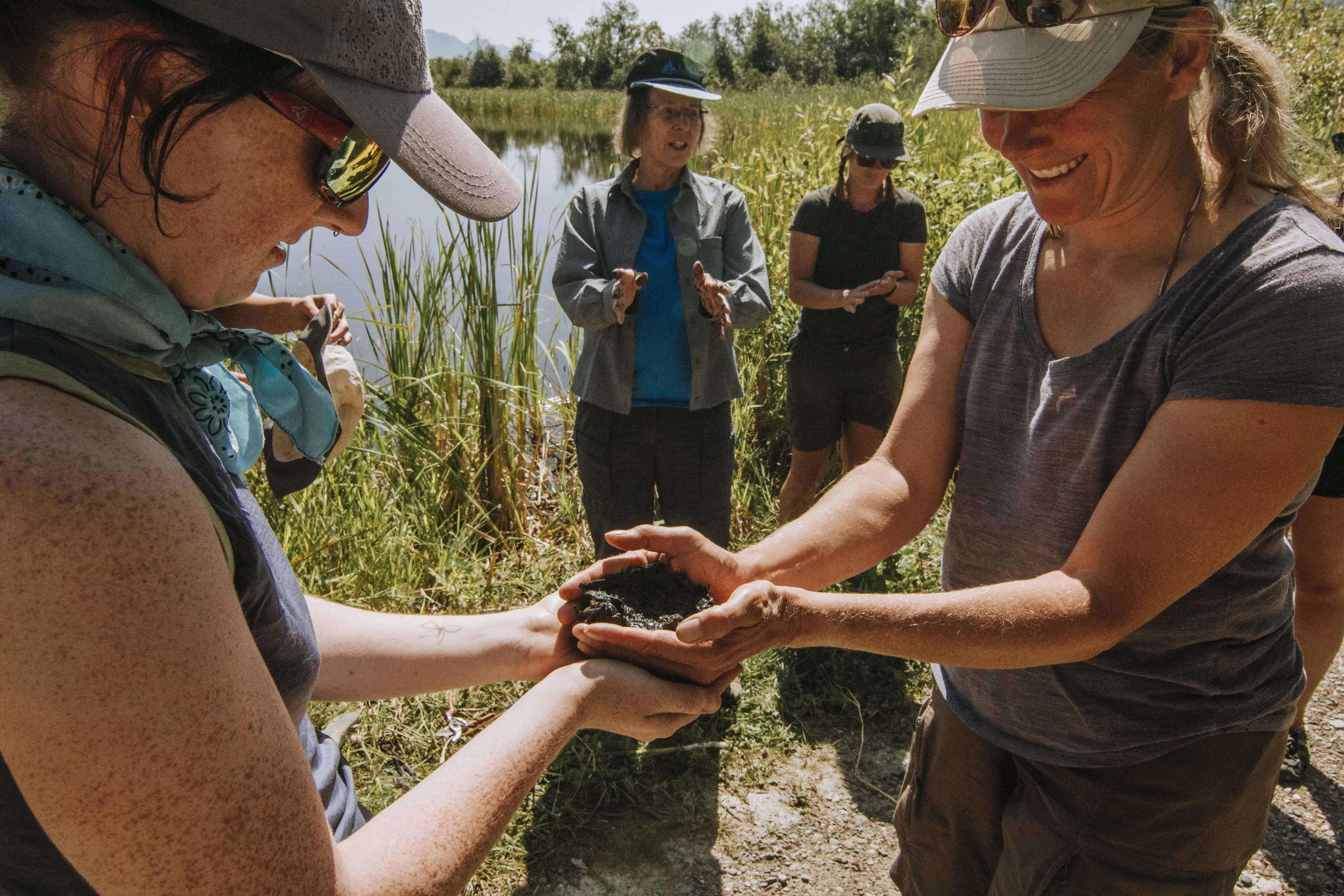
As an educator myself, I’ve seen how a simple hands-on activity can illuminate this powerful truth for kids. One of our most beloved games at Wildsight Education invites students to take on the identity of a different plant or animal. Standing in a circle, they then pass a ball of yarn to anyone else whose character they interact with. As the yarn forms an intricate web of life, they see — viscerally, unmistakably — how a single tug can reverberate through the entire system.
A sobering snapshot of climate education in Canada
This year, a Canada-wide survey was conducted on climate change education. With input from over 4,000 Canadians — including students, educators and parents, from every province and a subset of the Territories — the findings were sobering. Eighty percent of respondents said climate change is a very serious issue, yet many struggled to differentiate fact from misinformation. When given a few basic questions about climate science — such as the cause of climate change (burning fossil fuels, not a hole in the ozone layer) — only 47% earned a passing grade.
B.C. respondents gave our schools a ‘C’ for climate change education. Many students reported discussing climate change for only 1–10 hours in an entire school year.
In the midst of a planetary emergency, the next generation is receiving less than a day’s worth of learning on an issue that will shape their entire future.
What real ecological literacy requires
We need education about ecological principles, about the impossibility of infinite growth on a planet with finite resources. Education that presents humans as one animal among many. Education that acknowledges we have no alternative to photosynthesis, no technological replacement for old-growth forests, no backup planet Earth.
This kind of education — the kind that’s grounded in science, humility, and interconnection — must be prioritized, written into curriculums, and funded.
We need:
- More training for pre-service and in-service teachers so they can teach climate and ecological concepts confidently, accurately, and with emotional support for students.
- Climate change literacy to be required learning across the B.C. curriculum and written into the professional standards for educators.
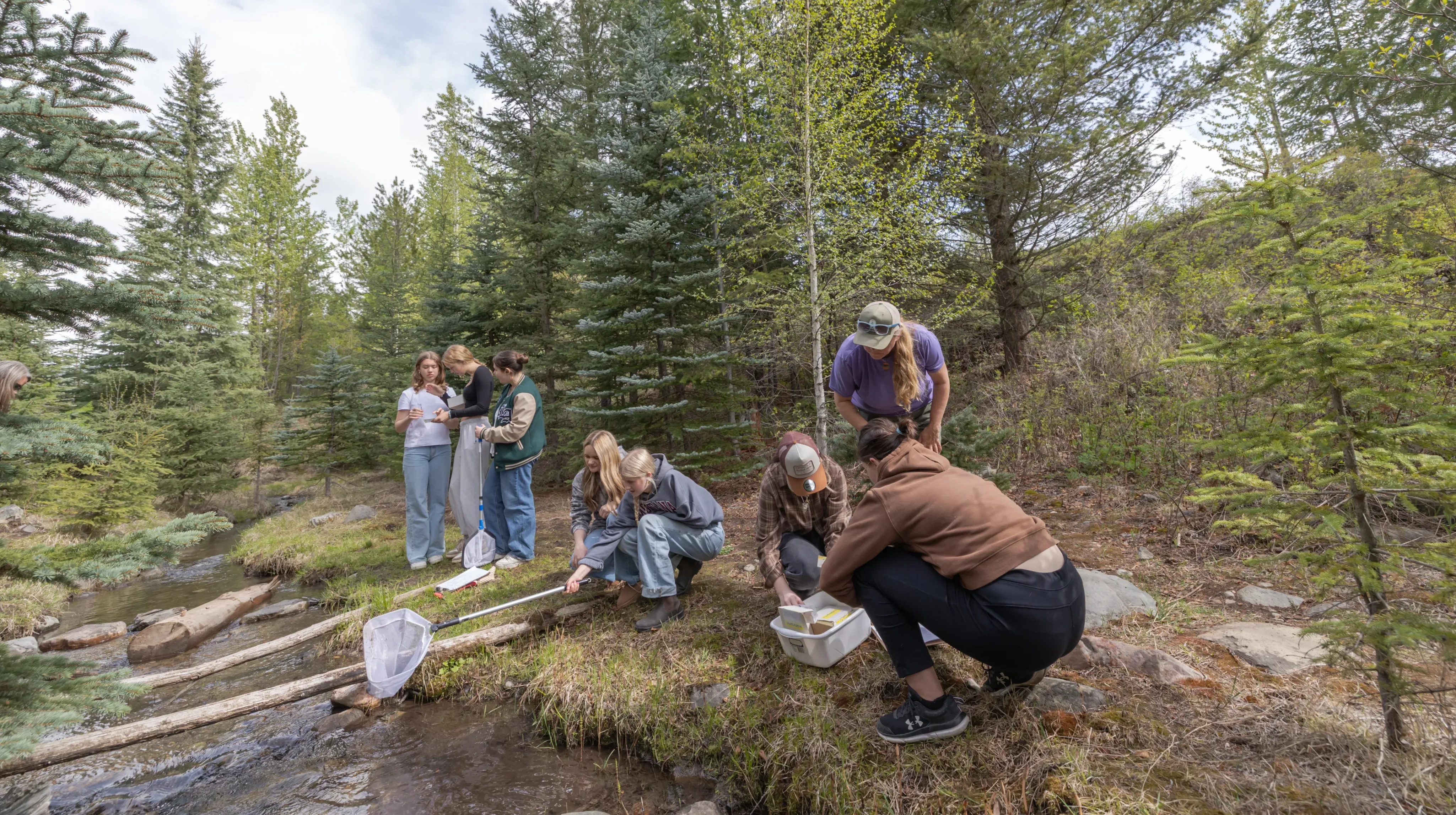
- More funding for NGOs and community groups that help schools to create place-based, hands-on learning opportunities to foster climate resilience, biodiversity, and healthy ecosystems.
- Support for Indigenous knowledge systems that centre reciprocity and responsibility rather than extraction and domination.
This is how we foster an informed generation — one capable of navigating complexity, resisting misinformation, and advocating for a livable future.

Wildsight has prioritized environmental education for the past 25 years, in classrooms and forests across our region. Yet we stand on the edge of a precipice as stable, long-term funding for this critical work becomes harder and harder to find.
Without renewed funding, these programs will simply disappear. If we want children to grow up with the knowledge, courage, and ecological literacy needed to care for this planet, we must commit to supporting this work now. The forests cannot wait, and neither can our kids.
Imagining a regenerative economy
Imagine, as Professor of Forest Ecology Suzanne Simard described at the Nelson rally, a regenerative economy — one that values trees for their role in the forest, not just their market price. An economy where air, water, soil, and life itself are treated as sacred. Where schools prepare students to steward the world that sustains them.
What would that look like? And more importantly, what would it take to get us there?
If we want a future in which our children inherit more than warnings and wildfires, we must invest in education that deepens their understanding of the natural world, nurtures their values, and grows their courage. Environmental education should not be seen as an optional add-on, but as a lifeline. The web of life is trembling, but it is not yet broken. And with knowledge, connection and collective will, we can still choose a future rooted in respect, reciprocity, and hope.
Monica Nissen has more than 30 years’ experience teaching environmental education. As Wildsight’s Education Director, she and her team deliver education programs to more than 3,000 kids across the Columbia Basin each year.